Pest control for Rockingham and the southern suburbs
About Us
Dedicated to protecting Rockingham homes from pests
Pest Control PER takes pest control requests for Rockingham, Kwinana, Baldivis, Mandurah, Cockburn and Armadale and connects you with a licensed local pest control technician. We are not the business that treats your property: the technician we put you in touch with inspects it, quotes it in writing and does the work, and you deal directly with them from the first call.
What you get from this site is a clear description of each service, honest local notes for 47 suburbs, and a process that always starts with an inspection and a written quote. Nothing here is a made-up number: no invented experience figures, no review counts, no success rates.
 13 pest control services, from termites to possums
- Licensed local pest control technicians
- Inspection first, then a written quote
- Treatments planned around kids, pets and gardens
Three steps from your request to a treated property
Spraying is the last step, not the first. Your request goes to a licensed local technician, who works out what the pest is, where it is getting in and what is feeding it, then puts a treatment and a price in writing before anything starts.
- Licensed local pest control technicians
- Written quote before any treatment
- You deal directly with who does the work
- Protected wildlife handled lawfully
Licensed local pest control technicians across the southern suburbs
Licensed local technicians only
Pest management work in WA must be done by a technician holding a Pest Management Technician licence from the WA Department of Health. We only pass your request to technicians who hold it, and you can ask to see it before work starts.
You deal directly with who does the work
The technician who contacts you is the one who inspects, quotes and treats your property. Prices, follow-up terms and any guarantee on the work are theirs to set and are put in writing before anything starts.
Local knowledge of the southern suburbs
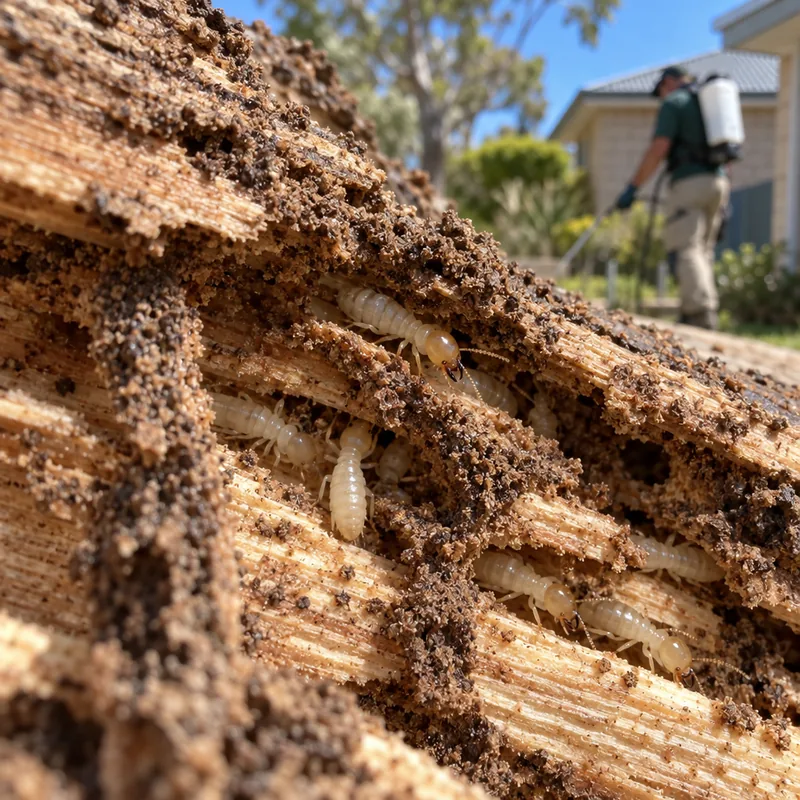
Termites in reticulated garden beds, coastal brown ants on sandy blocks, roof rats in 1970s brick and tile, millipedes from cleared bush: the technicians we work with treat these every season.
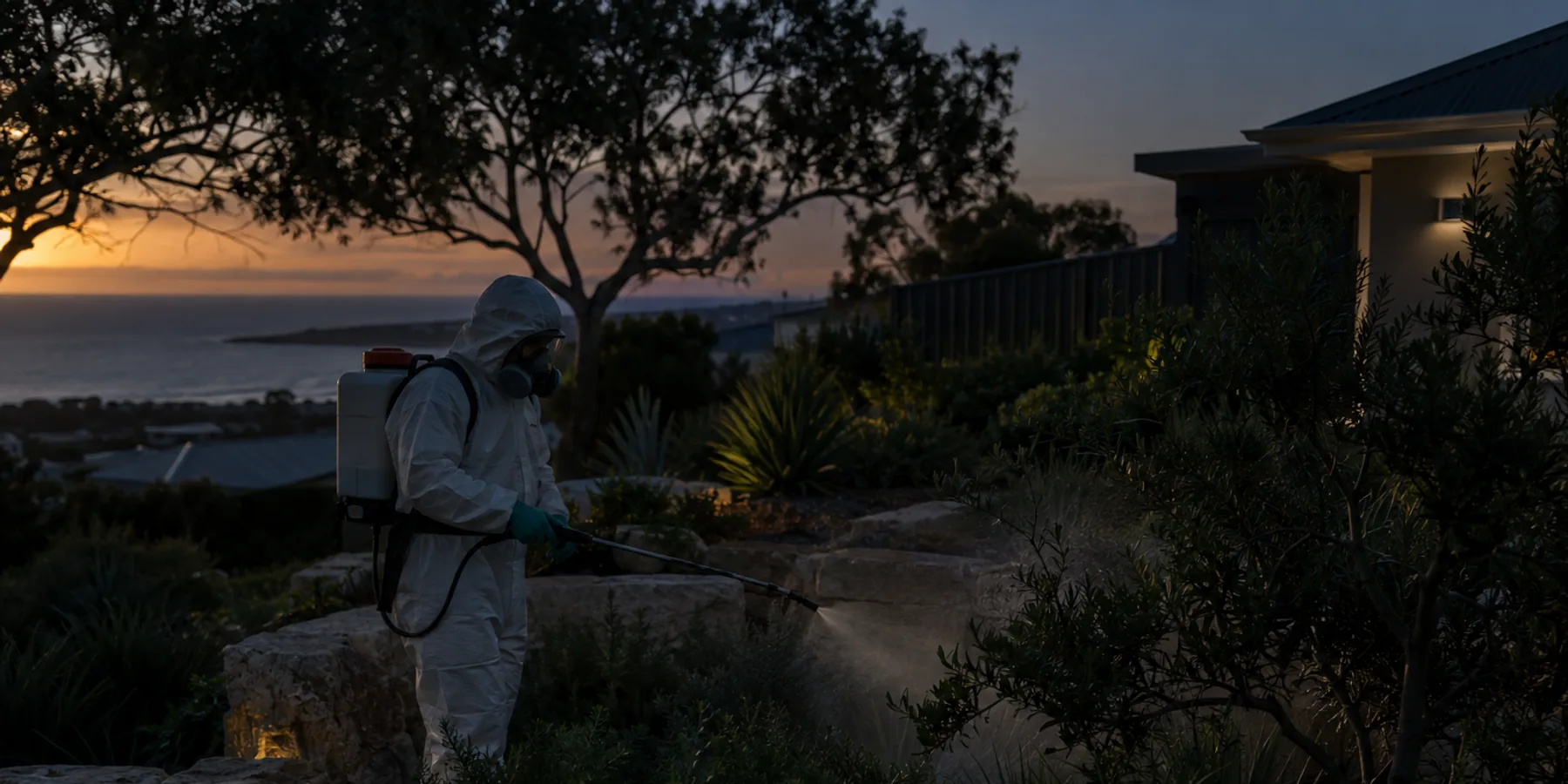
The technicians we work with are licensed and work to the standards that apply in WA
Safe for children and pets
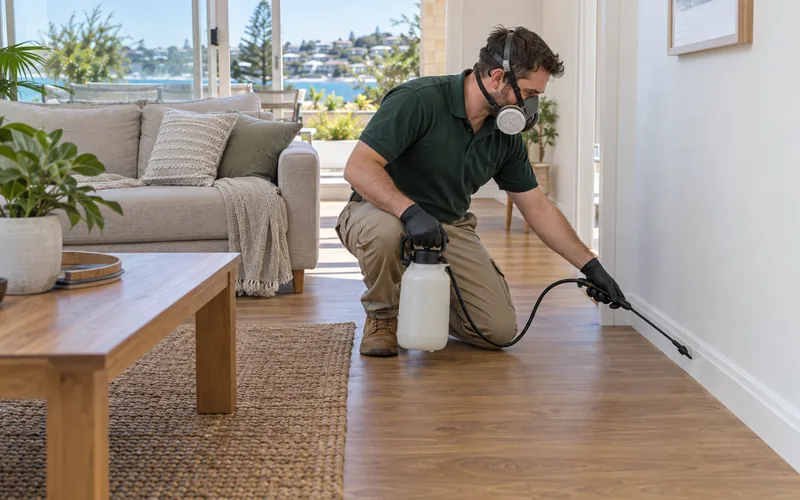
Products, placement and drying times are chosen for homes with kids, dogs, cats and fish tanks, and you are told exactly what to do before and after the visit.
- Low-odour, targeted applications
- Lockable, tamper-resistant bait stations
Inspection before treatment
The technician finds the pest, the entry points and what is attracting it before anything is sprayed, so the treatment is aimed at the cause rather than the symptom.
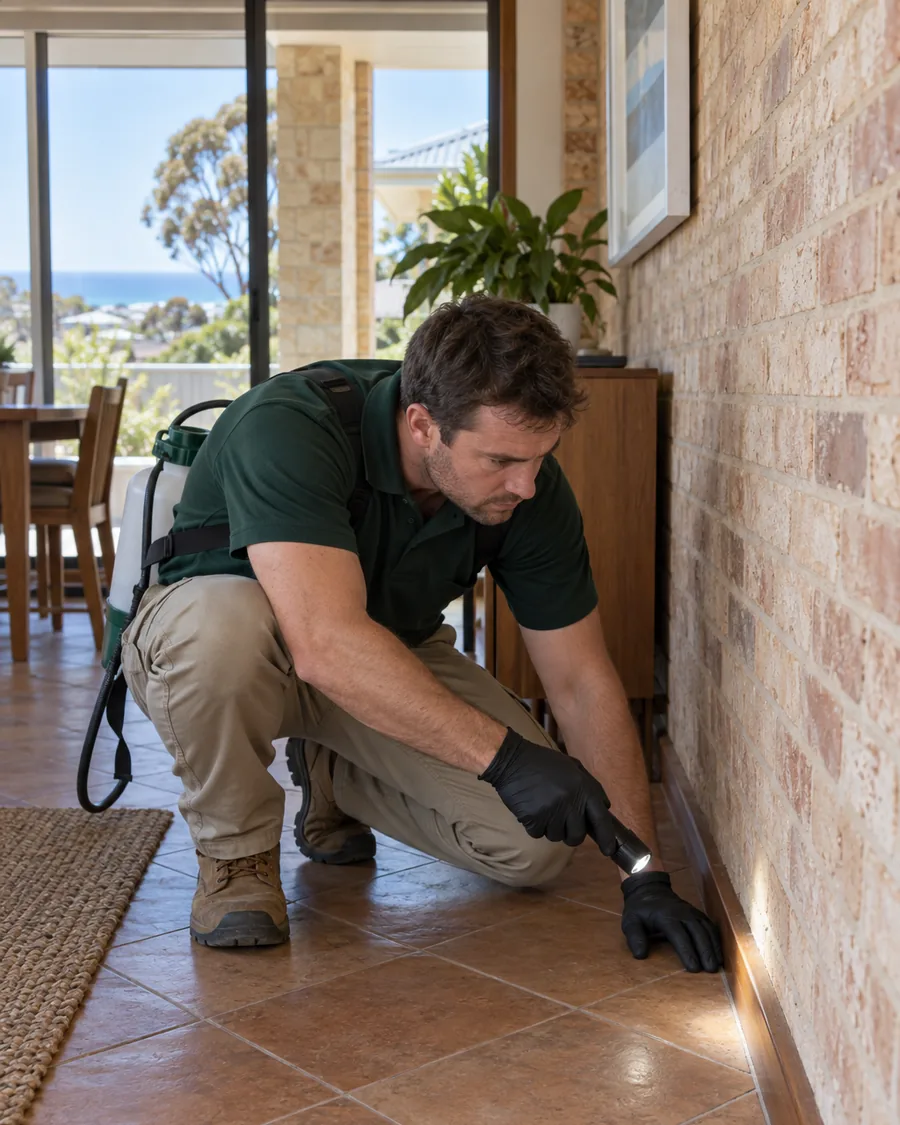
- Roof void, subfloor and perimeter checked
- Findings explained in plain language
Written quote, no surprises
Every quote is in writing before the job starts and says what is treated, what it covers, whether a follow-up is included and what you need to do to keep the pests out.
- Service report after every visit
- Advice on moisture, gaps and garden beds
The technicians we work with are licensed and work to Australian standards
- WA Department of Health Pest Management Technician licence
- AS 3660.2 termite management in existing buildings
- AS 4349.3 timber pest inspections
- Biodiversity Conservation Act 2016 for protected wildlife
Our pest control process for safe and effective results
Every job starts with an inspection and a written quote. What happens next depends on the pest and the property, but the order never changes.
- Licensed local pest control technicians
- Written quote before any treatment
Inspect
A licensed technician looks at the whole property, inside and out, and identifies the pest, where it is coming from and what is attracting it.
Written quote
You get the findings, the recommended treatment and the price in writing before anything starts. No obligation, no pressure.
Treat
The treatment matches the pest and the property: perimeter sprays, gel baits, dusts in roof voids, lockable bait stations, termite soil treatment or baiting.
Protect and follow up
You receive a report and plain advice on what to fix (moisture, entry points, garden beds). Follow-up visits are arranged where the treatment needs them.
1. Is pest control safe for children and pets, and what should I do on the day?
The products used in a residential treatment are registered for use in homes and applied at label rates by a licensed technician, and the standard precautions are simple. On the day, keep children and pets out of treated areas until surfaces are dry, which the technician will confirm before leaving. Cover or remove pet bowls, cover fish tanks and switch off their air pumps, put children's toys away and clear benchtops. Birds and reptiles are more sensitive, so tell the technician about them when booking. If anyone in the house has asthma, allergies or is pregnant, mention it so the treatment plan and the time away from the house can be adjusted.
2. Do I need to leave the house during the treatment?
For a general internal and external treatment, you are usually asked to be out of the house during the application and until treated surfaces have dried, which depends on the products used, the weather and the ventilation. The technician will tell you the time to stay away before starting, and it is stated for your particular job rather than as a fixed rule. External-only treatments do not normally require you to leave. Flea treatments, roof void dusting and some cockroach jobs have their own requirements. Pets should be out of the house or confined to an untreated area, and birds and fish need particular care.
3. What happens if it rains on the day, and how does weather affect the treatment?
Rain affects the external part of a treatment more than the internal part. A residual spray on the eaves, slab edge and fence lines needs time to dry and bind to the surface, so if steady rain is forecast the external work may be rescheduled while the internal treatment goes ahead. Light showers rarely matter under eaves and patios. Wind matters as much as rain, because a spray cannot be applied accurately in strong gusts. Heat also plays a part in summer, with some products applied early in the day. The technician makes the call on the day and reschedules the part of the job that cannot be done properly.
4. What does a written quote include?
The pests covered, the areas of the property to be treated, whether the interior, exterior, roof void and subfloor are included, the class of products to be used, any preparation you need to do, how long you need to stay out of the house, whether a follow-up visit is included and the terms for a re-visit if a listed pest returns. It should also carry the business details and the Pest Management Technician licence held under the WA Department of Health. For an end-of-lease job it should state that a certificate will be provided. If a quote you have been given leaves any of these out, ask for them in writing before comparing it with another.
5. Why do quotes from different pest controllers differ so much?
Usually because the quotes describe different jobs. One may be an external perimeter spray, another an internal and external treatment with the roof void, a third may include a follow-up visit and a written report. The products differ too: a repellent spray is cheaper and quicker than a non-repellent product or a gel bait programme, and it does not work on the same pests. The licence held, the time allowed on site and whether an inspection came first all change the figure. Before comparing totals, line the quotes up item by item and make the scopes match, then ask why anything is missing.
Reach out today for a written pest control quote
Tell us the suburb, what you have seen and whether the property is a rental. You will be contacted to arrange an inspection, and the quote is written before any treatment starts.
How to reach us
- Phone 0468 022 662
- Service area Rockingham and the southern suburbs of Perth. All suburbs