Pest control in Perth is priced from the job, not from a menu, and that is why this site does not publish a price list. A single-storey brick and tile home in Cooloongup with ants in the kitchen is not the same job as a double-storey rental in Baldivis with German cockroaches, a subfloor and a property manager waiting on a certificate. What this guide does instead is explain what a general pest treatment includes, which factors push a quote up or down, and how to tell a thorough quote from a thin one.
What a general pest treatment includes
Most residential quotes in Perth’s southern suburbs are for a general pest treatment, sometimes called a general spray or an annual treatment. On this site the general pest control service covers the pests that arrive in most homes over a year: ants, cockroaches, spiders and silverfish, with fleas, rodents and wasps handled as their own jobs or added on.
A proper general treatment starts with a walk through the property. The technician looks for where the pests are coming from, where they are nesting and what is feeding them, such as reticulation soaking a garden bed against the wall, a leaking tap, a compost bin or a gap under a Colorbond fence. That inspection decides what is treated and with what.
Inside, the work usually covers skirting boards, wet areas, under and behind kitchen appliances, cupboard kick boards, window frames and the roof void. Outside, it covers the perimeter of the slab or footings, eaves, weep holes, fence lines, the pergola, sheds, bins and the meter box. Spider webs are removed so the residual treatment can work. Where German cockroaches are found, gel baits and an insect growth regulator go into the kitchen instead of a broad spray. Where a coastal brown ant colony is active, the nest and the trails are treated rather than the ants alone.
You should get a written record of what was applied, where it went and which pests it covers. That record matters for tenants, for landlords and for anyone comparing quotes.
The factors that change a pest control quote
Two quotes for what sounds like the same job can be miles apart because the jobs are not actually the same. The table below lists what a technician weighs before writing a figure.
| Factor | Why it moves the quote |
|---|---|
| Property size | More floor area and more perimeter means more product, more time and more places for pests to hide. |
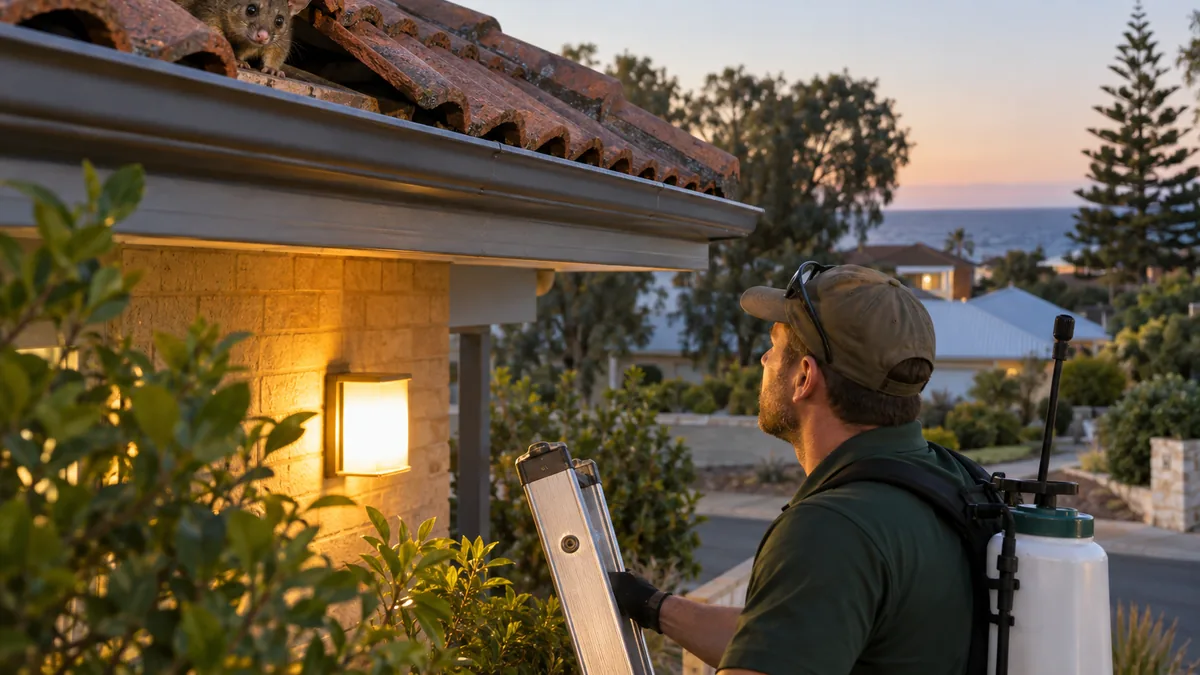
| Single or double storey | Upper floors, balconies and higher eaves take longer and often need ladders or extension equipment for the external work. |
| Pest type | Ants, spiders and silverfish sit inside a general treatment. German cockroaches, bed bugs, fleas, rodents and wasps each need their own approach and products. |
| Severity | A few ants on the bench is a different job from an established colony under the slab. Heavy infestations take more product and usually a follow-up. |
| Internal and external, or external only | An external perimeter treatment alone is quicker. Adding the interior and roof void adds time and adds coverage. |
| Subfloor and roof void access | Older homes in Medina, Hillman and Spearwood with timber floors have subfloors to crawl. Tight or cluttered roof voids take longer to treat safely. |
| Follow-up visits | German cockroaches and fleas need a second visit to break the life cycle. Whether that visit is included changes the total. |
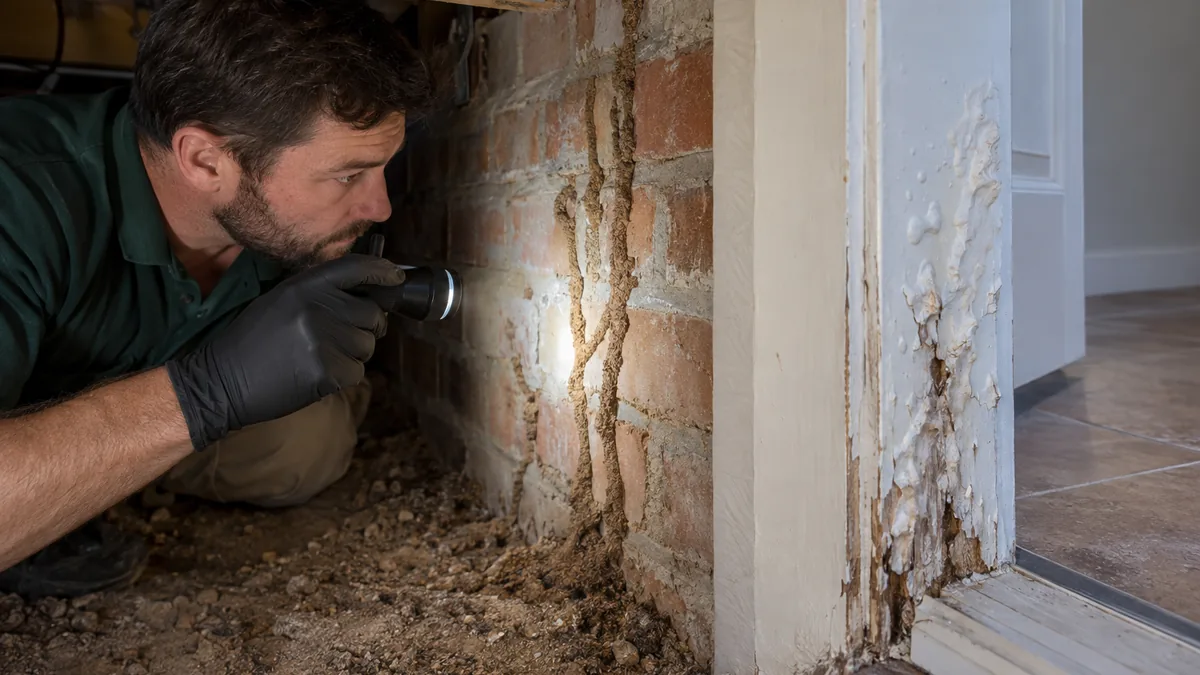
| Termite work versus general pest | Termite inspections and treatments are separate services with their own standards, equipment and reporting. They are never a line item on a general spray. |
| Commercial versus residential | Cafes, warehouses and childcare centres need documented service reports, more frequent visits and sometimes out-of-hours work. |
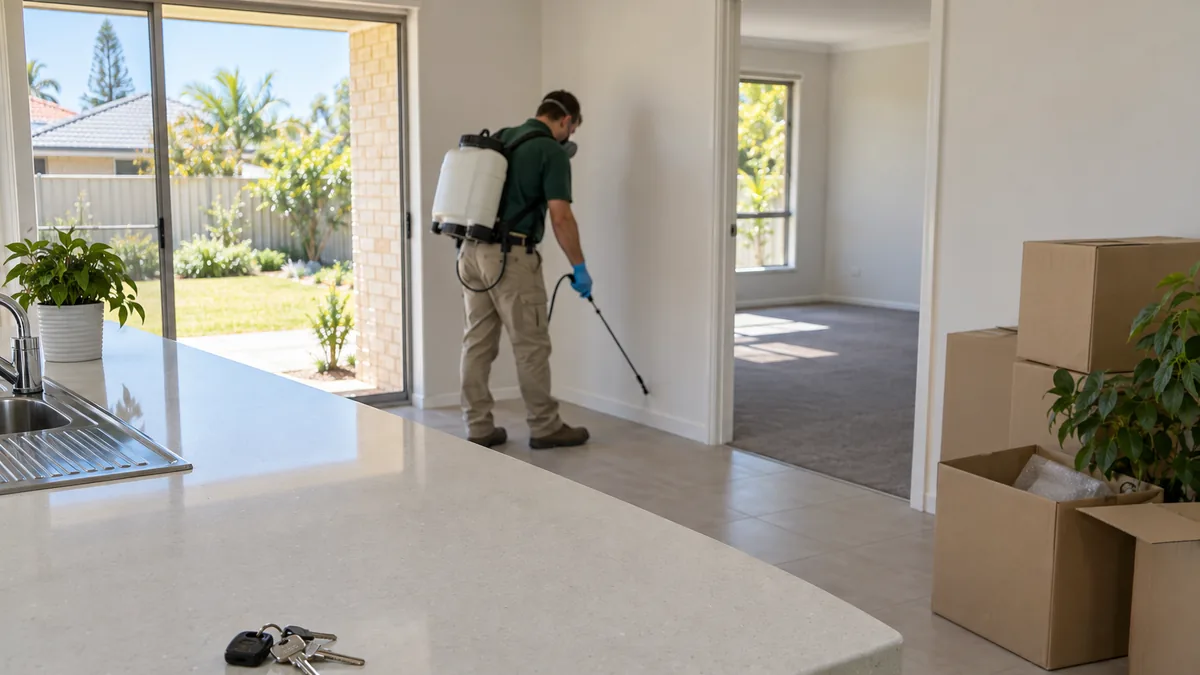
| End-of-lease certificate | A flea or general treatment for a vacating tenant includes a receipt or certificate for the property manager, and usually has to be timed after carpet cleaning. |
None of these is a hidden extra. They are the questions a technician asks on the phone or checks on site, and a good quote states which ones apply to your home.
How to compare two quotes properly
When you have more than one quote in front of you, compare the scope before the total.
Licence. Every technician doing this work in WA must hold a Pest Management Technician licence issued by the WA Department of Health under the Health (Pesticides) Regulations 2011, and the business must be registered. You can ask to see the licence, and a licensed operator will not mind.
What is covered. The quote should name the pests, the areas of the property and whether the interior, exterior, roof void and subfloor are included. A general treatment that lists ants, cockroaches, spiders and silverfish is not the same as one that lists ants and spiders only.
Re-visit terms. If the pests come back within a stated period, what happens? A quote should say whether a re-visit is included, for which pests, and for how long. Ask for this in writing rather than relying on what was said on the phone.
Chemicals used. You do not need the brand names, but you should know the class of product, such as a synthetic pyrethroid, a non-repellent, a gel bait or an insect growth regulator, and you are entitled to the safety data sheet. The choice of product should match the pest.
Written report. After the job, you should receive a record of what was done. For a rental this is the document the property manager asks for. For a home it is what you compare against next year.
The cheapest quote is only the cheapest if it covers the same pests, the same areas and the same re-visit terms as the one beside it. Line the two up item by item before you look at the totals.
Why the cheapest quote can end up costing more
A low figure usually means less has been included, not that someone has found a cheaper way to do the same work.
The common shortcuts are an external-only spray sold as a full treatment, no inspection before the product goes down, a repellent spray used on an ant colony that simply splits and moves next door, a broad spray in a kitchen with German cockroaches where gel bait was needed, and no re-visit when the pests come back. Each of those leads to a second call-out, and two cheap jobs cost more than one thorough one.
The other cost is the paperwork. If you are vacating a rental in Baldivis or Warnbro and the treatment comes with no receipt, or the receipt does not say fleas, the property manager may ask for it to be done again. If a termite problem is missed because a general spray was sold as an inspection, the cost is measured in timber, not in a call-out fee. Termite work is covered on the termite inspection page.
Questions to ask before you book
- Can I see the technician’s WA Department of Health licence?
- Is this quote for the interior and exterior, or the exterior only?
- Which pests are included, and which are not?
- Is the roof void treated, and the subfloor if the house has one?
- What class of product will be used, and can I have the safety data sheet?
- Do I need to leave the house, and for how long after treatment?
- What do I do about pets, fish tanks and children’s toys on the day?
- Is a follow-up visit included, and what are the re-visit terms in writing?
- Will I receive a written report or certificate, and does it name the pests treated?
- If this is an end-of-lease job, does the certificate say what the property manager needs it to say?
Termite work and end-of-lease jobs are quoted separately
A termite inspection is carried out to AS 4349.3 with a moisture meter, sounding and, where used, thermal imaging, and it produces a report rather than a spray. A termite treatment follows AS 3660.2 and is priced on the perimeter of the building, the slab or subfloor construction, the number of holes drilled through paths and paving, and whether a chemical soil treatment or a baiting system is the right option. See termite treatment for how those options differ.
End-of-lease pest control is a smaller, more specific job: usually a flea treatment where a pet was kept, timed after the carpets are cleaned and before the final inspection, with the certificate the property manager asks for.
Getting a quote for your home
The pricing page explains how quotes are built and what is stated before you book. For a figure for your own property, send the details through the quote form with the suburb, the pest you have seen, whether the home is single or double storey and whether it is a rental. The more you tell us, the fewer surprises there are on the day.
Questions on this topic
1. Why is there no price list for pest control on this site?
Because a figure that ignores your property would be a guess. The quote depends on the size of the home, whether it is single or double storey, which pests are involved, how severe the problem is, whether the interior, roof void and subfloor are included and whether a follow-up visit is needed. Those details are checked before a written quote is given, and nothing is treated until you have approved it.
2. What does a general pest treatment in Perth usually cover?
A general treatment covers the common household pests: ants, cockroaches, spiders and silverfish. It includes an inspection, an internal treatment of skirting boards, wet areas, kitchen and roof void, an external perimeter treatment of the slab edge, eaves, weep holes, fence lines and sheds, and web removal. Termites, rodents, bed bugs, fleas and wasps are separate jobs or add-ons, and the quote should say which pests are included.
3. Is an external-only pest spray enough?
Sometimes. If the problem is spiders on the eaves or ants coming in from the garden, a perimeter treatment can be the right job and a cheaper one. If cockroaches are breeding in the kitchen or ants are nesting inside a wall cavity, an external spray will not reach them. The inspection decides which is appropriate, and the quote should state clearly whether the interior is included.
4. How do I check a pest controller is licensed in WA?
Ask to see the technician's Pest Management Technician licence, which is issued by the WA Department of Health under the Health (Pesticides) Regulations 2011. The business should also hold a Pest Management Business registration. A licensed operator will show the licence without fuss. If someone quoting for your home cannot produce one, do not book, regardless of the price.
5. Is a follow-up visit included in a pest control quote?
It depends on the pest and the job. German cockroaches and fleas often need a second visit to break the life cycle, and some general treatments include a re-visit if a listed pest returns within a stated period. Whether a follow-up is included, for which pests and for how long should be written on the quote. If it is not there, ask before you book rather than after.