Termites, or white ants as most people in WA call them, are part of living in Rockingham. The coastal sand, the reticulation, the garden beds pushed up against the walls and the tuart and peppermint trees that make the suburb what it is all suit a subterranean termite colony. This guide covers the signs to look for, why local homes are exposed, what not to do when you find them, and what a proper inspection and treatment look like.
Why Rockingham, Baldivis and Kwinana homes get termites
The termite that does most of the damage in Perth is Coptotermes acinaciformis. It is subterranean, it nests in the base of living trees and under concrete slabs, and it travels underground through the soil to reach timber. It is active all year in Perth’s climate and it is very good at staying hidden.
Around Rockingham the soil is fast-draining dune sand. That sounds like poor termite country, but it means the moisture a colony needs comes from us: reticulation running against the house, garden beds built up over the slab edge or weep holes, air-conditioner drip lines, leaking taps and hot water system overflows. A damp strip of sand against a wall is a highway.
Timber in contact with the ground is the next factor. Retaining sleepers, pergola posts set into soil, timber edging, stacked firewood and buried form work left from construction all give a colony food and cover close to the house. Tuart, peppermint and other mature trees carry nests in their bases, and a stump left in a yard is a nest waiting to be used.
Housing stock matters too. The 1960s to 80s brick and tile homes in Cooloongup, Hillman and Medina often have timber floors, subfloors and timber roof frames, which give termites both a way in and plenty to eat. In Baldivis and the newer estates on the edge of cleared bush, colonies that lived in the scrub do not leave when the bulldozers arrive. They move into the nearest timber, which is now a house.
The signs of termites to look for
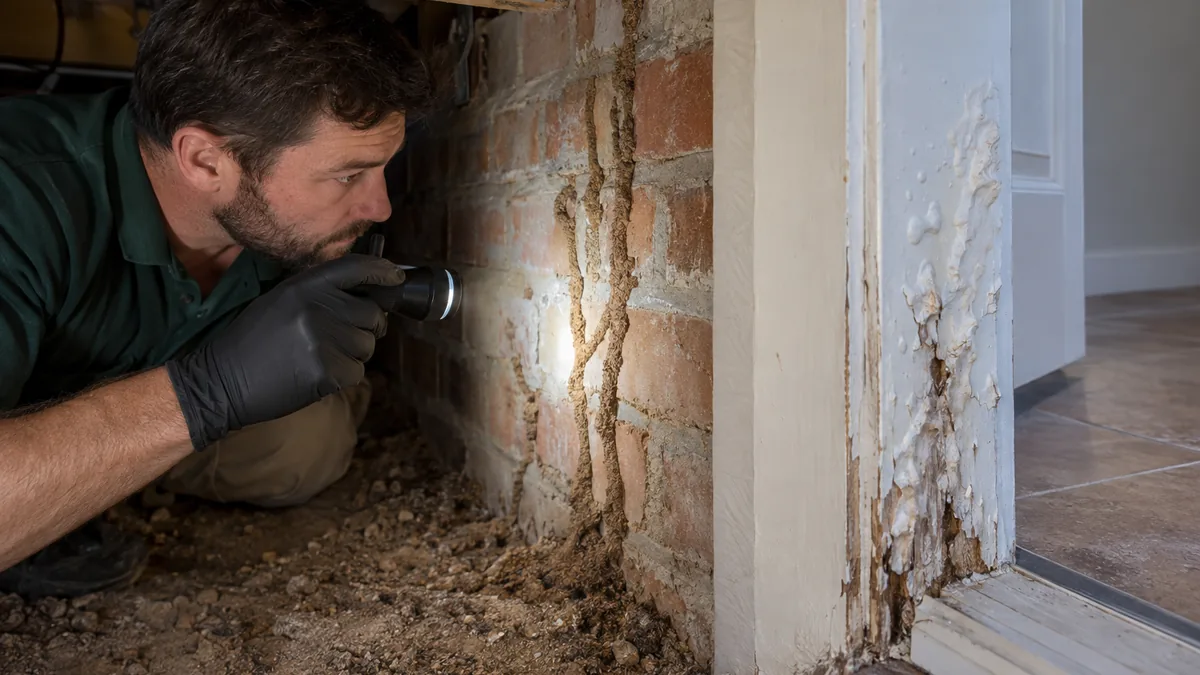
Mud leads. Termites build tubes of soil, saliva and droppings to travel across anything that is not soil. Look on the outside of the slab edge, up piers in a subfloor, on retaining walls, on the inside of the meter box and up the sides of fence posts. A lead the width of a pencil is easy to miss under a garden bed.
Hollow-sounding timber. Termites eat from the inside and leave a thin skin of paint or timber. Tap along skirting boards, architraves, door jambs and window sills with the handle of a screwdriver. A dull, papery sound where the rest is solid is a sign.
Blistered or bubbling paint. Termites bring moisture with them. Paint on a skirting or a door frame that lifts, bubbles or looks water-damaged with no plumbing nearby needs a closer look.
Doors and windows that have become tight. Timber that swells from termite moisture, or frames that have been eaten out, can jam. If a door that closed cleanly last year now sticks, do not assume it is the weather.
Alates in spring. Swarmers, the winged reproductives, leave the nest on warm humid evenings in spring and early summer, and sometimes in autumn. A pile of shed wings on a window sill, or a cloud of flying insects around an outside light, means a mature colony is close. Alates near the house are not proof it is in the house, but they are reason to book an inspection.
Other signs. Sagging floors, a soft patch in a timber deck, a power point that stops working, brittle timber in the roof void and tiny piles of droppings below timber all count.
What not to do when you find them
Do not disturb them. Do not pull the mud lead off, do not prise open the skirting and do not spray the area with a supermarket insect spray. Coptotermes colonies react to disturbance by abandoning that lead and opening another one somewhere you cannot see, and a repellent spray does the same thing faster. The workers you can see are a tiny fraction of the colony, and the colony is not in your wall. It is in a tree or under a slab nearby.
Cover the area if you can, take a photo, note where it is and leave it. The inspection needs the activity intact, because active termites are what a treatment is designed to reach.
Finding termites is not the problem. Spraying them is. Leave the lead where it is, take a photo and book an inspection.
What a termite inspection involves
A termite inspection is carried out to AS 4349.3, the Australian Standard for timber pest inspections. It is a visual inspection of every accessible part of the building and the grounds, inside and out. That includes the roof void, the subfloor if there is one, every room, the exterior walls and slab edge, fences, retaining walls, trees, stumps and stored timber within the property.
The technician uses a torch and a probe, a moisture meter to find damp timber and walls, sounding to find hollow timber and, where used, a thermal camera to pick up heat and moisture patterns behind surfaces. In WA, pest management technicians are licensed through the Department of Health. The report lists any active termites found, any damage, the conditions around the house that make it attractive to termites, and the areas that could not be inspected, such as behind built-in cupboards or under a low deck.
That last part matters. An inspection to AS 4349.3 cannot confirm there are no termites in concealed spaces it could not reach. It reduces the risk and tells you where the risk sits, which is why the report is worth reading rather than filing.
Treatment options under AS 3660.2
Termite management in an existing home follows AS 3660.2. The options depend on how the house is built, where the termites are and where the colony is likely to be.
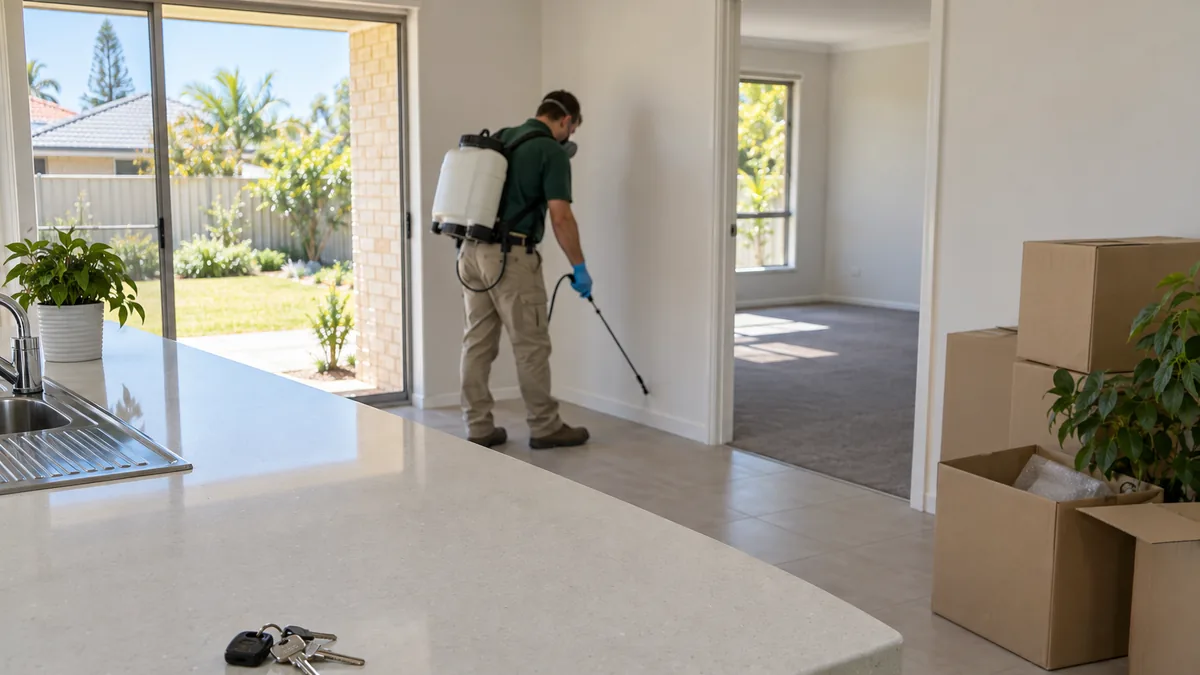
Chemical soil treatment. A treated zone is created in the soil around the perimeter of the building and under any slab penetrations. Soil is trenched against the footings, and paths, paving and garage slabs are drilled and injected so the zone is continuous. Non-repellent termiticides are the common choice because termites pass through the treated soil without detecting it and carry the product back into the colony.
Baiting and monitoring. Stations are placed in the ground around the house and, where there is active termite feeding, directly on the activity. Termites feed on the bait, which contains an insect growth regulator, and take it back to the nest. Baiting takes patience and repeat checks, but it is the option where drilling is impractical or the colony needs to be eliminated rather than kept out.
Physical barriers. Stainless mesh, graded stone and sheet systems are installed during construction or renovation under AS 3660.1, and they are not something that can be added to a finished house.
The termite treatment page explains how these are chosen and what the ongoing management looks like. Any treated home should have its own durable notice in the meter box stating what was done and when.
Annual inspections and what you can do yourself
AS 3660.2 recommends inspections at least every twelve months, and more often where the risk is higher, which in this part of Perth includes homes backing onto bushland, homes with timber floors and homes with a history of activity. An annual inspection is the difference between finding termites in a fence post and finding them in a roof frame.
Between inspections, keep reticulation off the walls, keep garden beds below the slab edge and weep holes, fix leaking taps and drip lines, store timber off the ground and away from the house, remove stumps, and keep the subfloor vents clear. None of that replaces an inspection, but it removes the reasons termites had to come to your house in the first place.
If you have seen any of the signs above, or the house has never been inspected, the termite inspection page explains what to expect and how the report is used. If you are buying in Rockingham, Baldivis or Kwinana, a timber pest inspection before settlement is the normal step, and the report will tell you more about the house than the sales brochure.
Questions on this topic
1. Are termites common in Rockingham and Baldivis?
Yes. Coptotermes acinaciformis, the most destructive termite in WA, is established across Perth's southern suburbs. Sandy soil drains fast, so the moisture from reticulation, garden beds against walls and leaking taps concentrates termite activity around houses. Older homes with timber floors in Cooloongup and Medina and newer estates built on cleared bush in Baldivis both see regular activity, which is why annual inspections are recommended in this area.
2. What are the first signs of termites in a house?
Mud leads on the slab edge, piers or meter box, skirting boards or architraves that sound hollow when tapped, paint that blisters with no plumbing nearby, doors and windows that have become tight, and shed wings on window sills after a warm evening in spring. Any one of these is enough to book an inspection. Do not remove or spray what you find, because the inspection needs the activity intact.
3. What should I do if I find termites in my home?
Leave them alone. Do not break the mud lead, open the timber or spray them, because disturbed termites abandon that spot and reappear where you cannot see them. Cover the area lightly, take a photo, and book a termite inspection. The technician will confirm the species, map the activity and conditions, and recommend a treatment under AS 3660.2. A few days waiting for a proper inspection is better than a spray that scatters the colony.
4. Does a termite inspection find every termite?
No inspection can. An inspection to AS 4349.3 is a visual inspection of accessible areas using a torch, probe, moisture meter, sounding and, where used, thermal imaging. It cannot see inside walls, behind fixed cupboards or under a low deck, and the report lists those limitations. What it does is find active termites, damage and conducive conditions in every reachable area and tell you where the remaining risk sits.
5. How often should a Rockingham home be inspected for termites?
AS 3660.2 recommends a termite inspection at least every twelve months. In higher-risk situations, such as homes backing onto bushland in Baldivis or Karnup, homes with timber floors and subfloors, or homes with a treatment history, more frequent inspections may be recommended. A treated home should also have a durable notice in the meter box stating what was done and when the next inspection is due.
6. What is the difference between a chemical treatment and baiting?
A chemical soil treatment creates a continuous treated zone in the soil around the building, with paths and paving drilled and injected, using a non-repellent termiticide that termites carry back to the colony. Baiting places monitoring stations around the house and bait directly on active termites, which take an insect growth regulator back to the nest. Baiting is slower and needs repeat checks, but it suits homes where drilling is impractical.