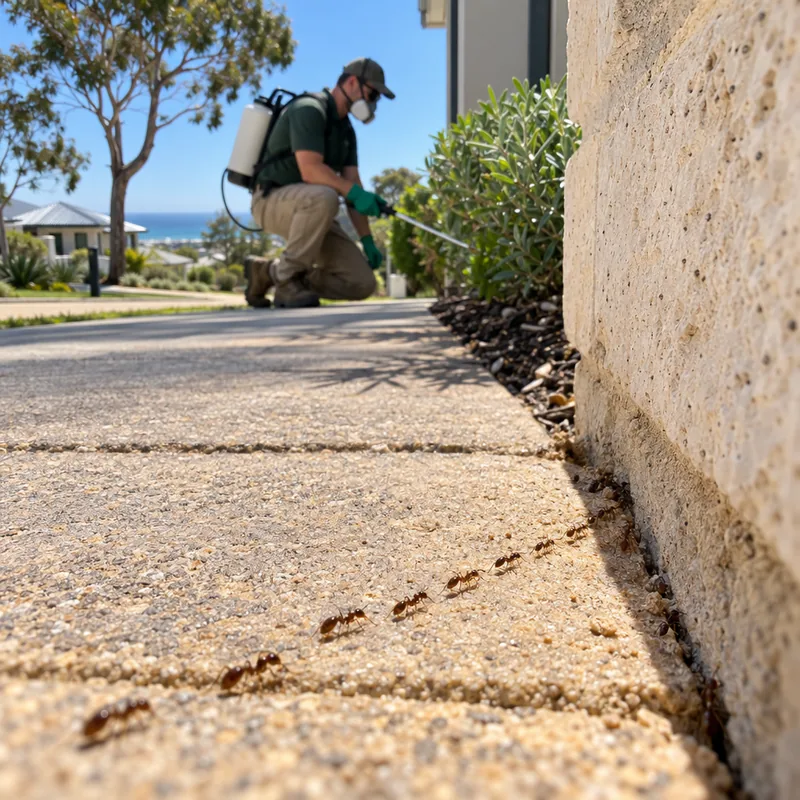
Ants are the most common reason a household in the southern suburbs calls for pest control in summer, and the most common reason a supermarket spray disappoints. The trail across the bench is a few hundred workers from a colony that may hold tens of thousands, living under the paving, in the wall cavity or in a garden bed three houses down. Ant control that lasts finds the nest and treats the colony, and this page explains how that is done across Rockingham, Baldivis, Port Kennedy and the rest of Perth’s south.
Why ants are a problem in Rockingham and Perth’s south
The sandy soils along the coast from Waikiki to Golden Bay are ideal ant habitat: easy to tunnel, fast draining and warm. Perth’s hot dry summers then push the colonies towards the only reliable water around, which is your home. The drip tray under the fridge, the dog bowl, the bathroom floor, the air conditioner drain and the reticulation line along the wall all pull ants in from December onwards. Newer estates in Baldivis, Secret Harbour and Port Kennedy sit on freshly cleared sand where the ant colonies were already established, and a new house with paving and irrigation is simply a better version of what they had. Older homes in Rockingham and Safety Bay have weep holes, cracked mortar and timber frames that give ants a way into the wall cavity and roof void.
The ants we see most
The coastal brown ant, also called the big-headed ant, is the dominant pest ant in Perth. It is small and brown, forms large colonies with many queens, throws up fine sand along paving joins and lawn edges, and trails into kitchens and bathrooms in numbers. Because a colony has multiple queens and nests, spraying one trail achieves very little.
Black house ants are small and black, nest in wall cavities, roof voids, under floors and in electrical fittings, and are the ants that come out of power points and light switches. White-footed house ants trail along benchtops and window frames and are harder to bait than most. Argentine ants have been the subject of control programmes in Perth over the years and form huge cooperative colonies where they occur. Bull ants live near bushland edges in Baldivis, Karnup and the Armadale foothills, sting painfully and are treated at the nest. Identifying the species is the first job on any visit because the bait and the method change with it.
Finding the nests
The technician follows the trails. Inside, that means tracing ants from the bench or bath back to the gap in the tiling, the weep hole, the power point or the crack behind the skirting they came through. Outside, it means checking paving joins, lawn edges, the base of retaining walls, pot bases, mulch beds, reticulation boxes, meter boxes and the slab edge for nest entrances and fine sand. Where the nest is in a wall cavity or under a slab and cannot be reached, the trail itself becomes the treatment route. The inspection also identifies what is drawing the ants in, because a dripping tap or a bed of mulch against the brickwork will bring the next colony as soon as this one is gone.
How ant treatment works
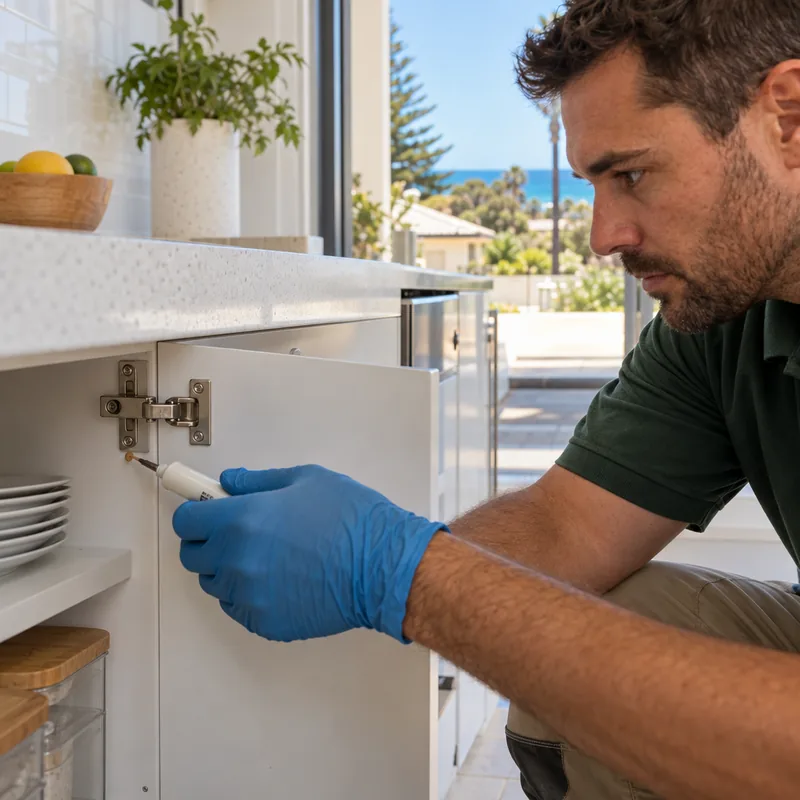
Nests that can be reached are treated directly with a residual insecticide or a dust into the nest, which deals with that colony outright. Nests that cannot be reached are treated with bait. Ant bait, granular or gel depending on the species, is laid along the trails and at the nest entrance, the workers carry it back and feed it to the queens and brood, and the colony declines over the following days and weeks. For coastal brown ants with their many queens, bait is the only approach that reaches the whole colony.
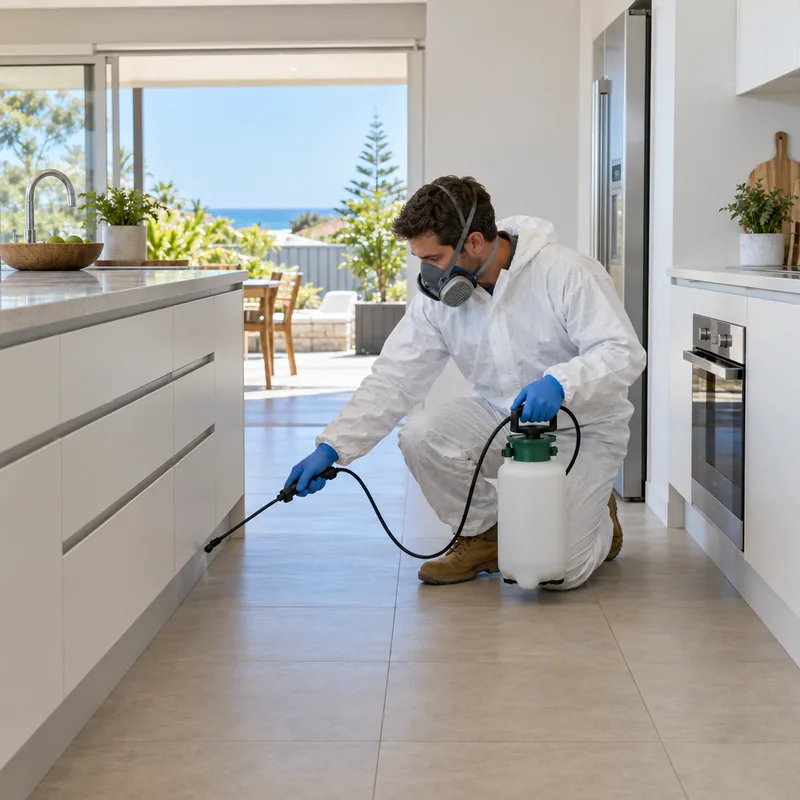
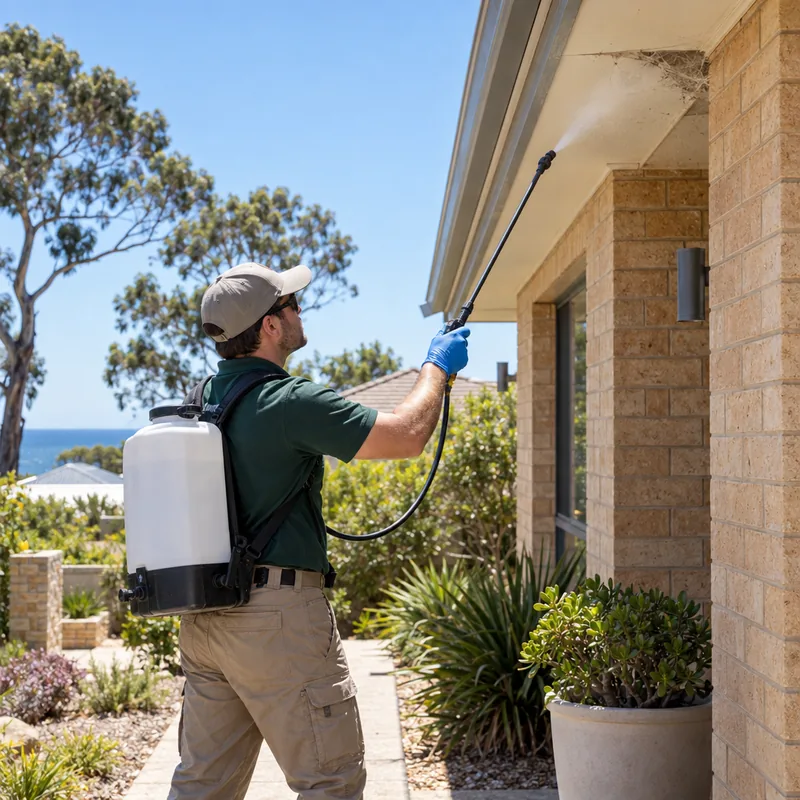
A non-repellent residual treatment is then applied to the external perimeter, weep holes, paving joins, window and door surrounds and other entry points. Non-repellent matters: ants walk through it without noticing and carry it back, rather than being pushed sideways into a new entry point the way a repellent spray does. Inside, treatment goes into cracks, crevices and the edges of wet areas rather than across open floors. Ants in power points, meter boxes and air conditioner units are treated with a dust designed for electrical fittings. Ant treatment is a standard part of a general pest treatment where ants are found, and a dedicated visit is used when the colony is large or the problem has resisted previous attempts.
On the day and how to prepare
Do not spray the trails before the visit. A repellent spray scatters the workers and pushes the colony into the walls, and it removes the trail the technician needs to follow. Wipe up food, empty the kitchen bin, put pet bowls away and keep pets and children out of the rooms being treated until surfaces are dry. Bait placed along trails should be left alone; it looks like the ants are feasting, and that is the point. Appointments are booked around your schedule and most homes take an hour or so, longer for a big block with many nests.
Keeping ants out
Move reticulation so it does not soak the base of the walls, and pull mulch and garden beds back from the brickwork. Fix dripping taps, run the air conditioner drain to a proper outlet and dry the area around pet bowls. Store sugar, honey, pet food and cereal in sealed containers and rinse recycling. Seal gaps around pipes and cables where they enter the house, and repoint cracked mortar on older homes in Waikiki and Rockingham. Keep paving joins topped with sand and compacted; the loose sand of a neglected join is a perfect coastal brown ant nest. Prune shrubs and trees off the walls and roof, because ants use them as bridges the same way rats do.
When to call and what to ask
If ants are inside daily through summer, if the paving is moving or the pool surround is sinking from nests underneath, if ants are coming out of power points or if a supermarket spray has failed twice, it is time for a proper ant treatment. If you have been searching for an ant exterminator, what you want is a technician who finds the nest rather than one who sprays the trail. Ask to see the Pest Management Technician licence, issued by the WA Department of Health under the Health (Pesticides) Regulations 2011. Ask which species was found, whether a bait or a direct nest treatment is proposed and why, whether the perimeter product is non-repellent and what the follow-up is if a large colony needs a second round.
Ant pest control in Perth’s southern corridor, across Baldivis, Port Kennedy, Golden Bay and Kwinana, is arranged through the quote form. Every job is inspected and quoted in writing first, and the post on what changes a pest control quote explains what affects the figure. Spiders and cockroaches are usually dealt with in the same visit; see the spider control and cockroach control pages.
What is included
- Inspection inside and out to identify the species and follow trails back to nests
- Direct treatment of nests found in lawn, paving edges, garden beds, retaining walls, pot bases and wall cavities
- Granular or gel ant bait laid along trails where the nest cannot be reached, so workers carry it back to the queens
- Non-repellent residual treatment to the external perimeter, weep holes, paving joins and entry points
- Internal crack and crevice treatment around kitchens, bathrooms, laundries and pet feeding areas
- Treatment of ants nesting in electrical fittings, meter boxes and reticulation control boxes
- Advice on the moisture and food sources drawing ants inside, and a written treatment record
Signs you should call
- Trails of small brown ants across the kitchen bench, around the dog bowl or through the bathroom
- Ants swarming on the paving or lawn on a hot afternoon, with fine sand mounds along the joins
- Black house ants inside walls, roof voids or coming out of power points and light fittings
- Ants in the dishwasher, kettle base, meter box or air conditioner unit
- Ant nests undermining pavers, pool surrounds or the base of retaining walls
- Bull ants or other stinging ants near a bush block, play area or verge
- An ant problem that comes back within weeks of a supermarket spray
Ant Control in four steps
Inspect
The technician identifies the species, follows the trails back to the nests inside and outside and notes the water and food sources drawing them in. Coastal brown ants and black house ants need different treatments, so identification comes first.
Written quote
You receive a written quote setting out the nests found, the treatment method for each, the perimeter work and any bait programme. Nothing is applied before you have seen it.
Treat
Reachable nests are treated directly, trails are baited where the nest is hidden, and a non-repellent residual is applied to the perimeter and entry points. Inside, cracks, crevices and wet areas are treated rather than open surfaces.
Protect and follow-up
Bait keeps working as it is carried back to the colony over the following weeks. You receive advice on reticulation, mulch, pet bowls and paving that keep ants out, and a follow-up is arranged if a large colony needs a second round.
Kids, pets and the ant baits
Ant baits are placed along trails and at nest entrances, in bait stations or under cover where children and pets do not walk, and sprays are applied to cracks, crevices and the perimeter rather than open floors. Keep pets and children out of treated rooms until surfaces are dry. Before the visit, wipe up food spills, put pet bowls away, empty the kitchen bin and do not spray the trails yourself. A trail that has been sprayed with a repellent can scatter the colony into the walls and make the job harder.
Frequently asked questions
1. What ants are in my Rockingham home?
Most often the coastal brown ant, a small brown ant with a larger big-headed soldier caste, which is the dominant pest ant across Perth and nests in sand along paving, lawn edges and slab edges. Black house ants are the small black ones coming from wall cavities, roof voids and electrical fittings. White-footed house ants trail along benchtops and window frames and have pale lower legs. Argentine ants form huge colonies where they occur. Bull ants are large, stinging and found near bushland in Baldivis, Karnup and the foothills. The technician identifies the species on the visit, because it decides whether bait or direct treatment is used.
2. Why do ants come inside every summer in Perth?
Water. Perth summers are hot and dry for months, the sandy coastal soil holds none of it, and the colonies under the paving and lawn go looking. A house offers the dog bowl, the drip tray under the fridge, the shower floor, the kitchen sink, the air conditioner drain and the reticulation line along the wall, all of it a short walk from the nest. Food is a bonus. That is why the ants appear in December, why they head for kitchens and bathrooms first, and why fixing drips and moving reticulation off the walls makes such a difference to how many come back.
3. Why did the ants come back after I sprayed them?
A supermarket surface spray kills the workers on the trail and repels the rest, but the queens and brood in the nest were never touched, and a coastal brown ant colony has many queens spread across several nests. The colony simply sends workers by another route, sometimes into the wall cavity where the problem is worse. Ant treatment that lasts uses bait the workers carry back to the queens, direct treatment of nests that can be reached and a non-repellent perimeter product that ants walk through and carry home rather than avoid. That is why we ask you not to spray before the visit.
4. How is coastal brown ant treatment different from black house ant treatment?
Coastal brown ants nest in the ground, in sand along paving, lawn edges and the slab, and have multiple queens, so the treatment is a granular bait laid along trails and at nest entrances plus direct treatment of the nests that can be found. Black house ants nest inside the structure, in wall cavities, roof voids, under floors and in electrical fittings, so the treatment uses a dust into the cavities and fittings, a gel or liquid bait along their internal trails and a non-repellent treatment of the entry points. Treating one as if it were the other is the usual reason an ant problem drags on.
5. Do you treat ants nesting in paving and retaining walls?
Yes, and it is one of the most common ant jobs in the newer estates of Baldivis, Port Kennedy, Secret Harbour and Golden Bay, where paving is laid on sand. Coastal brown ants tunnel through the bedding sand, throw it out onto the surface and over time the pavers sink and rock. The nests are treated directly through the joins and the trails baited so the whole colony is reached. After treatment, sweeping dry jointing sand back into the gaps and compacting it removes the loose sand the ants prefer. Retaining wall nests are treated at the weep holes and the base of the wall.
6. Is ant treatment safe for pets and children?
Baits are placed along trails, at nest entrances and in stations, in small amounts and away from where children and pets walk or eat, and sprays go into cracks, crevices and the perimeter rather than across open floors. Products are registered for use around homes and applied at the label rate by a licensed technician. Keep pets and children out of treated rooms until surfaces dry, wipe benches before preparing food and put pet bowls back out only after the technician says so. Tell us about fish tanks, birds and reptiles, which are more sensitive, and about a dog that eats anything it finds on the ground.
7. How long before the ants are gone?
Direct nest treatment stops that nest straight away. Bait takes longer by design, because the workers need to carry it back and feed it through the colony, so you will often see more ants on the bait for a few days before the numbers fall over the following one to three weeks. A large coastal brown ant colony with several nests may need a second bait round at the follow-up visit. Ants from a neighbouring block can arrive later in the season, which is what the perimeter treatment is for. If trails are still active weeks later, tell us and the technician will look for the nest that was missed.