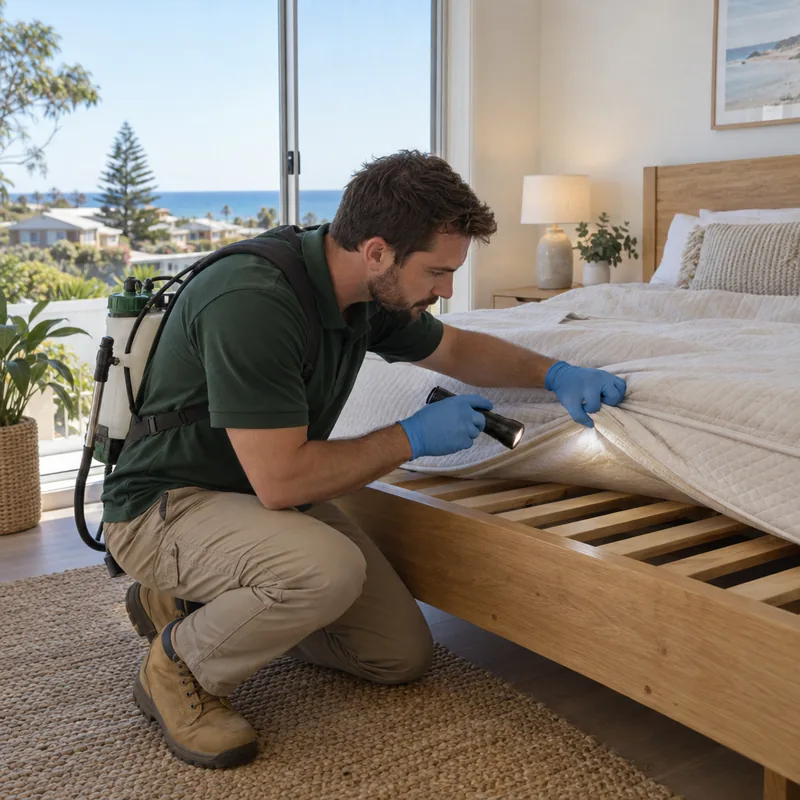
Bed bugs do not care whether a home is clean. They care whether someone sleeps in it. Across Rockingham, Mandurah and the Kwinana suburbs they arrive in suitcases from a holiday, in a couch picked up from a verge in Waikiki, in a second-hand bed frame from an online marketplace, or with a guest at a holiday let in Halls Head. This page covers how bed bugs get in, how to tell them from fleas and mosquitoes, why bed bug treatment in Perth takes more than one visit, what the technician does, and what you need to do yourself for the treatment to work.
How bed bugs arrive in southern suburbs homes
Bed bugs are hitchhikers. They cannot fly or jump, and they do not come in from the garden. An adult is the size and colour of an apple seed, flat enough to slip into a seam, a screw hole or the fold of a backpack, and it can go months without feeding. That is how they survive a trip in luggage, a week in a removalist’s truck or a summer in a stored mattress.
The typical stories we hear in Rockingham and the Peel suburbs are travel and second-hand furniture. Someone comes back from a hotel, hostel or work camp and unpacks the suitcase onto the bed. A family in Baldivis picks up a free couch or bunk bed. A holiday let in Mandurah or Falcon turns over guests every few days and one of them brings bugs in. Shared houses and units in Kwinana Town Centre pass them between rooms through wall cavities and shared walls. None of it is a hygiene failure.
Bed bugs, fleas or mosquitoes?
The bite pattern is the first clue. Bed bug bites tend to appear overnight in lines or clusters on skin that was exposed while sleeping: arms, shoulders, neck and torso. Flea bites cluster on the ankles and lower legs and usually come with a pet. Mosquito and midge bites around the Rockingham Lakes wetlands or the Peel estuary are random, single and worst around dusk outdoors.
The evidence in the bed settles it. Pull the fitted sheet off and look along the mattress seams, the piping and the label with a torch. Bed bugs leave small dark spots of digested blood, like the dot of a felt-tip pen, along with pale cast skins and sometimes live bugs in the seams, the joints of the bed frame, behind the headboard and in the screw holes of a bedside table. Heavy infestations have a sweet, musty smell. If you find fleas instead, the flea control page is the one you want.
Why bed bug treatment takes more than one visit
No residual insecticide reliably kills bed bug eggs, and the eggs are glued into places a spray does not reach: deep frame joints, behind skirtings, inside the hollow legs of a bed, in the folds of a mattress cover. Heat and steam kill eggs where they reach them, but they cannot be applied everywhere in a furnished bedroom. So the first visit kills the adults and nymphs that are out and about, and a follow-up visit is timed for the nymphs that hatch a week or two later and start moving across treated surfaces to feed.
That is why bed bug removal is quoted as a job with a set number of visits, not as a single spray. A single visit that promises to finish the problem usually means a second call a month later, when the population has rebuilt from the eggs.
What the treatment involves
The technician inspects every room, not just the bed where the bites happened. Bed bugs move once people start sleeping on the couch or spraying supermarket products, and a treatment that misses the spare room is a treatment that fails. Evidence is confirmed before anything is applied.
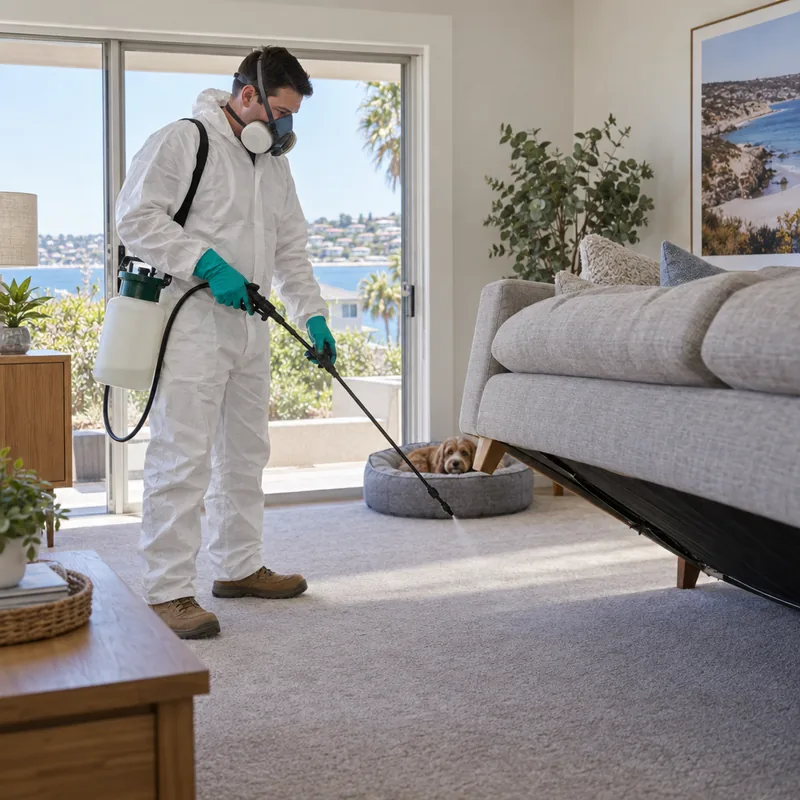
Treatment then targets the harbourages. Mattresses and bases are steamed or treated along the seams and tufts, bed frames are pulled apart and treated at every joint, headboards are taken off the wall, skirtings, wall fixtures, curtain hems, bedside furniture and the edges of the carpet are treated with a residual insecticide. Where heat is practical it is used on the mattress and frame because it kills eggs on contact. Beds are reassembled and can normally be slept in that night once surfaces are dry, which the technician confirms.
The residual keeps working between visits, and the bed itself becomes the bait: the bugs must cross treated surfaces to reach you. Mattress encasements and interceptor cups under the bed legs are useful additions and the technician will say whether they are worth it in your case.
Your part in the treatment
Bed bug control only works with the resident’s cooperation, and the preparation checklist arrives with the quote. Strip the beds and bag everything soft from the affected rooms: sheets, doonas, pillows, clothing, curtains, soft toys. Hot-wash and hot-dry them, then keep them sealed in clean bags until the job is closed off. Empty the bedside drawers and the wardrobe floor, pull the beds and furniture away from the walls and reduce the clutter under and around the bed. Vacuum the seams, frame and floor edges and empty the vacuum into an outside bin.
Two things not to do. Do not move to another room, because the bugs follow the sleeper and you double the treatment area. And do not spray the bed with supermarket aerosols first, because repellent sprays scatter the bugs into the walls and the next room, where they are much harder to find.
Rentals, holiday lets and shared houses
Bed bugs are a regular part of the rental and short-stay market from Wellard to Falcon. For a holiday let, the practical questions are how quickly the rooms can be inspected between bookings and how the follow-up visit fits around guests. For a long-term rental, the question is usually who pays. WA’s Residential Tenancies Act 1987 governs, landlords are generally responsible for pests present at the start of a tenancy and tenants for infestations caused by their conduct, but we do not give legal advice. Check your lease and the Consumer Protection WA tenancy guidance. What we provide is a written inspection report describing the extent and likely age of the infestation that both sides can rely on, and, where a tenancy is ending, the end of lease pest control page explains how a vacate treatment is documented.
Written quote before any treatment
Every bed bug job starts with an inspection, because the number of rooms affected decides the number of visits and the price. The quote is in writing, sets out the preparation, the method and the follow-up, and nothing is treated until you agree to it. The technician holds a WA Department of Health Pest Management Technician licence you are welcome to ask to see, and the post on what changes a pest control quote in Perth explains the factors. Use the quote form or call, and you will be contacted to arrange a time that suits.
What is included
- Inspection of every bedroom and living area, not just the bed where the bites happened
- Mattress seams, bed frames, slats, headboards, bedside tables and skirtings checked with a torch and confirmed with live bugs, cast skins or spotting
- Residual chemical treatment of harbourages in the bed, furniture, skirtings and wall fixtures, with heat or steam used where practical
- Treatment of the room next door and rooms the bugs may have moved into after supermarket sprays
- Written preparation checklist covering laundering, bagging and decluttering before each visit
- Follow-up visits scheduled in the quote to catch the nymphs that hatch from eggs after the first treatment
- Advice on mattress encasements, bed isolation and what to check when travelling or buying second-hand
- Discreet service and a report for property managers or holiday-let owners where required
Signs you should call
- Bites in lines or clusters on the arms, neck, shoulders or torso that appear overnight
- Small dark spots, like a felt-tip pen dot, along mattress seams, on the bed frame or behind the headboard
- Rusty blood smears on sheets from a bug squashed in the night
- Live bugs the size of an apple seed, flat and reddish-brown, or pale cast skins in the bed frame joints
- Bites that started after a trip, a stay in a hotel or hostel, or a second-hand couch or bed brought home
- A sweet musty smell in a bedroom with a heavy infestation
- Bugs found in a rental you have just moved into or a holiday let between guests
Bed Bug Treatment in four steps
Inspect
The technician inspects every room, because bed bugs spread beyond the first bed once people start sleeping elsewhere or spraying. Evidence is confirmed before anything is treated, so you know what you are dealing with.
Written quote
The quote sets out which rooms are affected, the treatment method, the number of visits and the preparation you need to do before each one. Bed bug treatment is priced for the whole job, not one visit.
Treat
Harbourages in the bed, furniture and room edges are treated with a residual insecticide, with heat or steam used on mattresses and frames where practical. Beds are reassembled so they can be slept in that night unless the technician says otherwise.
Protect and follow up
Eggs are not reliably killed by any chemical, so a follow-up visit treats the nymphs that hatch in the following weeks. The job is closed when a final inspection finds no live bugs or fresh evidence.
Kids, pets and getting the room ready
Bag and hot-wash all bedding, clothing and soft toys from affected rooms, dry them on high heat and keep them sealed until the treatment is done. Do not move to another bedroom or the couch, as the bugs follow you and the problem spreads. Children and pets stay out of treated rooms until surfaces are dry, which the technician confirms on the day. Tell us about asthma, pregnancy or chemical sensitivities when booking. Mattresses are treated, not thrown out; a mattress dumped on the verge spreads bed bugs to the neighbours.
Frequently asked questions
1. How did bed bugs get into my home?
They hitchhiked. Bed bugs travel in luggage, backpacks, bedding and the seams of second-hand furniture, and they arrive in Rockingham and Mandurah homes from hotel stays, hostels, FIFO camps, university accommodation, kerbside couches and marketplace bed frames. A holiday let in Halls Head can pick them up from one guest and pass them to the next. Once inside they walk to the nearest bed and settle in the seams and frame joints within reach of a sleeping person. Where they came from matters less than treating every room they have spread to.
2. Does having bed bugs mean my house is dirty?
No. Bed bugs feed on blood, not on dirt or food scraps, and a spotless home with a good mattress is just as attractive to them as any other. They turn up in expensive hotels, hospitals and brand-new estates in Baldivis alike. Clutter does not cause bed bugs, but it gives them more places to hide and makes treatment slower, which is why decluttering is on the preparation list. There is no reason to feel embarrassed about calling, and the technician has seen it all before.
3. Why does bed bug treatment take more than one visit?
Because the eggs survive. Residual insecticides kill the adults and nymphs they contact, and heat or steam kills eggs it reaches, but eggs cemented deep in a frame joint or behind a skirting can hatch a week or two later. The follow-up visit is timed for that hatch, and the treated surfaces are still active to catch nymphs as they move to feed. A single visit that is sold as a complete solution usually means another call a month later. The written quote sets out the number of visits from the start.
4. Should I throw out the mattress and bed?
Usually not. A mattress and frame can be treated, and a mattress encasement then seals any survivors inside where they starve. Dumping a bed on the verge in Waikiki or Warnbro moves the problem to whoever picks it up, and a replacement bed is reinfested from the bugs left in the skirtings and bedside table anyway. If a mattress is torn or genuinely beyond saving, wrap it completely in plastic before it leaves the room and label it so nobody takes it home.
5. What do I need to do before the treatment?
Strip the beds and bag the bedding, clothes, curtains and soft toys from affected rooms, then hot-wash and hot-dry them and keep them sealed in clean bags until the job is done. Empty bedside drawers and wardrobes floors, pull beds and furniture away from walls, and reduce clutter under and around the bed. Vacuum the mattress seams, frame and floor edges and empty the vacuum into an outside bin. Do not spray supermarket products first, as they scatter the bugs into other rooms. The checklist arrives with the quote.
6. Can I sleep somewhere else until it is treated?
It is better not to. Bed bugs find sleeping people by warmth and carbon dioxide, and if you move to the couch or the spare room they follow within a few nights and you now have two infested rooms. Keep sleeping in the treated bed, pull it away from the wall, keep bedding off the floor and use it as the bait that draws the remaining bugs across treated surfaces. If the bites are unbearable, talk to the technician about a mattress encasement and interceptor cups under the bed legs.
7. Who pays for bed bug treatment in a rental?
That depends on the lease and on whether the bugs were present at the start of the tenancy or arrived with the tenant's belongings or guests. In WA the Residential Tenancies Act 1987 governs, and landlords are generally responsible for pests present at the start while tenants are responsible for infestations caused by their conduct. We cannot give legal advice on who is liable; check your lease and the Consumer Protection WA tenancy guidance. What we can do is provide a written inspection report describing the extent and likely age of the infestation for both parties.