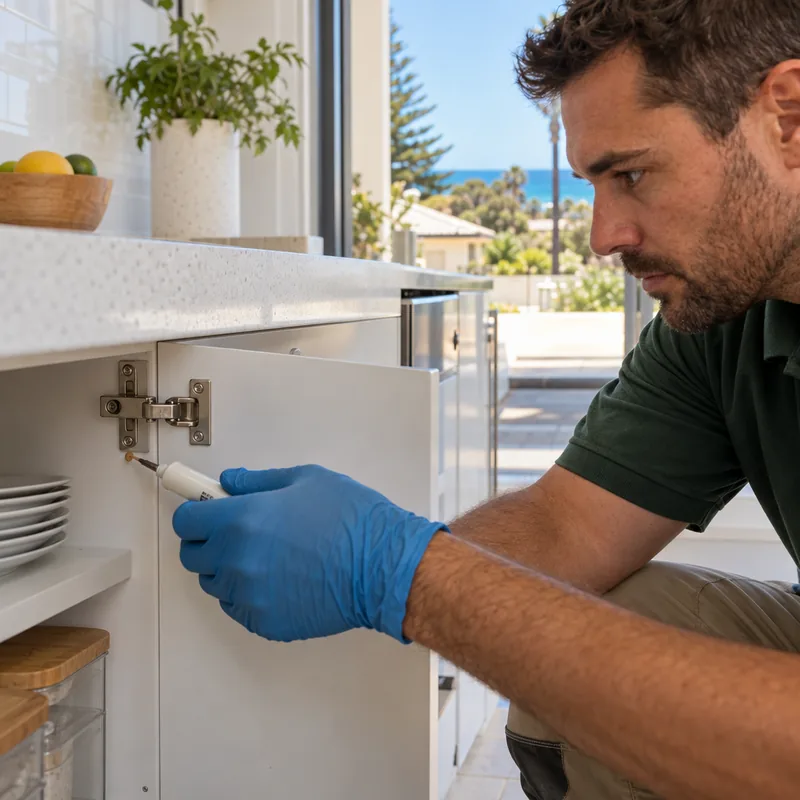
There are two very different cockroach problems in Perth homes, and treating one like the other is why so many infestations drag on. The small German cockroach lives indoors, breeds in kitchens at a pace that turns a few into hundreds in a season, and is spread by cardboard and second-hand appliances. The large American and Australian cockroaches live outside in drains, compost and roof voids and wander in on warm nights. This page explains cockroach control for both across Rockingham, Kwinana, Mandurah and the Cockburn suburbs, and why the method matters more than the product.
Why cockroaches are a problem in Rockingham and Perth’s south
Warm weather drives the large species. From late spring through summer the American and Australian cockroaches that live in the sewer, stormwater and gully traps, under mulch and in compost bins are active and looking for water and food, and a gap under a door or an unsealed floor waste is all they need. Older brick and tile homes in Rockingham, Cooloongup and Kwinana Town Centre have roof voids and subfloors where they harbour by day; the canal homes at Mandurah and Halls Head and the wetland edges at Beeliar have plenty of damp ground outside.
German cockroaches follow people rather than weather. They arrive in a box, a second-hand fridge or microwave, a bag of groceries or a tenant’s belongings, and in a warm kitchen they breed all year. The large rental markets in Baldivis, Mandurah and Success mean plenty of homes changing hands with cockroaches travelling along, and the end of lease pest control work in those suburbs often starts with a German cockroach problem left behind.
German cockroaches and the large species
German cockroaches are small, light brown with two dark stripes behind the head, and are seen in kitchen cupboards, dishwasher seals, behind the fridge and around the kettle, sometimes in daylight when numbers are high. Their droppings look like ground pepper along hinges and cupboard corners. They breed fast: a female carries an egg case holding dozens of eggs, and nymphs mature within weeks in a warm kitchen. They do not live outside in Perth and they do not come up the drains.
American cockroaches are large and reddish brown and live in drains, sewers, compost and subfloors. Australian cockroaches are similar in size with yellow markings, live in gardens, mulch and roof voids, and come inside on warm evenings. Both are seen singly or in small numbers in bathrooms, laundries and garages at night rather than in the kitchen cupboards. They are a nuisance and a hygiene issue but they do not build up inside the way the German species does.
How the inspection finds them
The technician starts in the kitchen with a torch, checking hinges, cupboard corners, the kickboards, the gap behind the fridge and dishwasher, the underside of drawers, the microwave and the kettle base for live insects, droppings and egg cases. Bathrooms and the laundry are checked the same way. For the large species the inspection moves to floor wastes, the gully trap, the roof void, subfloor vents, the garage, compost and mulch beds. The inspection confirms which species is present, how far it has spread and where the harbourages are, and that determines the treatment. Cockroach pest control in Perth that starts with a spray and no inspection is guessing.
How cockroach treatment works
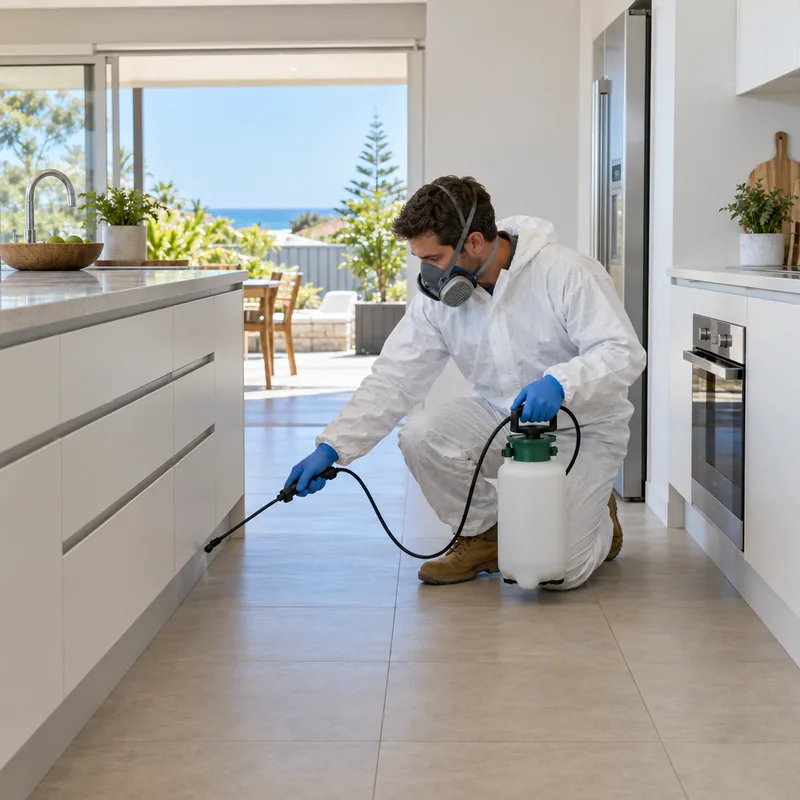
German cockroach control in Perth is a baiting job. Gel bait is placed in small dots in the cracks, hinges, cupboard corners, appliance housings and kickboard gaps where the cockroaches hide, so they feed on it and carry it back to the harbourage. An insect growth regulator is applied to the same areas to stop the nymphs maturing and to break the breeding cycle, which is what stops the population bouncing back. Aerosol sprays are avoided in the kitchen because they repel the cockroaches from the bait and push them into new hiding places, including the ceiling and the next room. A follow-up visit checks bait uptake and treats any pocket that survived, and heavy infestations can need more than one.
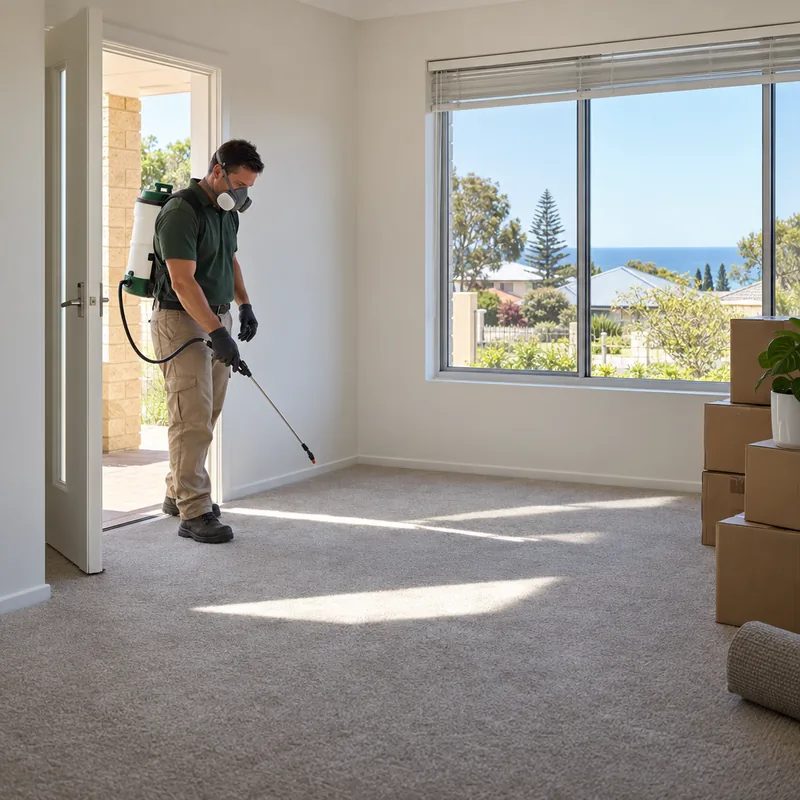
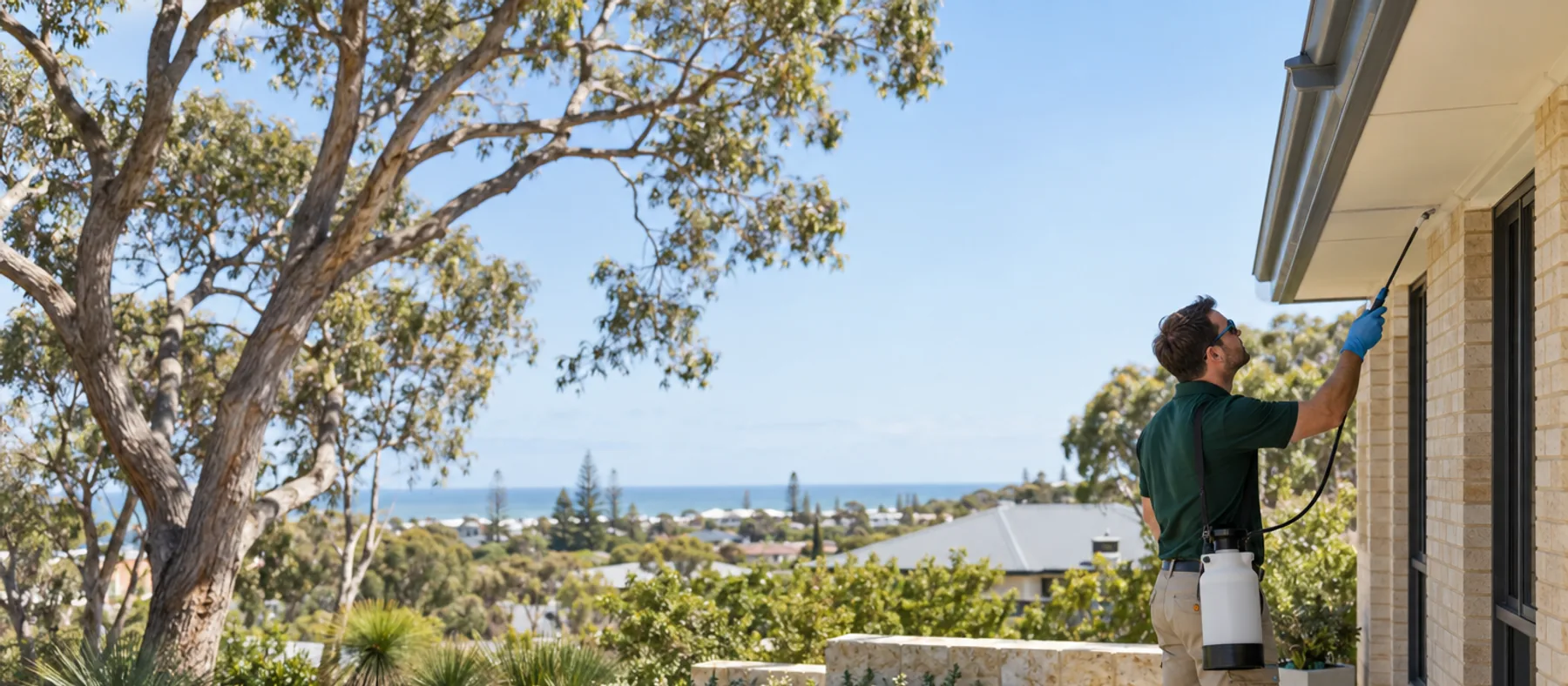
The large species are treated from the outside in. A residual insecticide is applied to the external perimeter, weep holes, eaves, garage and the areas around doors and floor wastes. Drains and gully traps are treated, and the roof void is dusted where it is accessible. Inside, a crack and crevice treatment goes into the bathroom, laundry and behind appliances. This is the cockroach treatment included in a general pest treatment, and it is usually enough for a home that sees the occasional large cockroach in summer.
Preparation and what to expect on the day
For a German cockroach job the technician will ask you to clear the cupboards and drawers where activity was found, wipe down the benches and inside the cupboards, empty the bin, clear the top of the fridge and the space under the sink, and put away pet food and bowls. Do not use a supermarket spray or bomb in the days before. The visit takes an hour or two depending on the size of the infestation, and the gel bait dots should be left in place afterwards. For the large species there is little to do beyond clearing access to the perimeter, the roof manhole and the garage. Keep children and pets out of treated rooms until surfaces are dry and cover fish tanks.
Keeping cockroaches out
Break down and throw out cardboard boxes as soon as they come in, because German cockroaches ride in on them and breed in the corrugations. Check second-hand appliances before bringing them inside. Wipe the stovetop and benches at night, empty the bin daily, keep pet food sealed and do not leave dishes in the sink overnight. Fix dripping taps and dry the area under the sink. For the large species, keep floor wastes and shower drains covered with a fitted grate, fit door seals to the laundry and garage, keep mulch and compost away from the house and clear leaf litter from gutters and the roof void.
When to call and what to ask
Small brown cockroaches in a kitchen cupboard by day, droppings along hinges or an egg case behind the fridge means a German cockroach infestation that will not fix itself and gets harder with every month. Large cockroaches in the bathroom on summer nights, or coming up a drain, are a perimeter and drain job. Ask the technician for their Pest Management Technician licence, issued by the WA Department of Health under the Health (Pesticides) Regulations 2011. Ask which species was found, whether gel bait and a growth regulator are being used for German cockroaches, what preparation is needed and when the follow-up is.
Cockroach removal across Rockingham, Kwinana Town Centre, Mandurah, Success and the rest of Perth’s southern corridor is booked through the quote form, inspected first and quoted in writing. Tenants and landlords sorting out who is responsible for a cockroach problem in a rental should read the end of lease pest control guide for WA and check the lease and the Consumer Protection WA tenancy guidance.
What is included
- Inspection of kitchen, bathrooms, laundry, roof void, subfloor, drains and outdoor areas to confirm the species and the harbourages
- Gel bait placed in cracks, hinges, cupboard corners and behind appliances where German cockroaches hide
- Insect growth regulator applied to stop nymphs maturing and break the breeding cycle
- Residual crack and crevice treatment inside, including under sinks, behind the fridge, dishwasher and oven
- External perimeter, eave, weep hole and garage treatment for American and Australian cockroaches
- Treatment of drains, gully traps and compost areas where the large species breed
- Roof void dusting where the void is accessible and harbouring cockroaches
- Follow-up visit for German cockroach infestations to check bait uptake and re-treat as needed
Signs you should call
- Small brown cockroaches in kitchen cupboards, the dishwasher seal or behind the fridge during the day
- Dark specks like ground pepper along hinges, cupboard corners and under the kitchen bench
- Egg cases, which are small brown capsules, behind appliances or under drawers
- Large dark cockroaches in the bathroom or laundry at night, especially on warm evenings
- Cockroaches coming up through floor wastes, shower drains or the gully trap
- A musty, oily smell in a cupboard or pantry
- Cockroaches turned up with a second-hand fridge, microwave or a box of belongings
Cockroach Control in four steps
Inspect
The technician checks kitchens, wet areas, appliances, roof void, drains and the perimeter to identify the species and find the harbourages. German cockroaches and the large outdoor species are treated in different ways, so the species is confirmed first.
Written quote
You receive a written quote covering the baiting, growth regulator, perimeter or drain treatment recommended and the follow-up visit if one is needed. The preparation you need to do is explained at the same time.
Treat
German cockroaches are treated with gel bait and an insect growth regulator placed in the cracks and hinges where they hide. The large species are treated with a residual perimeter, eave and drain treatment and roof void dusting where accessible.
Protect and follow-up
A follow-up visit for German cockroach jobs checks bait uptake and re-treats any pocket that survived. Advice covers the cardboard, moisture and food habits that let cockroaches re-establish.
Before the visit and around kids and pets
Do not spray the kitchen with a supermarket aerosol before we arrive, because it repels German cockroaches from the bait and scatters them into new hiding places. Clear the cupboards the technician asks you to clear, wipe down surfaces, empty the bin and put pet food and bowls away. Gel bait goes into cracks, hinges and cupboard corners in small dots that children and pets do not reach, and the growth regulator and perimeter products are applied at the label rate by a licensed technician. Keep everyone out of treated rooms until surfaces are dry and cover fish tanks.
Frequently asked questions
1. How do I know if I have German cockroaches?
German cockroaches are small, about the size of a fingernail, light brown with two dark stripes running down the shield behind the head. They are found in kitchen cupboards, around hinges, in the dishwasher door seal, behind the fridge and around the kettle and microwave, and when numbers are high they are seen in daylight. Their droppings look like ground pepper in cupboard corners and along hinges, and the egg cases are small brown capsules found behind appliances and under drawers. If the cockroaches you see are large and turn up singly in the bathroom at night, that is one of the outdoor species instead.
2. Why is German cockroach control different from other cockroaches?
German cockroaches live entirely indoors and breed in the kitchen at a rate no other species matches, so the aim is to eliminate the population, not just to stop them coming in. That is done with gel bait placed in the cracks and hinges where they hide, which they eat and carry back to the harbourage, and an insect growth regulator that stops the nymphs maturing. Sprays are avoided in the kitchen because they repel the insects away from the bait. The large American and Australian species live outside and wander in, so for them a residual perimeter, eave and drain treatment does the job.
3. Where do the big cockroaches in my bathroom come from?
Usually from the drains, the roof void or the garden. American cockroaches live in sewer and stormwater systems and come up through floor wastes, shower drains and the gully trap, especially on warm nights and after the drains have been disturbed. Australian cockroaches live in mulch, compost, leaf litter and roof voids and come in under doors and through gaps around pipes. Both are common across Rockingham, Mandurah and Kwinana in the warmer months. A perimeter and drain treatment, fitted grates on floor wastes and door seals on the laundry and garage deal with them.
4. Do I need to empty my kitchen cupboards before cockroach treatment?
For a German cockroach treatment, yes, the cupboards and drawers where activity was found need to be cleared so the gel bait and growth regulator can be placed in the hinges, corners and gaps where the cockroaches hide, and so the technician can inspect properly. Wipe the shelves, benches and the space under the sink, empty the bin and put away pet food. Leave the gel dots in place afterwards and do not spray over them. For the large outdoor species there is little to prepare beyond clearing access to the perimeter, the roof manhole and the garage.
5. Will one cockroach treatment be enough?
For the large outdoor species, a residual perimeter, eave and drain treatment usually settles a summer of visitors, and the treatment is repeated the following season if they return. For German cockroaches it depends on how established they are. Bait and growth regulator work over days and weeks as the insects feed and the nymphs fail to mature, and a follow-up visit is standard to check bait uptake and treat any pocket that survived. A heavy infestation in a kitchen that has been going for months, or one that keeps arriving in boxes and appliances, can need more than two visits and the quote will say so.
6. Is cockroach treatment safe for children and pets?
Gel bait is placed in small dots inside cracks, hinges and cupboard corners where children and pets do not reach, and the insect growth regulator and residual products are applied to cracks, crevices and the perimeter at the label rate by a licensed technician. Keep everyone out of treated rooms until surfaces are dry, wipe benches before preparing food and keep pet bowls away from treated areas. Cover fish tanks and turn off their pumps during the visit, and tell the technician about birds and reptiles. Do not use supermarket aerosols or bombs alongside the treatment, which adds exposure and undoes the baiting.
7. Does a rental need a cockroach treatment at the end of a lease?
WA leases commonly require a flea treatment where a pet was kept, but a cockroach treatment is generally only expected where the tenant caused the problem, and landlords are generally responsible for pests present at the start of a tenancy. That is a general description, not legal advice, so check your lease and the Consumer Protection WA tenancy guidance. In practice, a German cockroach infestation found at a final inspection in Baldivis or Mandurah is usually resolved by a treatment with a written record that the property manager can see. Booking it before the final inspection rather than after saves the argument.