Commercial pest control is a different job from a house treatment. The pests are the same, but the questions are about records, timing and risk: will the pest folder satisfy the council inspector, can the visit happen before the cafe opens, will a bait station near the loading dock harm an owl, can a childcare centre show a parent exactly what was used. Pest Control PER provides scheduled pest management in Perth’s southern corridor, from the Rockingham foreshore cafes and the Kwinana Industrial Area to the strata developments around Cockburn Central and the schools and aged care facilities of Mandurah. This page explains who we service, how food businesses are handled, what a warehouse programme looks like, how bird control works, what strata, offices, schools and aged care need, and what the reports contain.
Who we service across the southern corridor
The mix of businesses south of Perth is broad. Cafes, restaurants, bakeries, takeaways and pubs along the Rockingham foreshore, in the Rockingham Centre and at the Mandurah waterfront. Warehouses, transport depots, manufacturing and fabrication sheds in the Kwinana Industrial Area, East Rockingham and the Bibra Lake and Jandakot industrial estates. Offices, medical and allied health suites, gyms and retail tenancies in Kwinana Town Centre, Cockburn Central and Baldivis. Strata complexes and apartment buildings. Schools, childcare centres and aged care facilities in every suburb.
Each gets a programme written for its risks rather than a standard residential spray with a company name on the invoice. Pest management in Perth’s commercial sector is about monitoring, documentation and fixing the conditions that let pests in, with treatment as one part of that.
Cafes, restaurants and food businesses
Food businesses in WA are required to keep their premises free of pests, and the local government environmental health officer who inspects a cafe in Rockingham or Mandurah expects to see how that is being done. A food safety programme, whether it is a formal HACCP-based system for a larger operator or the simpler records a small cafe keeps, needs a pest management plan, a site map of monitoring points and bait stations, a service report after every visit, product details and safety data sheets, and a note of what was recommended and what the business did about it.
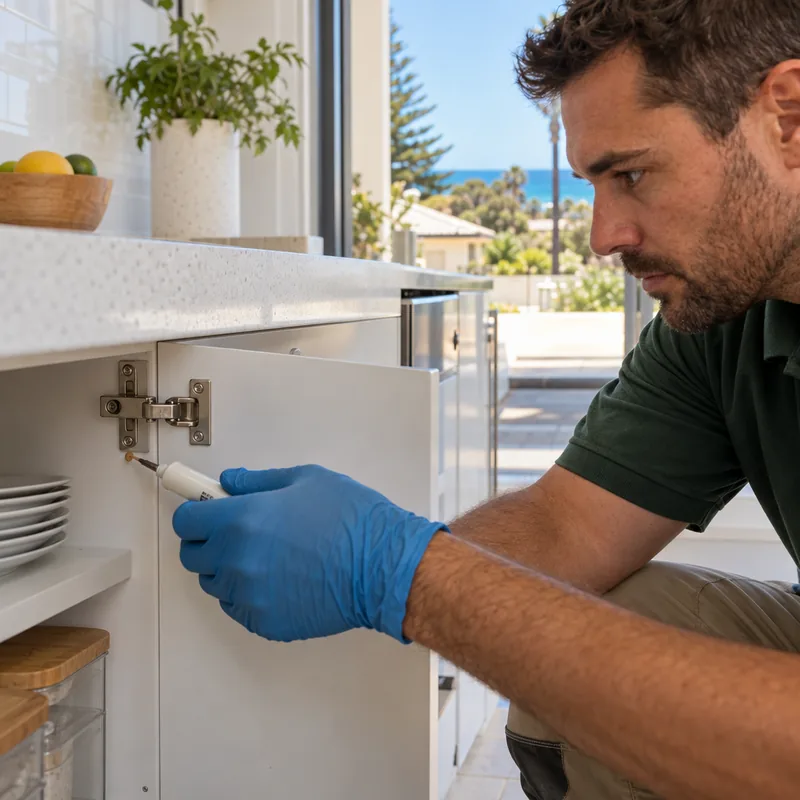
The pests in a southern suburbs kitchen are German cockroaches behind the coffee machine, under the dishwasher and in the cardboard stores, flies at the bin store and the back door, coastal brown ants along the slab edge in summer, and rats and mice at the loading dock and in the ceiling. The treatment uses gel baits and insect growth regulators for the cockroaches, drain and bin area treatments for flies and the large cockroach species, and a small mapped rodent station network. Visits are scheduled before opening or after close, and the recommendations that come back are usually about cardboard, door seals, drain covers and the bin store, because that is where the problem starts.
Warehouses, logistics and the Kwinana Industrial Area
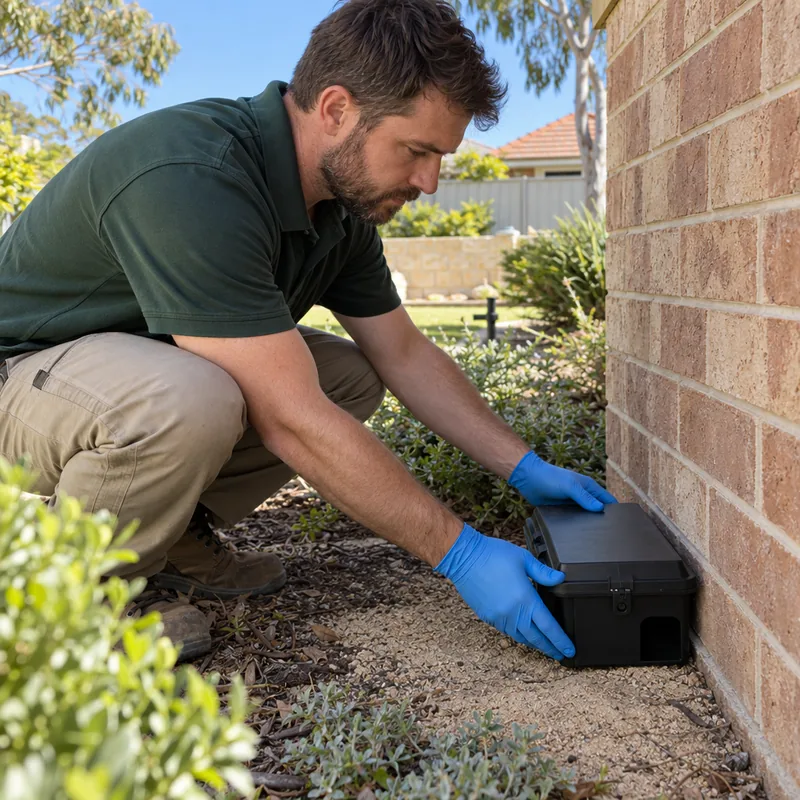
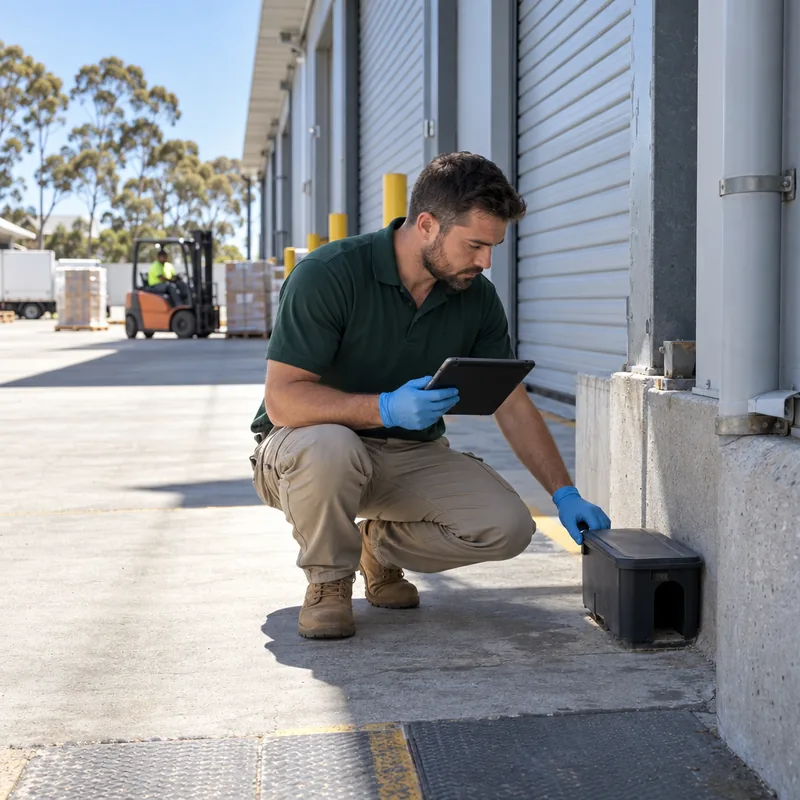
A warehouse programme is mostly about rodents and birds. Roof rats and house mice come in with pallets, through roller door gaps, dock levellers and service penetrations, and set up in racking, ceiling spaces and the amenities block. The programme installs a numbered, tamper-resistant bait station and trap network along the external perimeter, at entry points and internally along walls, with a site map that matches the station numbers, and every visit records what each station showed. Empty stations on one side of a shed tell you where the rats are coming in, and the report says so.
Near the Beeliar wetlands, the Rockingham Lakes reserves, the Serpentine River and the Kwinana bush reserves, second-generation anticoagulant baits are used sparingly or replaced with snap traps and monitoring, because owls and raptors that eat poisoned rodents die from it. Proofing recommendations, such as brush seals on doors and mesh over vents, are part of the report. The rodent control page explains the species and the seasonal pattern, with rodent pressure peaking from May to August as they come in from the cold.
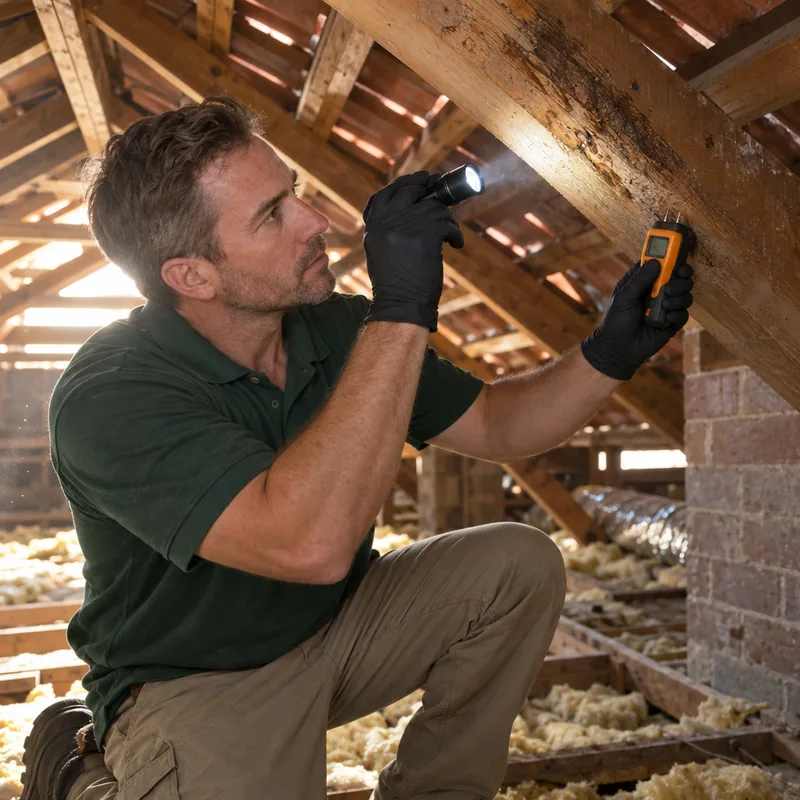
Stored product pests, spiders in racking and paper wasps under the awnings are handled in the same visits, and an annual termite inspection to AS 3660.2 is added for owned premises with timber elements or a slab edge hidden by pavement.
Bird control: pigeons at the sheds, seagulls at the foreshore
Birds are a commercial-only problem in this area and a real one. Feral pigeons roost on industrial shed purlins, under awnings and on the plant of shopping centre roofs, and their droppings corrode roofing, foul stock and create a slip and health issue on walkways. Pigeons are not protected and are managed by exclusion: netting, spikes, wire systems, sealing off roosting ledges and cleaning and proofing the roosting areas.
Silver gulls on the Rockingham and Mandurah foreshores are a different matter. They are native birds and protected, so gull management at a foreshore cafe, a fish and chip shop or the surf club is deterrence and exclusion only: netting over roosting areas, spikes and wires on ledges and signage, removing the food and water that draws them, and bin and outdoor dining practices that give them less to steal. Nothing that harms the birds is done or offered. The right mix depends on the roof, the awning and how the birds are using the site, and it is assessed on the inspection.
Strata, offices, schools, childcare and aged care
Strata common property needs bin rooms, car parks, plant rooms, fire stairs and landscaping covered for cockroaches, rodents, ants and spiders, plus an annual termite inspection of the common structure, with reports to the strata manager so residents’ complaints can be answered with a record. Offices are mostly about ants in the kitchen every summer, the odd rat in the ceiling and spiders around the entry, serviced outside business hours.
Schools, childcare centres and aged care facilities get the most conservative programme. Visits happen in holidays or after hours, indoor treatment relies on gel baits and growth regulators rather than broadcast sprays, rodent stations are locked and anchored out of reach, and outdoor play areas in the sandy yards of Baldivis, Secret Harbour and Byford centres are checked for redback spiders, paper wasp nests and ant nests. Every product is recorded with its safety data sheet, and the report is written so a centre director or facility manager can show it to a parent, a family or an assessor.
Service reports and the records folder
Every visit ends with a service report: date and technician, areas inspected, what was found at each monitoring point, what was treated, the product, the quantity and where it was applied, and recommendations for the site. The station map is kept current, product safety data sheets are on file, and the whole set lives in a site folder or a digital record you can hand to a council officer, a food safety auditor, a landlord or a head office without notice. When something changes, such as a new tenancy fit-out or a new food line, the programme is revised rather than left to drift.
Written quote and programme before any work
A commercial programme is quoted after a site walk with whoever runs the premises, because the frequency, the station network and the reporting are what set the price, and WA Consumer Protection explains your rights on quotes and contracts, and the post on what changes a pest control quote in Perth covers the factors. The quote is in writing, the technicians hold WA Department of Health Pest Management Technician licences and the business holds its Pest Management Business registration, both available on request. For commercial pest control in Rockingham, Kwinana, Cockburn, Mandurah or the Armadale industrial precinct, use the quote form with the type of premises and its size, and you will be contacted to arrange the site inspection.
What is included
- Site inspection and a written pest management programme matched to the business, its risks and its audit requirements
- Scheduled service visits with a report after each one: what was found, what was treated, product and quantity, and recommendations
- Rodent bait station and trap network with a site map and numbered stations, tamper-resistant where the public, children or pets are present
- Cockroach, ant and stored product pest treatment in kitchens, food storage, bins and loading docks using gel baits, growth regulators and targeted sprays
- Bird management for pigeons and seagulls on foreshore, retail and industrial sites using exclusion, netting, spikes and deterrents
- Documentation folder or digital records for food safety programmes, HACCP-based systems, council inspections and third-party audits
- Treatments timed outside trading hours, around shift changes or during school holidays where the site needs it
- Annual termite inspection to AS 3660.2 added to the programme for owned premises and strata common property
Signs you should call
- A council environmental health inspection or a third-party food safety audit is due and the pest records are thin
- Cockroaches seen in the kitchen, behind the coffee machine or in the bin store of a cafe or restaurant
- Rat droppings on pallets, gnawed packaging or a bait station that keeps being emptied at a warehouse
- Pigeons or seagulls roosting on a foreshore cafe roof, a shopping centre awning or an industrial shed
- Ants trailing through an office kitchen or a childcare centre every summer
- Strata residents reporting cockroaches, rodents or spiders in bin rooms, car parks and common areas
- A new lease, a new tenancy fit-out or a new site that needs a pest management plan from day one
Commercial Pest Control in four steps
Inspect
The technician walks the site with whoever runs it, looking at food storage, bin areas, loading docks, roof voids, drains, the building envelope and any current activity. Existing bait stations and records are reviewed.
Written quote
You receive a written programme and quote setting out the service frequency, the treatments, the station network, the reporting format and how it fits your food safety or site requirements. Nothing starts until it is approved.
Treat
The initial service deals with any active problem and installs the numbered station network and monitoring. Scheduled visits then service the stations, treat as needed and inspect for new activity.
Protect and follow up
Each visit produces a service report and the site map and records are kept current for auditors and council officers. Recommendations on proofing, storage and cleaning are written into the report so problems are fixed at the source.
Staff, customers, kids and the public during service
Treatments in food premises, childcare centres, schools and aged care are scheduled outside operating hours or in areas closed off for the visit, and the products and placements are chosen with children, residents and food contact surfaces in mind. Rodent stations are lockable and tamper-resistant wherever the public, children or pets can reach them, and traps rather than anticoagulant baits are used near wetlands and reserves to protect owls and raptors. Safety data sheets and a record of every product used are kept in the site folder.
Frequently asked questions
1. What does a commercial pest management programme include?
A site inspection, a written programme, scheduled visits and records. The programme names the pests the site is at risk from, the monitoring and treatment methods, the service frequency and the reporting format. A cafe in Rockingham might need monthly visits focused on cockroaches, flies and rodents with gel baits and a small station network, while a Kwinana warehouse needs a perimeter and internal rodent station network with a site map, quarterly bird checks and an annual termite inspection. Every visit produces a service report, and the folder or digital record is kept audit-ready.
2. Do you provide documentation for food safety audits?
Yes. Food businesses in WA are required to keep their premises free of pests, and local government environmental health officers and third-party auditors expect to see a pest management plan, a site map of bait stations, service reports for each visit, product details and safety data sheets, and a record of recommendations and what was done about them. Our records are set out to slot into a HACCP-based food safety programme and can be kept in a site folder or supplied digitally. When an inspection is due, the folder is already current rather than assembled the night before.
3. Can treatments be done outside trading hours?
Yes, and for most food businesses, childcare centres and schools that is how it is arranged. Cafes and restaurants along the Rockingham foreshore are usually serviced before opening or after close, offices and strata common areas outside business hours or on weekends, and schools and childcare centres during holidays or after pick-up. Warehouses with shift work are serviced around the quieter shift. The schedule is agreed in the programme, and you will be contacted to confirm each visit. Access, alarm codes and any site induction are sorted out at the start.
4. How do you control rodents at a warehouse without harming wildlife?
With a mapped station network, careful placement and the right product choice. Second-generation anticoagulant rodenticides can kill owls, raptors and pets that eat poisoned rodents, so stations are lockable and tamper-resistant, placed along walls and at entry points rather than scattered, and near the Beeliar wetlands, the Rockingham Lakes reserves or the Serpentine River the programme leans on snap traps and monitoring rather than bait. Proofing recommendations, such as door seals, dock leveller brushes and sealing service penetrations, are written into every report because rats at a Kwinana warehouse are usually a building problem before they are a bait problem.
5. Can you get rid of seagulls and pigeons?
They can be managed, with an important distinction. Feral pigeons are not protected and can be excluded with netting, spikes, wire systems and deterrents, and roosting areas cleaned and proofed. Silver gulls, the seagulls on the Rockingham and Mandurah foreshores, are native birds and protected, so gull management is exclusion and deterrence only: netting over roosting areas, spikes and wires on ledges, removing food and water sources, and staff and customer bin practices. No poisoning or harming of gulls is done. The right mix depends on the roof, the awning and how the birds are using the site.
6. Do you service strata complexes and body corporates?
Yes. Strata common property in Rockingham, Mandurah and the Cockburn Central apartment developments generally needs a scheduled programme covering bin rooms, car parks, plant rooms, fire stairs, lift wells and landscaped areas for cockroaches, rodents, ants and spiders, plus an annual termite inspection of the common structure. Individual lots can be added at the owner's request. Reports go to the strata manager after each visit so residents' complaints can be answered with a record rather than a guess, and treatment days are notified to residents in advance.
7. What about childcare centres, schools and aged care?
These sites get the most conservative approach. Treatments are scheduled when children or residents are not present, products are chosen for low residual exposure, gel baits and growth regulators are preferred over sprays indoors, and rodent stations are locked, anchored and placed out of reach. Outdoor play areas are checked for redback spiders, paper wasp nests and ant nests, which are the practical risks in the sandy yards of Baldivis and Secret Harbour centres. Every product used is recorded with its safety data sheet, and the report is written so a centre director can show it to a parent or an assessor.