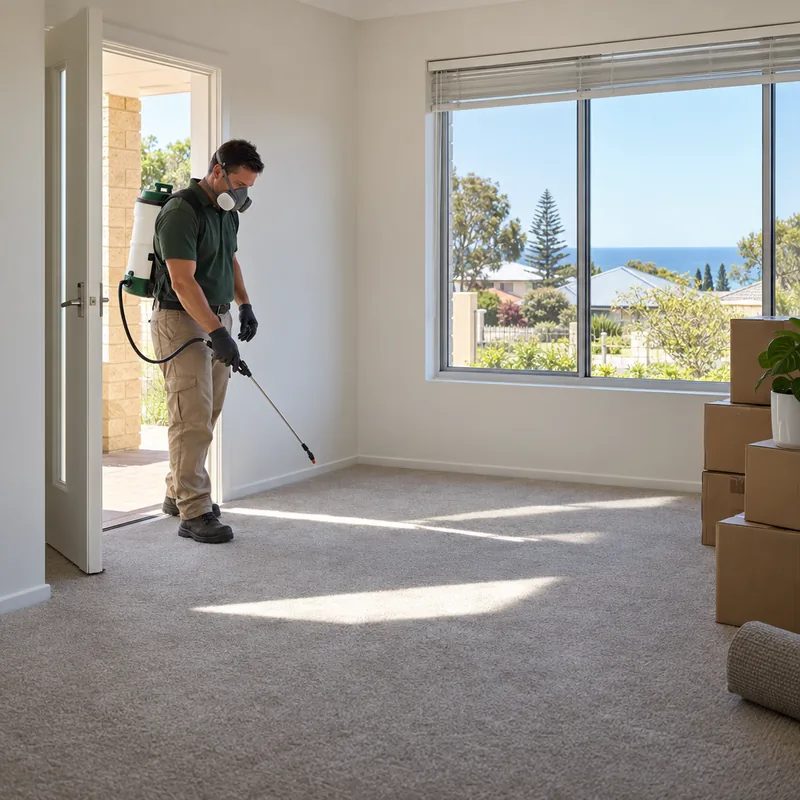
Moving out of a rental in Perth’s southern suburbs comes with a checklist: bond clean, carpets, garden, keys, and, if you had a pet, the flea treatment the lease asks for. Baldivis, Wellard, Secret Harbour and the Cockburn estates have some of the biggest rental markets in WA, and end of lease pest control is a regular part of a vacate there. This page explains what the lease usually requires, who is generally responsible for what, when to book the treatment, what a vacate flea treatment involves and why dormant pupae make empty properties bite, what else gets treated at handover, and what the receipt for the property manager looks like.
What the lease usually asks for
Most WA residential tenancy agreements that allow a pet include a clause requiring a flea treatment of the property at the end of the tenancy, sometimes worded as pest fumigation or pet fumigation. Some agreements go further and require a general pest treatment at the vacate regardless of pets. The Residential Tenancies Act 1987 (WA) is the legislation behind tenancies, but the specific requirement comes from the wording of your lease, so read the pets clause and the vacate conditions before booking anything.
We do not give legal advice. If the wording is unclear, check your lease and the Consumer Protection WA tenancy guidance, or ask your property manager in writing what they require. What we can do is tell you what a given clause means in practice and quote for exactly that, so you are not paying for a general treatment when the lease only asks for fleas. The blog post on end of lease pest control for WA tenants and landlords covers the common lease wordings.
Who is responsible for what
The general position under WA tenancy law is that landlords are responsible for pest problems present at the start of a tenancy, such as an existing termite, rodent or cockroach issue in an older Kwinana or Cooloongup home, and tenants are responsible for infestations caused by their own conduct, which is why the end of lease flea treatment falls to the tenant with the pet. Every case has its details and disputes go to the tenancy process, not to us.
Where there is a disagreement about what was found, the inspection notes and receipt we provide describe what was present and what was treated on the day, which gives both sides something factual to work from.
When to book: after the bond clean
The order matters. Furniture out, bond clean, carpet steam clean, then the pest treatment, then the final inspection. A flea treatment applied before the carpets are steam cleaned is washed off, the insect growth regulator stops working, and the agent can reasonably ask for it to be done again. Book the pest treatment for the day after the carpets are cleaned, or as soon as they are dry, and leave a day before the inspection so the receipt can be forwarded.
For an empty property with the keys handed back, access is arranged through you or the agent. That is the normal situation for a vacate in Baldivis or Rockingham and it is the best case for the treatment, because every square metre of carpet is reachable.
What a vacate flea treatment involves and why empty homes bite
The cat flea is the species on WA dogs and cats. Its eggs fall off the animal into carpet, pet bedding and the sand under a timber floor, the larvae feed in the carpet pile, then they spin a cocoon and pupate. The pupa can sit dormant for months and hatches on the vibration, warmth and carbon dioxide of someone walking into the room. That is why a rental in Wellard that sat empty for a month after the tenants and their dog left can seem clean at the final inspection and then bite the new tenants on the first night.
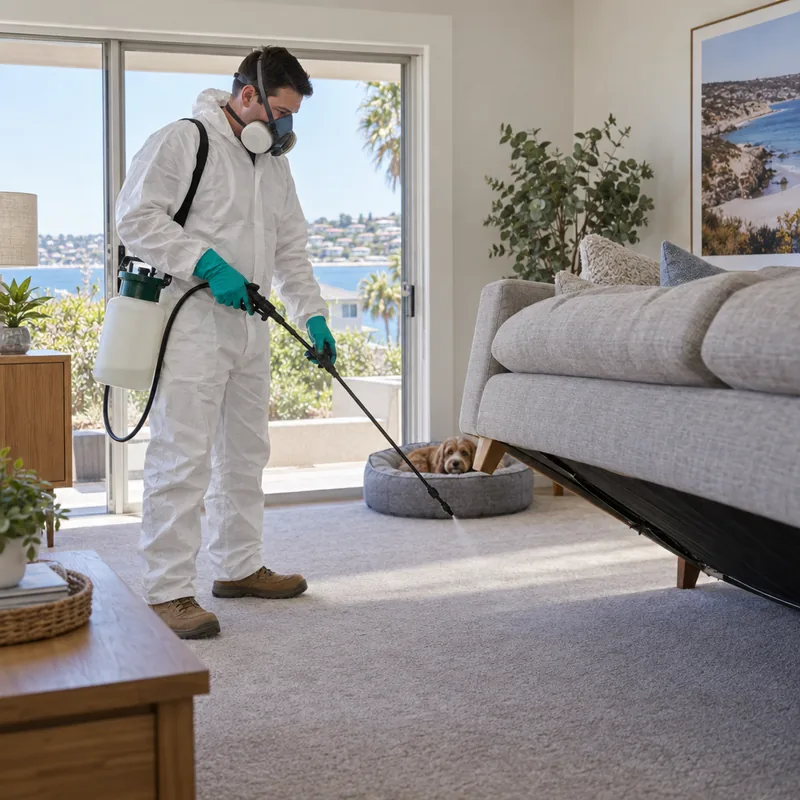
A bond clean flea treatment deals with that by combining an adulticide, usually a synthetic pyrethroid, to kill the adults and larvae, with an insect growth regulator that stops eggs and larvae developing for weeks afterwards. Carpets, hard floor edges, under built-in furniture, the subfloor of older timber-floored homes and the shaded parts of the yard where the dog slept are all treated. The technician walks the carpet before treating to trigger dormant pupae. The flea control page covers the life cycle and preparation in more detail, and the same treatment is what a landlord orders between tenancies when new tenants report bites.
Other pests at handover
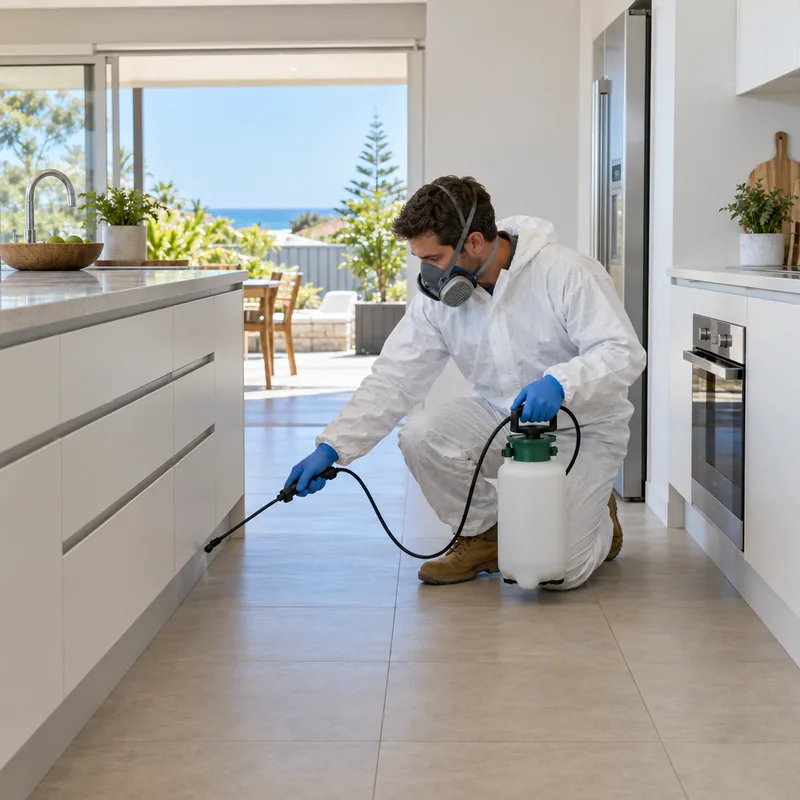
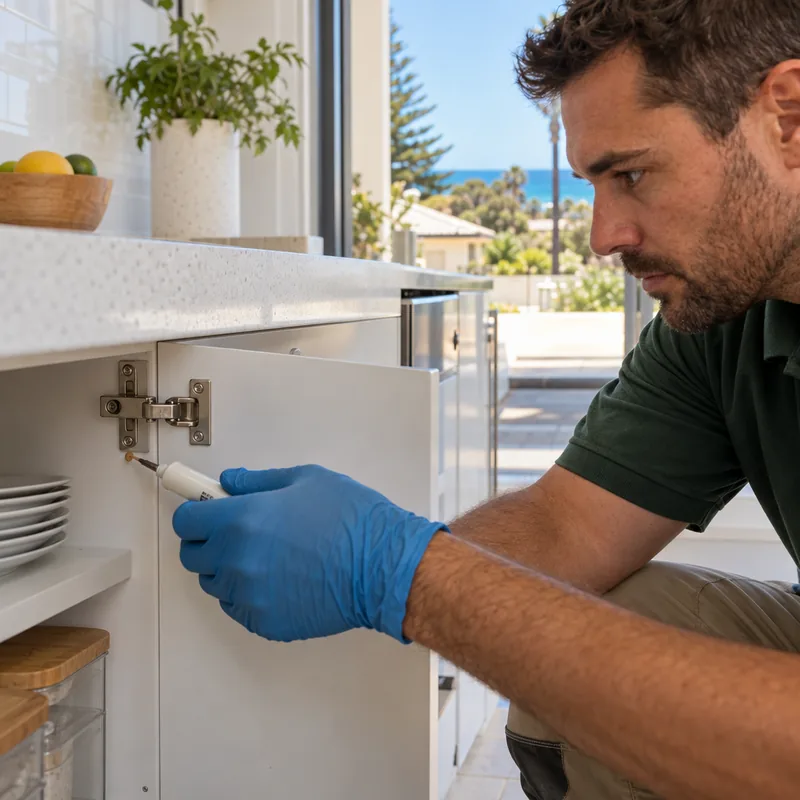
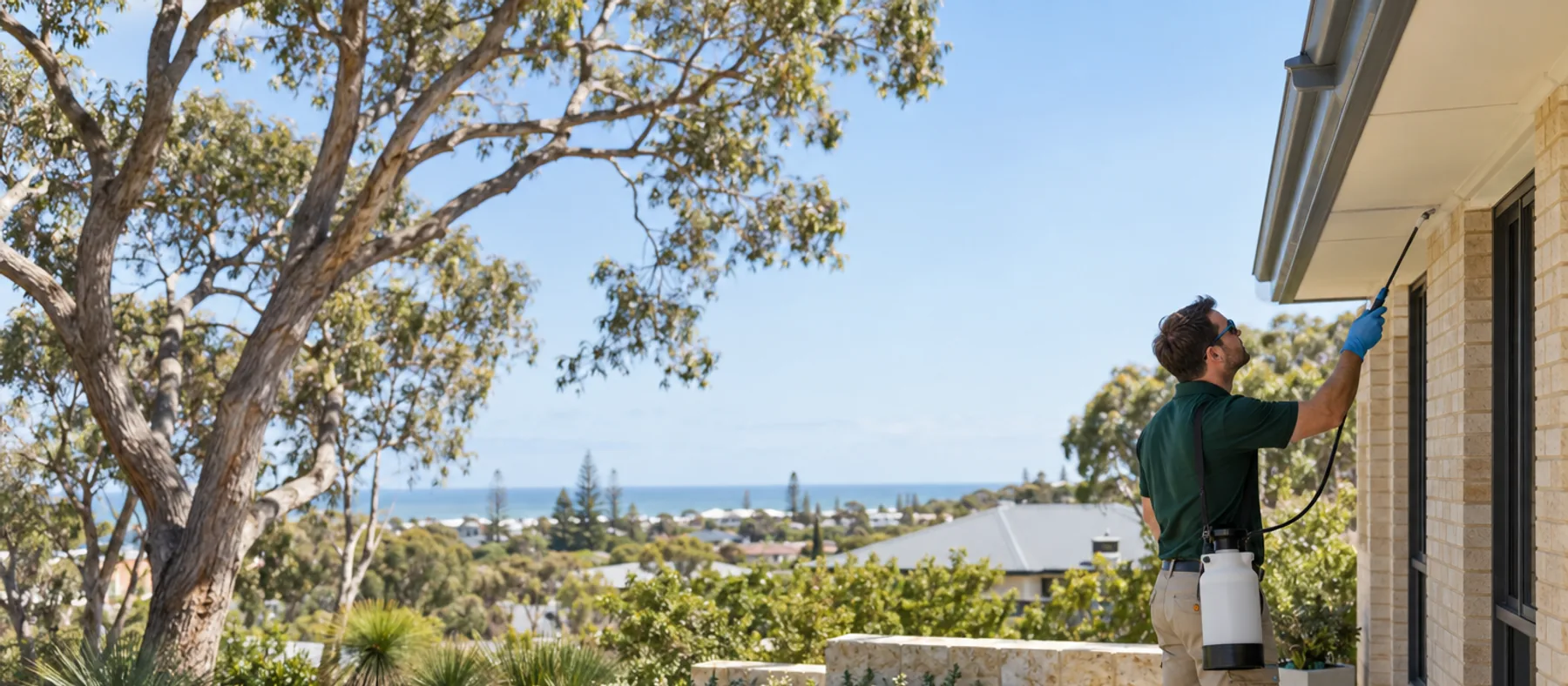
Where the lease asks for a general pest treatment, or where cockroaches, ants or spiders have been an issue during the tenancy, a vacate general treatment is added. It covers the kitchen and wet areas for cockroaches, the interior skirtings and cupboards, the eaves and window frames for spiders, and the perimeter, garage and shed for ants. In the sandy new estates of Baldivis, Success and Byford, coastal brown ants at the slab edge are the usual handover complaint. In the older brick and tile homes of Medina, Cooloongup and Safety Bay it is more often cockroaches in the kitchen and rats in the roof void, and a roof check can be noted on the receipt if the agent wants it. The general pest control page describes the treatment. It is quoted separately from the flea treatment so you only pay for what is required.
The receipt for the property manager
Once the treatment is complete you receive a receipt from a licensed pest management business stating the property address, the date, the treatments carried out, the chemistry classes used and the business details. Property managers call it a receipt, a certificate or a clearance; it is the same document, and it goes to the agent with your bond clean receipt before the final inspection. It confirms a treatment was done. It does not certify the property will be pest-free forever, and no honest operator issues one of those.
If your agent has particular wording or a form they want completed, send it through when booking. Most of the agencies managing rentals from Cockburn to Mandurah have seen our receipts before.
Landlords, agents and holiday lets
For landlords and property managers, the same service runs between tenancies: a turnover flea treatment where the previous tenant had a pet, a general treatment before new tenants arrive, or a treatment after a complaint from the incoming tenants. Holiday lets in Mandurah, Falcon and Golden Bay turn over far more often than a long-term rental, and a scheduled treatment between peak periods keeps fleas and cockroaches from becoming a review problem. Multiple properties can be quoted together.
Written quote before any treatment
A vacate is quoted from the property details: house or unit, bedrooms, carpet or hard floors, subfloor or slab, yard, pet or no pet, flea only or flea plus general. The quote is in writing before the treatment, and the technician holds a WA Department of Health Pest Management Technician licence you are welcome to ask to see. The post on what changes a pest control quote in Perth explains the factors. To book end of lease pest control anywhere between Cockburn and Mandurah, use the quote form with your inspection date, and you will be contacted to arrange a time that fits the clean.
What is included
- Flea treatment of carpets, hard floor edges, subfloor and shaded yard areas with an adulticide and an insect growth regulator, where a pet was kept
- General pest treatment of the interior, eaves, perimeter and garage for cockroaches, ants and spiders where the lease or property manager asks for it
- Treatment timed after the bond clean and carpet cleaning so the residual is not washed off
- Receipt from a licensed pest management business stating the property address, date and treatment, ready to forward to the property manager
- Access arranged through you or the agent when the property is already empty and the keys handed back
- Advice on what your lease wording actually requires so you do not pay for a treatment you do not need
- Roof void and subfloor check for rodent activity at the vacate, noted on the receipt if requested
- Landlord and agent turnover treatments between tenancies, including holiday lets
Signs you should call
- Your lease has a pets clause requiring a flea treatment, or pet fumigation, at the end of the tenancy
- The property manager has asked for a pest control receipt before releasing the bond
- You kept a dog or cat at the property, even for part of the tenancy
- Fleas, cockroaches or ants have been a problem during the tenancy and you want it dealt with before the final inspection
- You are a landlord or agent turning a property over between tenants or holiday guests
- New tenants are being bitten in a property that sat empty after the previous tenants left with a pet
- The final inspection date is set and the bond clean is booked
End of Lease Pest Control in four steps
Inspect
The technician confirms what the lease asks for, the size and layout of the property, whether there is carpet, a subfloor or a yard to treat, and whether anything beyond fleas is present. This is often done from the enquiry details when the property is empty.
Written quote
You receive a written quote naming the treatments, the date and what the receipt will state. If the lease only requires a flea treatment, that is what is quoted; nothing is added that the lease does not ask for.
Treat
The treatment is done after the bond clean and carpet cleaning, with the property empty. Carpets, floor edges, subfloor and shaded yard areas are treated for fleas, and the interior and perimeter for general pests if that was requested.
Protect and follow up
The receipt is issued once the treatment is complete and can be forwarded to the property manager for the final inspection. The residual keeps working on any fleas that hatch from dormant pupae before the next tenants arrive.
Timing, kids and pets at the vacate
Book the pest treatment for after the bond clean and carpet cleaning, because a treatment done before the carpets are steam cleaned is washed off and does not count. The property should be empty of people and pets for the treatment and until surfaces are dry, which the technician confirms. If new tenants or the owner are moving in straight away, tell us so the timing and products suit a family arriving with young children or pets. Keep the receipt, as agents usually ask for it at the final inspection.
Frequently asked questions
1. Do I have to get a flea treatment when I move out?
It depends on your lease. WA tenancy agreements commonly include a clause requiring a flea treatment at the end of the tenancy where a pet was kept at the property, and the property manager will ask for a receipt from a licensed pest control business before the bond is released. If no pet was kept and the lease does not require it, a treatment is usually not needed unless there is an actual pest problem. Read the lease and the pets clause carefully, and check the Consumer Protection WA tenancy guidance. We can tell you what the wording requires, but we do not give legal advice.
2. Should the pest treatment be done before or after the bond clean?
After. The bond clean and carpet steam clean come first, then the flea treatment, then the final inspection. A treatment sprayed onto carpet that is steam cleaned the next day is washed away, the residual and growth regulator stop working, and the property manager can reasonably ask for it to be done again. The ideal sequence in a Baldivis or Wellard vacate is furniture out, cleaners in, carpets cleaned, pest treatment the following day or as soon as the carpet is dry, receipt sent to the agent before the inspection.
3. What does the property manager need from me?
A receipt from a licensed pest management business showing the property address, the date, the treatment carried out and the business details. Some agents call it a certificate; it is the same document. It is issued once the treatment is complete and you forward it with your bond clean receipt. If the lease also asked for a general pest treatment, that is listed on the same receipt. Keep a copy yourself. If the agent has a specific form or wording they want, send it through when booking and it is easy to match.
4. Who is responsible for pests found during a tenancy?
Under the Residential Tenancies Act 1987 (WA), landlords are generally responsible for pest problems present at the start of a tenancy, such as an existing termite, rodent or cockroach issue, while tenants are generally responsible for infestations caused by their own conduct, such as fleas from their pet. Every situation has its details, and we do not give legal advice. Check your lease and the Consumer Protection WA tenancy guidance, and if there is a dispute the inspection report and receipt we provide describe what was found and treated so both sides have the facts.
5. The property is already empty and the keys are with the agent. Can you still do it?
Yes. This is the normal situation for a vacate in Rockingham, Secret Harbour or Mandurah, and access is arranged through you or the property manager. An empty property is actually the best case for a flea treatment because every part of the carpet can be reached. Be aware that a property that has sat empty for weeks after a pet left can seem flea-free and then erupt when someone walks in, because dormant pupae hatch on vibration. The insect growth regulator in the treatment is there for exactly that, and the technician walks the carpet before treating to trigger them.
6. Do you also treat cockroaches, ants and spiders at the vacate?
Where the lease or the property manager asks for a general pest treatment, or where there is an active problem, yes. A vacate general treatment covers the interior skirtings and cupboards, the kitchen and wet areas for cockroaches, the eaves and window frames for spiders, and the perimeter and garage for ants. In the sandy estates around Baldivis, Success and Byford, coastal brown ants and black house ants are the usual issue at handover, and in older Kwinana and Cooloongup homes it is cockroaches. It is quoted separately from the flea treatment so you only pay for what is required.
7. Is the receipt the same as a pest control certificate?
In practice, yes. Property managers in WA use the words receipt, certificate and clearance interchangeably for the document that shows a licensed pest business treated the property on a given date. Ours states the address, the date, the treatment carried out and the chemistry classes used, and it carries the business details. It is not a certification that the property is pest-free forever, and no honest operator issues one of those. If your agent needs particular wording, tell us when booking and the receipt is worded to suit.