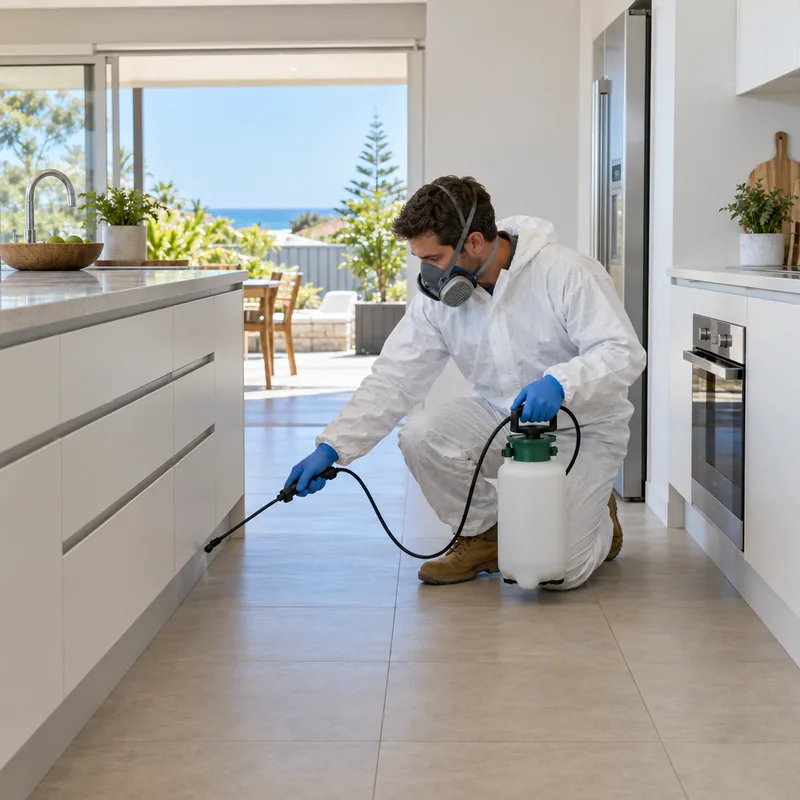
Most calls we take across Rockingham and the southern suburbs are not about one dramatic pest. They are about the ordinary mix that turns up in a Perth home over a year: ants across the kitchen bench in January, spiders in the eaves, a cockroach in the bathroom at night, silverfish in the linen cupboard, millipedes in the garage after the first rains. A general pest treatment deals with that mix in one visit, inside and out, and this page explains what it covers, how it is done and what you can expect on the day.
Why homes in Rockingham and Perth’s south get pests
The climate does most of the work. Perth’s summers are hot and dry, often 35 to 40 degrees for days at a time, and the sandy coastal soils from Rockingham through Safety Bay and Warnbro drain almost as fast as the reticulation puts water on them. The damp patch along the house wall, the dog bowl on the verandah and the drip from the air conditioner become the only reliable water for hundreds of metres, so ants and spiders come inside looking for it. In the wet months the pressure flips: cockroaches and rodents move under cover, and Portuguese millipedes crawl up the walls of newer estates in Baldivis and Secret Harbour after the first autumn rains.
Housing matters too. The 1960s to 80s brick and tile homes in central Rockingham, Cooloongup and Hillman have weep holes, roof voids and timber window frames that give pests a way in and somewhere to hide. Newer double brick and Colorbond homes in Baldivis, Success and Port Kennedy are tighter, but they sit on freshly cleared sand next to bushland, and the ants, spiders and millipedes that lived there simply move into the nearest building.
What the inspection looks for
Every general pest treatment starts with a walk through the house and around the block before anything is applied. Inside, the technician checks kitchens, wet areas, laundries, pantries, the space behind the fridge and dishwasher, wardrobes and linen cupboards, and the roof void access point. Outside, they look at the eaves, weep holes, meter box, fence lines, paving edges, garden beds against the wall, the shed and any outdoor furniture.
The point is to identify which pests are present and where they are living, because that changes the treatment. Ant trails along a bench are followed back to the nest under the paving. Small cockroaches in a kitchen cupboard mean German cockroaches and a baiting programme, not just a spray. Fine dust on a windowsill under a hole in a timber frame is worth a closer look for borers or termites, and if there is any sign of termite activity you will be told and pointed to a proper termite inspection rather than have it sprayed over.
How a general pest treatment works
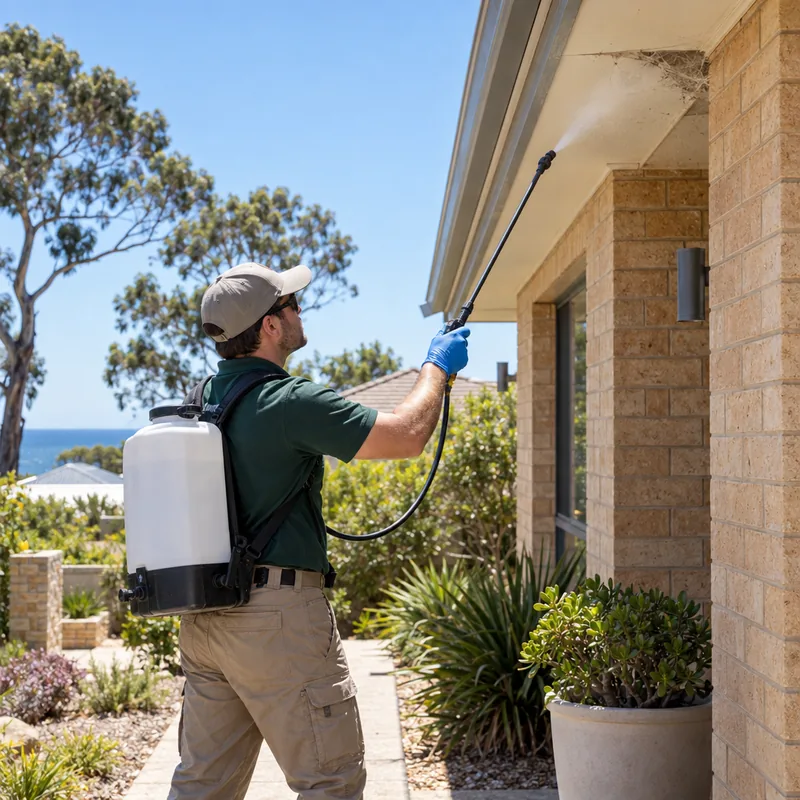
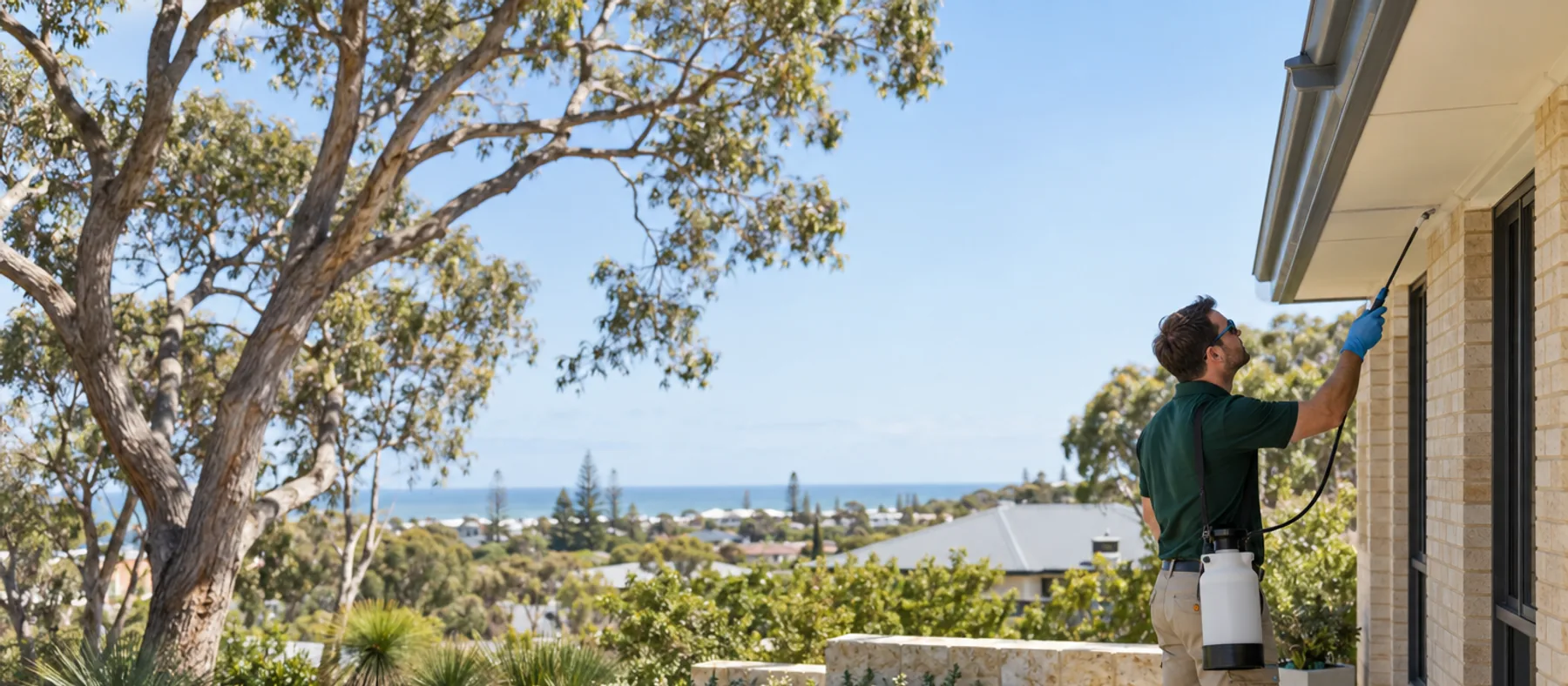
The standard residential pest control treatment has three parts. A residual insecticide, usually a synthetic pyrethroid, is applied inside along skirting boards, under sinks, around window and door frames, behind appliances and in cupboards where pests travel. The same class of product is sprayed outside along the base of the walls, up under the eaves, around weep holes, window and door surrounds, the outdoor entertaining area and the garage. Where the roof void is accessible it is dusted for cockroaches, spiders and silverfish.
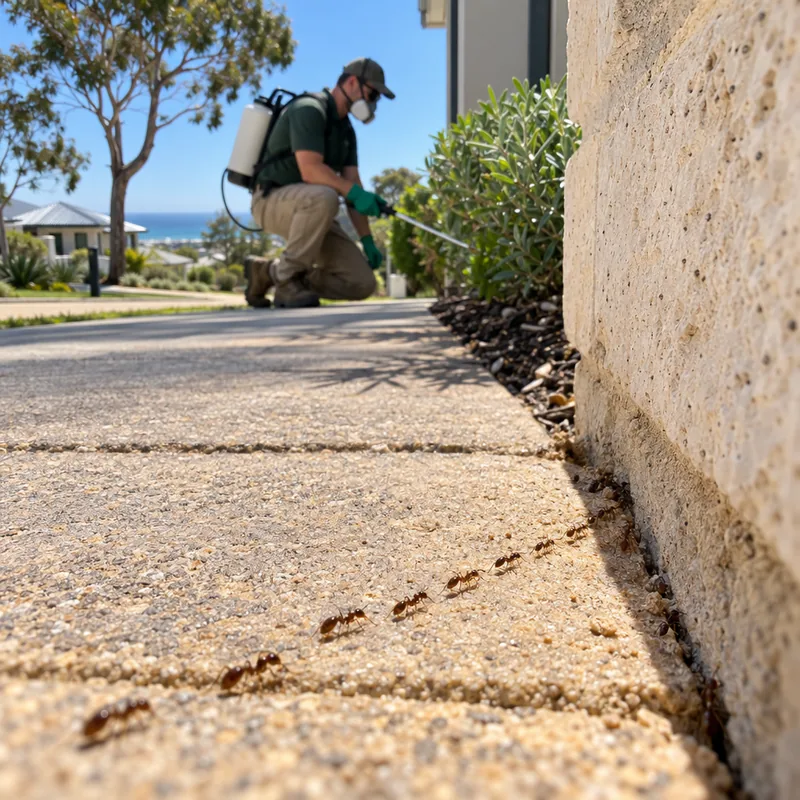
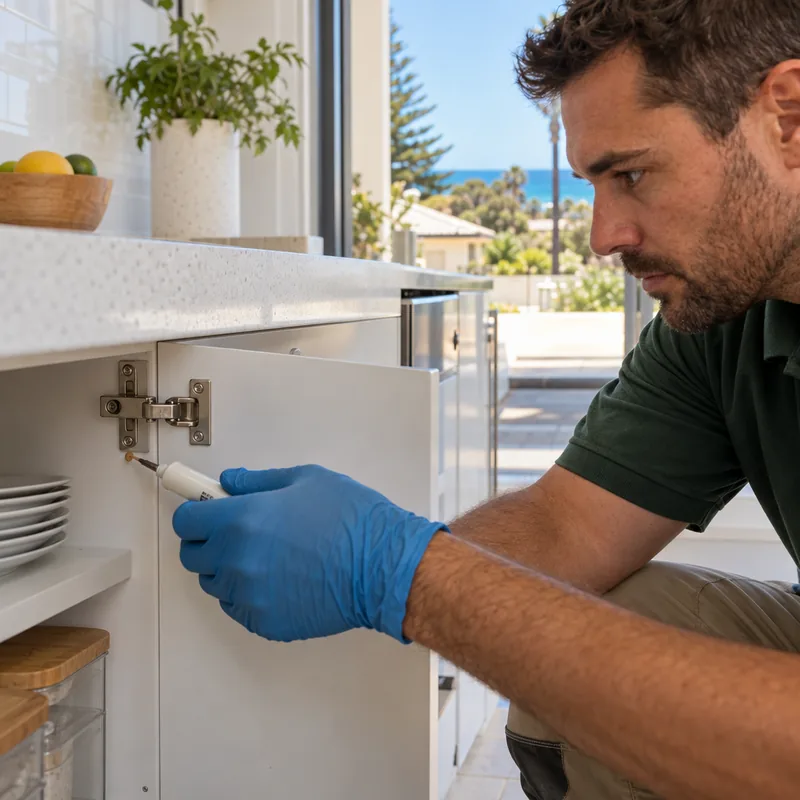
Some pests need something extra. German cockroaches are treated with gel bait and an insect growth regulator in the kitchen because a spray alone scatters them. Ant nests found in the yard are treated directly, and coastal brown ants, the dominant pest ant in Perth, often need a granular bait laid along their trails. Redbacks are treated at the harbourage, under the pot rim or the outdoor chair, not just sprayed at from a distance. The ant control and spider control pages go into more detail on each, and both are included in a general treatment where they are found.
Moths, silverfish, carpet beetles and millipedes are covered as well. Pantry moths are dealt with by finding and discarding the infested packet and treating the shelving; clothes moths and carpet beetles by treating wardrobes, carpet edges and under furniture; silverfish by dusting the roof void and treating the cupboards and bookshelves they feed in; millipedes by a barrier along the base of the walls and around doorways.
On the day and how to prepare
Appointments are booked around your schedule, and a typical house takes an hour or two depending on size and how much is found. Before the visit, clear the floor along walls in the kitchen and bathrooms, put pet bowls and toys away, cover fish tanks and switch off their air pumps, and take washing off the line if it hangs over the perimeter. Children and pets should be out of the treated rooms while the product is wet, and the technician will tell you when it is dry and safe to walk on.
You do not need to empty cupboards unless German cockroaches are being baited, in which case the affected cupboards are cleared so the gel can be placed where they hide. After the treatment you will receive a written record listing the products used, where they were applied and any recommendations for the property.
Keeping pests out between treatments
A residual treatment keeps working for months on the surfaces it was applied to, but the property does a lot of the work. Move garden beds and mulch off the house wall, adjust reticulation so it does not spray the brickwork, fix leaking taps and air conditioner drip lines, and keep pet food in sealed containers overnight. Trim tree branches and palm fronds off the roof, because they are highways for ants, spiders and roof rats alike. Keep firewood and timber off the ground and away from the house. In the older streets of Safety Bay and Kwinana Town Centre, check that weep holes are not blocked by paving and that gaps around pipes through the wall are sealed.
When to book a general pest treatment
Most homeowners in the southern suburbs book once a year, and late spring is the sensible time because it puts a fresh treatment in place before the summer ant and spider push. Others book when they move into a house, after a renovation, when a rental changes hands, or when a particular pest has become a nuisance. If the problem is a single pest that keeps coming back despite treatment, such as a rodent in the roof or a persistent German cockroach infestation, a dedicated rodent control or cockroach control visit is a better fit than a general spray.
If you are trying to work out what affects pest control prices in Perth, the short version is the size of the house, the pests found, whether a roof void and subfloor need doing and how much external area there is. The post on what changes a pest control quote goes through each factor. Every job here is quoted in writing after the inspection and before anything is applied, so you can compare like for like. WA Consumer Protection sets out your rights on quotes and contracts.
Licensing, safety and what to ask
Pest management technicians in WA must hold a Pest Management Technician licence issued by the WA Department of Health under the Health (Pesticides) Regulations 2011, and the business must hold a Pest Management Business registration. You are entitled to ask to see the licence, and a technician who is licensed will not mind. Ask what products are being used and where, what the re-entry time is for each room, and what the written record will include. Ask how the treatment is adjusted for a household with a pregnant member, a baby, a bird or a reptile, because those change the product choice and where it goes.
To arrange an inspection and a written quote for a home in Rockingham, Baldivis, Warnbro, Kwinana or anywhere across Perth’s southern corridor, use the quote form and you will be contacted to arrange a time.
What is included
- Inspection of the interior, roof void access point, subfloor where present and the yard before anything is applied
- Internal treatment of skirtings, wet areas, cupboards, behind appliances and window frames with a residual insecticide
- External perimeter and eave spray to the walls, weep holes, window frames, door surrounds and outdoor entertaining areas
- Roof void dusting for cockroaches, spiders and silverfish where the void is accessible
- Gel baiting in kitchens and bathrooms where German cockroaches are found
- Ant nest treatment along paths, paving edges, garden beds and reticulation lines
- Web removal from eaves, gutters and outdoor furniture after the spray
- A written treatment record listing the products used and the areas treated
Signs you should call
- Ant trails along benchtops, around the dog bowl or through the bathroom every summer
- Cockroaches in the kitchen at night, or egg cases behind the fridge and dishwasher
- Redbacks under outdoor furniture, in the meter box or along the fence line
- Silverfish in the linen cupboard, bookshelves or wardrobes
- Millipedes in the garage and along the bottom of external walls after the first rains
- Small moths in the pantry, or holes in woollens and carpet edges from carpet beetles
- A pest problem in a rental at the start or end of a tenancy
General Pest Control in four steps
Inspect
The technician walks through the interior, the roof void access point, the subfloor where present and the yard to identify which pests are active and where they are living. This decides what is treated and with what.
Written quote
You receive a written quote listing the areas to be treated, the pests covered and any extra work such as German cockroach baiting or ant nest treatment. Nothing is applied until you have agreed to it.
Treat
A residual insecticide goes into skirtings, wet areas, cupboards and behind appliances inside, and along the perimeter, eaves, weep holes and entertaining areas outside. Roof voids are dusted where accessible and nests and harbourages are treated directly.
Protect and follow-up
The treatment keeps working on the surfaces it was applied to over the following months, and you receive a written record and advice on the moisture and entry points to fix. A yearly visit is the usual pattern for homes in the southern suburbs.
Kids, pets and what to do before the visit
Products are applied to cracks, crevices, skirtings, eaves and the perimeter at the label rate by a licensed technician, not across open floors, and once dry they are bonded to the surface. Keep children and pets out of treated rooms until surfaces are dry, wipe benchtops before preparing food and put pet bowls back out afterwards. Before the visit, clear the floor along walls in the kitchen and bathrooms, take washing off the line, cover fish tanks and turn off their pumps, and tell us about birds, reptiles, pregnancy or asthma in the household so the product and placement can be adjusted.
Frequently asked questions
1. What does a general pest treatment in Perth cover?
A general pest treatment covers the common crawling and web-building pests found in and around Perth homes, which means ants, spiders including redbacks, cockroaches, silverfish, pantry and clothes moths, carpet beetles, millipedes and the occasional earwig or slater. It includes an internal residual treatment, an external perimeter and eave spray, roof void dusting where accessible and web removal. It does not cover termites, rodents, fleas, bed bugs, wasps or possums, which each need their own inspection and treatment. If any of those are found during the visit, you will be told and given a separate written quote.
2. What changes pest control prices in Perth?
Four things move the price of a general pest treatment more than anything else. The size of the home, because a four by two in Baldivis takes longer than a two bedroom unit in Rockingham. The pests found, because German cockroaches or a large ant problem add baiting to the standard spray. Whether a roof void and subfloor are accessible and need treating. And the external area, since a big block with sheds, decking and retaining walls takes more product and time. Every job is inspected and quoted in writing before treatment, so the figure you receive reflects your property rather than an average.
3. How often should a home in Rockingham have a general pest treatment?
Once a year is the usual pattern for a house in the southern suburbs, with late spring the most useful time because it puts a fresh residual treatment in place before the summer ant and spider push. Homes backing onto bushland in Baldivis, Secret Harbour or the Rockingham Lakes wetlands, older homes with subfloors and roof voids, and households that have had a German cockroach problem sometimes go to two visits a year. If a pest keeps returning between treatments, that usually points to a moisture or entry problem worth fixing rather than more frequent spraying.
4. Do I need to leave the house during the treatment?
For most general pest treatments you do not need to leave, but you should stay out of the rooms being treated until the product has dried, which usually takes a couple of hours depending on the weather. The technician works room by room and will tell you when each is fine to re-enter. If someone in the home is pregnant, asthmatic, very young or elderly, mention it when booking so the product choice and application can be adjusted, and it may be simpler to be out for the afternoon. Pets should be kept off treated floors until dry, and fish tanks covered.
5. Is the treatment safe for dogs, cats and children?
The products used in a residential general pest treatment are registered for use in and around homes and applied at the label rate by a licensed technician, in cracks, crevices, skirtings and perimeter areas rather than across open floors. Once dry they are bonded to the surface. Keep children and pets out of treated rooms while surfaces are wet, wipe benchtops before preparing food, and put pet bowls and toys away before the visit. Birds, reptiles and fish are more sensitive, so tell the technician about them so the product and placement can be changed or the tank covered and its pump turned off.
6. Does a general pest treatment cover termites?
No. Termites, which many people in WA still call white ants, need a separate inspection to AS 4349.3 and, if they are found, a treatment to AS 3660.2, and neither can be done with a general spray. A general pest treatment can suppress ants and other insects around a home, but it does nothing to a termite colony under the slab or in a tree on the verge. If the technician sees mud leads, hollow-sounding timber or termite frass during a general treatment, they will stop and recommend a dedicated termite inspection rather than spray over it.
7. Do you do residential pest control for rentals and end of lease?
Yes. General pest treatments are common at the start and end of a tenancy across Rockingham, Baldivis and Mandurah, where the rental market is large. A tenant leaving a property where a pet was kept usually needs a flea treatment as well, and many leases ask for it, so check your lease and the Consumer Protection WA tenancy guidance before booking. The written treatment record you receive after the visit is what property managers generally ask for. Landlords and property managers can book a general treatment between tenancies to start a new lease from a clean baseline.