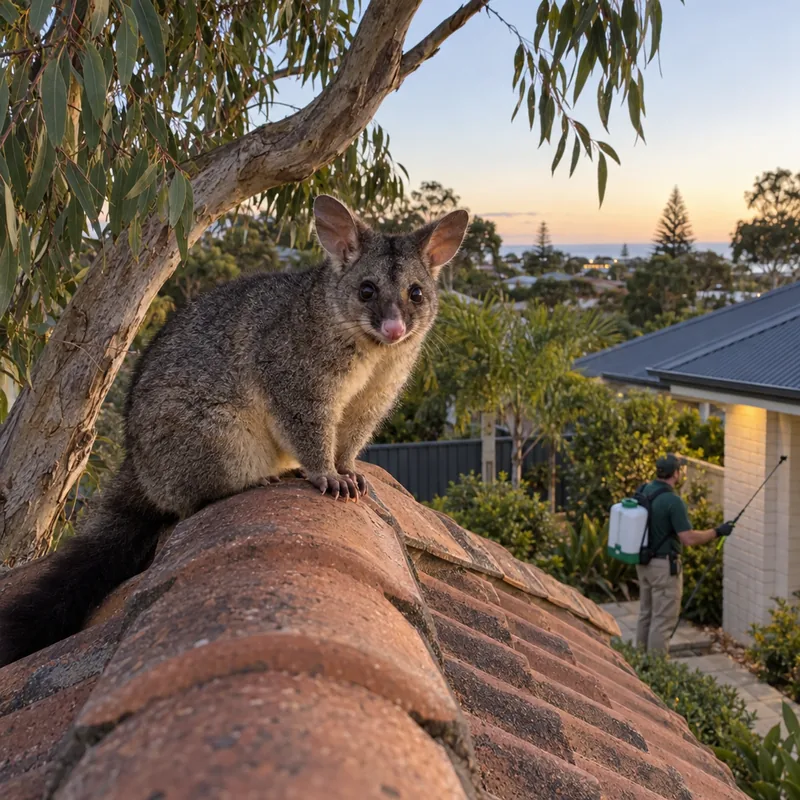
A possum in the roof announces itself just after dark: a heavy thump on the ceiling, a scramble across the plaster, a hiss or a growl, then silence until it comes home before dawn. It is one of the most common wildlife calls in the foothill suburbs of Armadale and Kelmscott, along the tree-lined older streets of Safety Bay and Shoalwater, and around the wetlands and reserves of Rockingham. It is also the call where the law matters most. This page explains what WA law allows, how possum removal in Perth is done by a licensed operator, why the possum is released on your own property, why sealing the roof is the real fix, and where a possum box fits in.
Possums are protected native fauna in WA
Brushtail and ringtail possums are protected under the Biodiversity Conservation Act 2016 (WA), regulated by the Department of Biodiversity, Conservation and Attractions (DBCA). They cannot be killed, harmed, poisoned or taken away, and trapping one requires a licence. The lawful way to get a possum out of a roof is to trap it, release it on the same property within a short distance of where it was caught, and seal the entry points so it cannot return. The western ringtail possum is also a listed threatened species in the south-west, which is one more reason the rules are strict.
That rules out several things people try. Rodent bait in a roof with a possum in it will kill the possum. Blocking the entry with the animal inside means it dies in the ceiling or claws its way out through the plaster. Driving it to the Serpentine National Park or Baldivis Nature Reserve is an offence and, because possums are territorial, usually a death sentence for the animal. Possum control in Perth is about exclusion, not extermination, and any operator who suggests otherwise should be shown the door. The blog post on possums in the roof and what WA law allows goes through the legislation in more detail.
Possum or rat? Getting the identification right
From below, a possum and a roof rat can sound similar, and the response is completely different. A possum is heavy, slow and noisy: thumps, a dragging sound, hisses, growls and a cough-like call, leaving at dusk and returning before dawn. A roof rat is light, fast and busy through the night, with gnawing sounds and a scurry along the top plates. Possum droppings are dark, cylindrical and the size of an olive; rat droppings are small and pointed. A strong urine smell and a yellow stain on the ceiling usually mean a possum.
The inspection settles it. The technician looks in the roof void for droppings, nesting material and a flattened den in the insulation, walks the roofline for lifted tiles and gaps, and checks the trees and fences for the climbing route. If it turns out to be rats, the rodent control page covers that treatment, which is never used while a possum could be in the roof.
How lawful possum removal works
A cage trap of the kind approved for possums is set in the roof void or at the entry point, baited with fruit, and checked as the licence conditions require so the animal is not left in the trap. Once caught, the possum is released on the same property at dusk, close to where it was caught. Possums are nocturnal, and releasing at dusk lets it find cover and food straight away rather than sitting exposed in the heat.
Before the release, the roof is checked for a second possum or dependent young, and the entry points are sealed so the released animal cannot go straight back in. The whole sequence is planned so the animal is out and the roof closed off once the animal is confirmed out. The technician works under the appropriate licence and the quote states that.
Sealing the entry points is the real fix
Trapping removes one possum for one night. Sealing the roof keeps every possum out. Brushtails get in through lifted or broken roof tiles, gaps under Colorbond ridge capping and flashings, torn or missing eave linings, gable vents, old whirlybirds, gaps where a pergola or carport meets the fascia, and the corner where two roof planes meet on the older brick and tile homes of Safety Bay and Hillman. On the timber and weatherboard homes of Kelmscott the gaps are often at the eaves and under the verandah roof.
Every entry point found in the inspection is sealed with galvanised mesh, new eave lining, timber or flashing, and the gaps that a possum uses are usually the same ones that let roof rats in, so the work helps with both. Overhanging branches, vines and the pergola are the climbing routes, and you are told which ones to trim so the roof is harder to reach.
Possum boxes: give it somewhere else to live
The possum was in the roof because it needed a den. The tuarts, jarrahs and peppermints with natural hollows have largely gone from the suburbs, and a roof void is a dry, dark, safe substitute. Seal the house without offering an alternative and the possum tries the neighbour’s roof, the shed, the pergola ceiling or the space behind the air-conditioner. A possum box fixed to a tree a few metres from the house, high enough to be out of reach of dogs and facing away from the afternoon sun, gives it a home that is not yours. On the big foothill blocks of Armadale and Byford and near the Rockingham Lakes and Lake Richmond wetlands, a box is often the difference between a one-off job and a repeat call every winter.
Where possums turn up in the southern suburbs
Possums live wherever there are trees, food and a den. The Darling Scarp suburbs of Armadale, Kelmscott and Byford back onto jarrah forest and have the most. The older coastal suburbs of Safety Bay, Shoalwater and Waikiki have mature peppermints and tuarts on the verges and 1960s roofs with plenty of gaps. Around the Rockingham foreshore, Cape Peron and the Lake Richmond reserve, possums use the coastal heath and move into houses along the bush edge. Newer estates in Baldivis and Secret Harbour see fewer, but a possum displaced by clearing will move into the nearest roof.
Possums also strip fruit trees, roses and vegetable beds overnight. Netting and tree collars are the lawful answer there; poison and traps are not.
Written quote before any work
A possum job is quoted after the inspection, because the sealing work is what decides it: a single lifted tile is a very different job from a 1970s roof with a dozen gaps and a possum family in residence. The quote sets out the trapping, the release, each entry point to be sealed and any possum box, in writing, before anything is done. WA Consumer Protection explains your rights on quotes and contracts. Possum removal in Armadale, Kelmscott, Safety Bay and everywhere between Cockburn and Mandurah is booked through the quote form or by phone, and you will be contacted to arrange a time. If the noise in the roof turns out to be something else, the general pest control page covers the rest.
What is included
- Roof void and exterior inspection to confirm it is a possum, not a roof rat, and to find every entry point
- Trapping by a licensed operator using a possum-safe cage trap set in the roof or at the entry, checked as required
- Release of the possum on the same property at dusk, as WA law requires, not relocated to bushland
- Entry points sealed: lifted tiles, gaps under Colorbond ridges, broken eave linings, gaps at gable ends and vents
- Tree branches and climbing routes onto the roof identified so you can trim them back
- Possum box installed on a tree away from the house where practical, so the animal has somewhere else to den
- Clean-up advice for droppings and urine staining in the ceiling insulation
- Written quote and a note of the licence under which the trapping is done
Signs you should call
- Heavy thumping or running across the ceiling just after dusk and again before dawn
- Hissing, growling, coughing or screeching sounds from the roof at night
- A strong urine smell coming from the ceiling or a yellow stain spreading across the plaster
- Dark cylindrical droppings about the size of an olive on the verandah, pergola or driveway
- A lifted roof tile, a torn eave lining or a gap at the gable end you have noticed but not fixed
- Fruit trees, roses and vegetable gardens stripped overnight
- A possum seen on the fence, the pergola or the powerline at dusk heading for your roof
Possum Removal in four steps
Inspect
The technician inspects the roof void and walks the roofline to confirm a possum is present, where it gets in and where it dens. Rats and possums sound similar from below, and the treatment is completely different.
Written quote
The quote sets out the trapping, the release, the sealing work and any possum box, and confirms the work is done under the appropriate licence. Nothing is done until you have agreed to it.
Trap and release
A cage trap is set with fruit bait in the roof or at the entry point and checked as the licence requires. The possum is released on the same property at dusk, close to where it was caught, so it can find a new den nearby.
Protect and follow up
Every entry point is sealed once the roof is confirmed empty, and a possum box is fitted where practical. You are told which branches to trim and what to listen for in the weeks afterwards.
Do not try to trap, poison or block the possum in yourself
Possums are protected native fauna in WA and it is an offence to kill, harm or relocate them without a licence, and rodent bait in a roof with a possum in it will kill the possum. Do not seal the entry while the animal is inside; it will die in the ceiling or tear its way out through the plaster. Keep kids and pets away from a possum on the ground, as a cornered brushtail bites and scratches hard. Trapping and release is done by a licensed operator, and the work is planned so the animal is confirmed out before the roof is sealed.
Frequently asked questions
1. Is it legal to remove a possum from my roof in WA?
Yes, but only in a specific way. Brushtail and ringtail possums are protected native fauna under the Biodiversity Conservation Act 2016 (WA), regulated by the Department of Biodiversity, Conservation and Attractions (DBCA). They cannot be killed, harmed or taken away. Removal from a roof is done by a licensed operator who traps the animal and releases it on the same property, within a short distance of where it was caught, and the entry points are then sealed so it cannot get back in. Trapping without the right licence is an offence, and so is dumping the possum in bushland.
2. Can you relocate the possum to bushland away from my house?
No, and neither can anyone else lawfully. WA law requires a trapped possum to be released on the same property, close to where it was caught. Possums are territorial, and one dropped into an unfamiliar patch of bush in the Darling Scarp or Baldivis Nature Reserve is usually killed by the resident possums, foxes or cats, or starves. The fix that works is not removing the animal from the area but removing its access to your roof: sealing the entry points and giving it a possum box on a tree so it dens there instead of in your ceiling.
3. How do I know it is a possum and not a rat?
Timing and weight. A possum leaves the roof just after dusk and returns before dawn, and its movement is a slow, heavy thump rather than the light scurry of a roof rat. Possums hiss, growl and cough; rats are mostly silent apart from gnawing. Possum droppings are dark, cylindrical and about the size of an olive, while rat droppings are small and pointed. A strong urine smell and a yellow ceiling stain usually mean a possum. The inspection confirms it, and if it is rats the rodent control page describes the very different treatment, which must never be used where a possum is present.
4. What happens after the possum is trapped?
It is released on the same property at dusk, close to where it was caught, so it can find another den nearby. Possums are nocturnal and a daytime release leaves the animal exposed to heat, dogs and birds, so the timing matters. Before the release, the roof is checked to make sure no joeys or a second possum are still inside, and the entry points are sealed so the released animal cannot go straight back in. Where a possum box has been installed on a tree, the animal often moves into it within a few nights, which is the outcome everyone wants.
5. Why do you install a possum box?
Because the possum was in your roof for a reason: it needed a dry, dark den and the older tuarts, jarrahs and peppermints that used to provide hollows have mostly gone from the suburbs. Seal the roof without giving it an alternative and it will try the neighbour's roof, the shed or the pergola ceiling. A possum box fixed to a tree a few metres from the house, facing away from the afternoon sun, gives it somewhere to go. On the big foothill blocks of Armadale and Kelmscott and near the Rockingham Lakes wetlands, a box is usually the difference between a permanent fix and a repeat call.
6. Will the possum just come back?
It will try, which is why the sealing work is the real job and the trapping is the smaller part. Possums use lifted tiles, gaps under Colorbond ridge capping, broken eave linings, gable vents, gaps where the pergola meets the fascia and old whirlybirds. All of them are sealed with galvanised mesh, new eave lining or timber, and overhanging branches are identified for trimming so the roof is harder to reach. If a possum does get back in later, it has found a new gap, and that gap is sealed. The quote says exactly what is being sealed.
7. Do possums cause damage in the roof?
Some. The main issues are urine soaking into insulation and staining the ceiling, droppings, the smell, and the noise that stops people sleeping. Brushtails can tear insulation and sarking to make a nest and occasionally chew wiring, and a possum that dies in the roof is a serious problem. They do not eat timber and they are not a structural pest like termites. Once the animal is out, soiled insulation in the affected area can be replaced and the ceiling stain sealed and painted. A roof with a possum in it often also has the gaps that let rats in, so the sealing work helps with both.