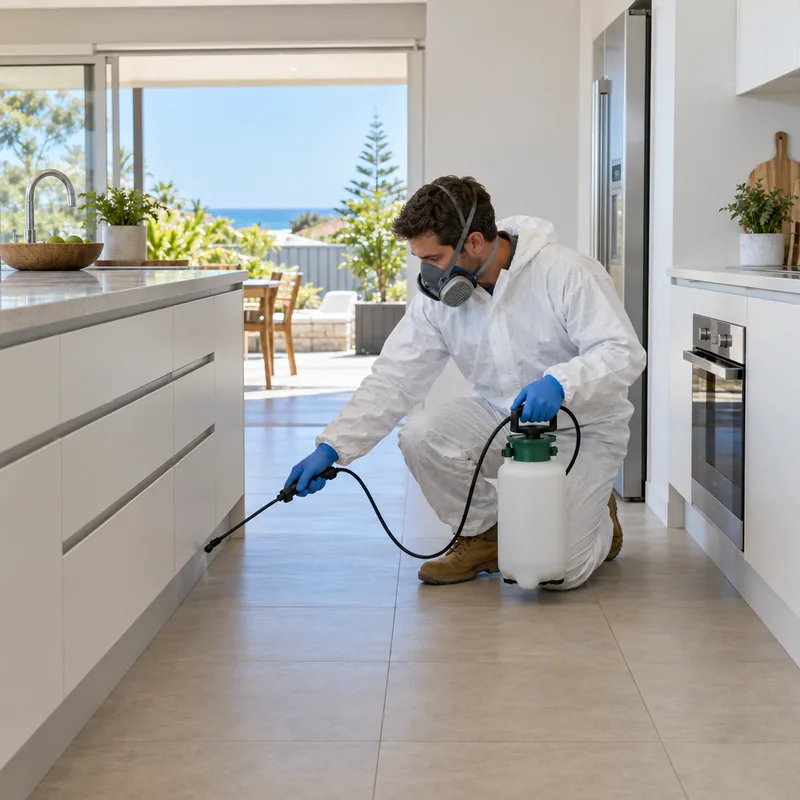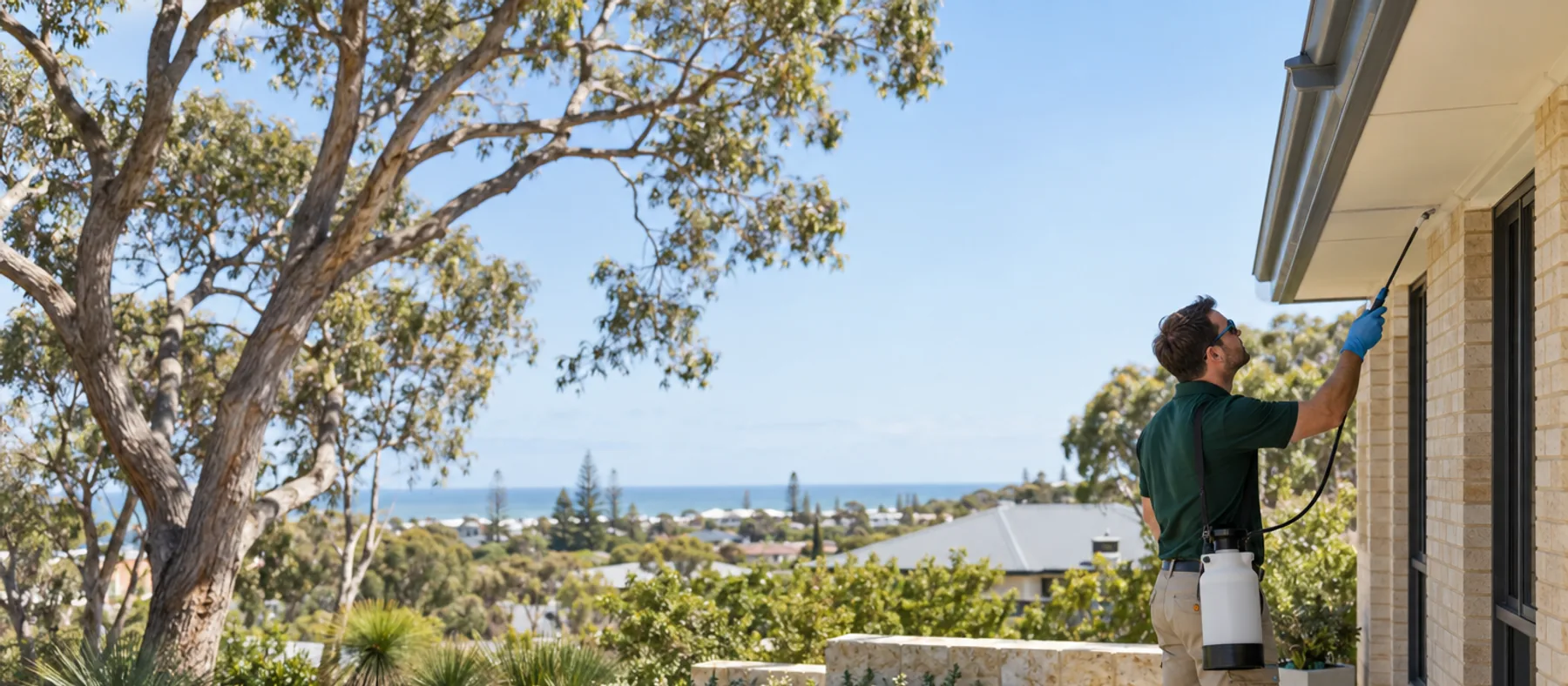
Rodents in Perth’s southern suburbs follow the seasons. Through summer there is plenty to eat outside, and the roof rats live in the palms, the citrus and the vines along the fence. When the first cold fronts come through in May the roof void of a warm house is a better place to be, and the scratching starts above the bedroom ceiling at night. This page covers rat control and mice control for homes across Rockingham, Kwinana, Mandurah and Cockburn, how the species are identified, how baiting and trapping are used safely around pets and wildlife, and how the entry points are closed so the problem does not repeat next winter.
Why rodents are a problem in Rockingham and Perth’s south
The housing does a lot of it. The 1960s to 80s brick and tile homes across Safety Bay, Shoalwater, Cooloongup and Kwinana have roof voids with plenty of gaps under the tiles at the eaves, and often a subfloor with vents that have rusted or broken. Colorbond roofs on the newer estates leave a corrugation gap at the eave and ridge that a roof rat walks through without slowing down. Older homes in Spearwood and Hamilton Hill with a market garden history have fruit trees and sheds that have fed rats for decades.
The landscape adds to it. Lake Richmond, the Rockingham Lakes Regional Park wetlands, the Peel estuary and canals at Mandurah and Halls Head, and the Beeliar wetlands all carry rodent populations that move into the nearest streets as winter sets in. Palm trees, which are everywhere in the coastal suburbs, are a roof rat’s favourite nest and highway. Chook pens, bird aviaries, fruit trees and pet food left out overnight keep them fed.
Roof rats, house mice and how to tell them apart
The roof rat, also called the black rat, is the one in the ceiling. It climbs well, travels along fences, powerlines and tree branches, and nests in roof voids, wall cavities and palms. Its droppings are spindle shaped and it takes fruit off the tree and leaves it half eaten. The house mouse is small, gets through a gap the width of a pencil, and turns up in pantries, behind the oven and in the garage, leaving small dark droppings everywhere it goes. The Norway or brown rat is bigger and heavier, burrows rather than climbs, and is found around drains, compost and industrial sites; it is less common in the suburbs here. Knowing which one matters because station placement, bait choice and where to look for the entry point all change.
How the inspection finds them
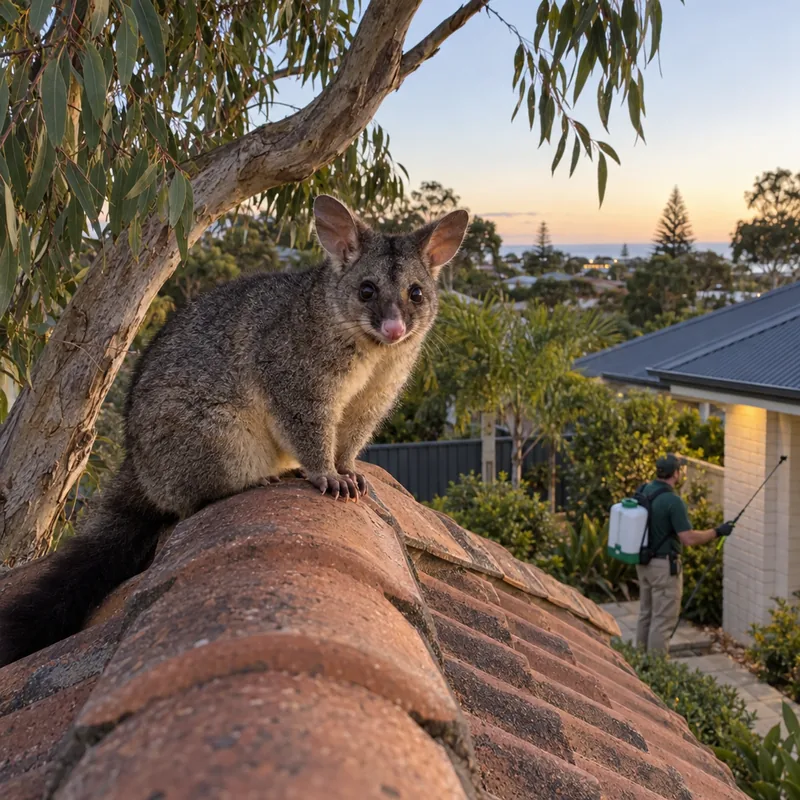
The technician goes into the roof void with a torch and looks for droppings along the top plates, gnawed cable and insulation pulled into nests. Grease marks along beams and pipes show the runs. Outside, the eaves, valleys and any Colorbond gaps are checked, along with pipes and vents through walls, roller door seals, subfloor vents and the base of sheds. The yard is checked for fruit trees, palms, compost, chook pens and pet bowls, which explain why the rats are there in the first place. If the noise in the ceiling turns out to be a possum, which is common in Armadale and Kelmscott and along the coastal tuarts, that is a different job under different law, and the possum removal page and the post on possums in the roof and WA law explain what happens instead.
How rodent control works
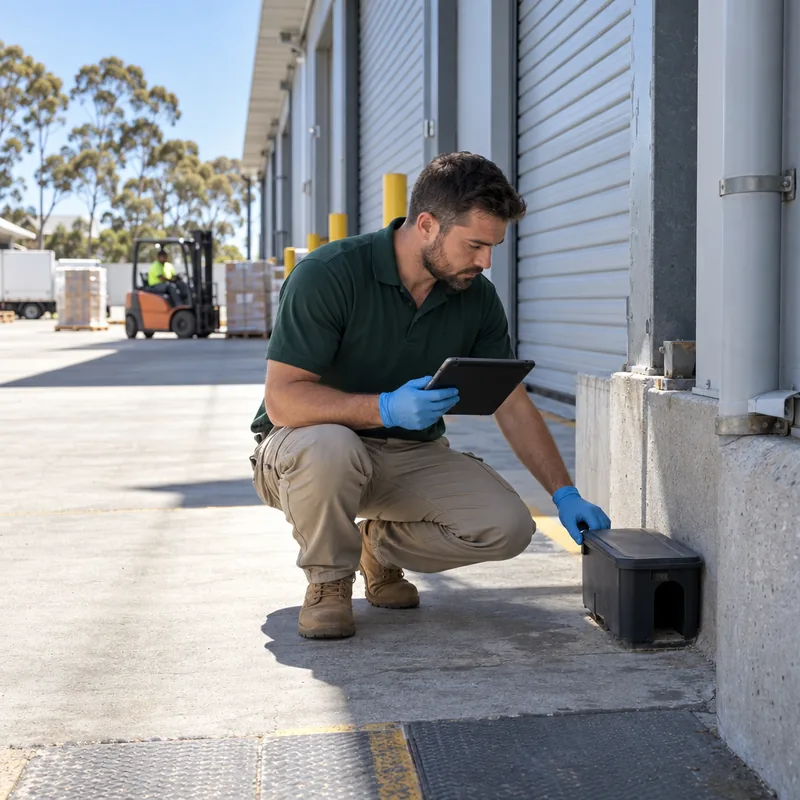
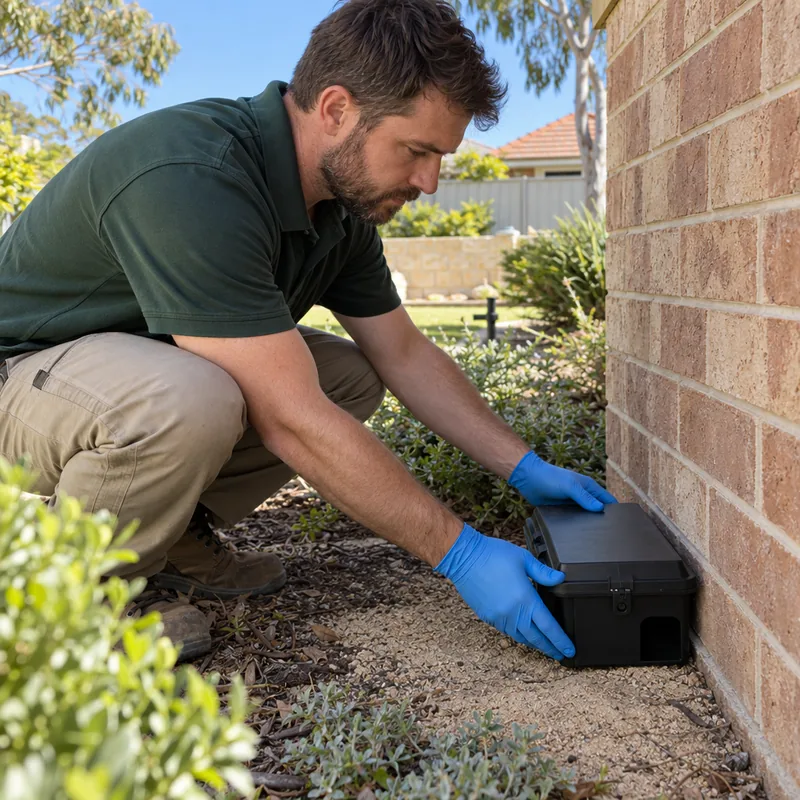
For most homes the treatment is a set of lockable, tamper-resistant bait stations placed in the roof void, along the external walls, in the shed and at the points where rodents enter. The stations are secured so a child or a dog cannot get at the bait, and they are placed on the runs the inspection found rather than scattered at random. Where a property backs onto wetlands, bushland or the estuary, or where owls and raptors are known to hunt, second-generation anticoagulant baits can poison the animal that eats the poisoned rat, so snap traps in the roof void and along runs are used instead or alongside. Traps are also the better choice where pets catch rodents.
Entry points are sealed where it is practical: mesh over subfloor vents, gaps around pipes and conduits filled, eave gaps closed, roller door seals replaced. A rat exterminator who baits without sealing is treating the symptom, and the roof will be occupied again next May. Rodent removal is not finished until the follow-up visit, when stations and traps are checked, any dead rodents that can be reached are removed and the sealing is inspected.
On the day and how to prepare
Clear access to the roof manhole, usually in a hallway or wardrobe, and move stored goods away from the walls in the garage and shed so the runs and entry points can be seen. Put pet food away and keep pets inside or secured while the technician is in the roof and around the perimeter. Let the technician know about chooks, aviaries, a dog that catches rats or a neighbour’s cat that visits, because it changes what is used and where. A typical house takes an hour or so, and the follow-up is booked before the technician leaves.
Keeping rats and mice out
Prune palm fronds, vines and tree branches back from the roof line so there is no bridge onto the eaves. Pick fruit as it ripens and clean up windfalls. Store chook feed, bird seed and pet food in sealed metal or heavy plastic bins and take pet bowls in at night. Keep compost enclosed. Fix broken subfloor vents and seal the gaps where pipes and cables pass through walls. Keep the roof void and shed free of stored cardboard, which is nesting material. In the older streets of Safety Bay and Shoalwater, where fibro and brick homes from the 1960s have roof voids that were never sealed, a check of the eaves before winter each year is worth doing.
When to call and what to ask
Noise in the ceiling at night, droppings in the pantry, a musky smell, gnawed cable or fruit taken off the tree are all reasons to book rather than wait, because a pair of roof rats in April is a family by July and rats chewing cable in the roof is a fire risk. Ask the technician to show you the Pest Management Technician licence issued by the WA Department of Health under the Health (Pesticides) Regulations 2011. Ask where each station will be placed and whether it is lockable, whether traps would be safer for your situation, what the follow-up schedule is and what entry points were found.
Rat control and mice control across Rockingham, Baldivis, Mandurah, Spearwood and the rest of Perth’s southern corridor is booked through the quote form. An inspection comes first and the quote is written before any station goes in, and WA Consumer Protection explains your rights on quotes and contracts; the post on what changes a pest control quote explains the factors. For a home with several pests at once, the general pest control page covers what can be done in the same visit.
What is included
- Inspection of the roof void, subfloor, kitchen, laundry, garage, shed and yard to confirm rats or mice and the routes they use
- Identification of the species, since roof rats, house mice and Norway rats nest and travel differently
- Tamper-resistant, lockable bait stations placed in the roof void, along external walls and in sheds where children and pets cannot reach them
- Snap traps used in place of bait near wildlife areas, wetlands and where secondary poisoning of owls, raptors or pets is a concern
- Entry points identified and sealed where practical, including gaps under Colorbond roofing, around pipes, vents and roller doors
- Removal of accessible dead rodents and advice on droppings and contaminated insulation
- Follow-up visit to check stations, traps and sealing and to remove or refresh as needed
- Written record of station locations and the products used
Signs you should call
- Scratching, scurrying or gnawing in the ceiling at night, especially from May to August
- Droppings in the pantry, under the sink, in the garage or along the top of a wall in the roof void
- Gnaw marks on food packaging, plastic bins, irrigation pipe or electrical cable
- A musky smell in a cupboard, roof void or wall cavity
- Half-eaten fruit under citrus, fig or palm trees, or rats seen running along fences and powerlines at dusk
- Pets fixated on a wall, cupboard or the base of a shed
- Grease marks along skirtings, beams or pipes where rodents run the same route each night
Rodent Control in four steps
Inspect
The technician checks the roof void, subfloor, kitchen, garage and yard for droppings, gnawing, grease marks and nests, and identifies the species. The entry points and outside food sources, such as fruit trees, chook pens and pet food, are noted.
Written quote
You receive a written quote covering the treatment method, the number and placement of stations or traps, any sealing work and the follow-up visit. If wildlife or pets make bait unsuitable, traps are quoted instead.
Treat
Lockable, tamper-resistant stations are placed where rodents travel and children and pets cannot reach, or snap traps are set in the roof void and along runs. Accessible entry points are sealed.
Protect and follow-up
A follow-up visit checks and refreshes stations or traps, removes any dead rodents that can be reached and confirms the sealing is holding. Advice covers the trees, storage and food sources that keep rats coming back.
Bait, pets and native wildlife
Rodenticide is only ever placed in lockable, tamper-resistant stations positioned where children and pets cannot reach it. Second-generation anticoagulant baits can poison owls, raptors, dogs and cats that eat a poisoned rodent, so near the Rockingham Lakes wetlands, Lake Richmond, the Peel estuary and bushland edges we may recommend traps instead. Tell us if you have chooks, aviary birds or a dog that catches rats. Before the visit, clear access to the roof manhole and move stored items away from the walls of the garage and shed.
Frequently asked questions
1. Is it rats or possums in my roof?
Roof rats are light and quick, and the noise is a scratching, scurrying or gnawing that moves fast across the ceiling, mostly late at night. Possums are heavier, so you hear a thump when they land on the roof at dusk and a slower, louder walk, often with hissing or coughing calls. Rat droppings are small and spindle shaped; possum droppings are larger and more like a pellet. The inspection settles it. It matters because possums are protected native fauna in WA under the Biodiversity Conservation Act 2016 and must be trapped and released on the property by a licensed operator, never baited.
2. Why do rats come inside in winter in Perth?
Roof rats live outside comfortably through Perth's dry summer, nesting in palms, vines and dense shrubs and feeding on fruit, seed and pet food. When the cold fronts arrive from May onwards the roof void of a heated house is warmer, drier and safer than a palm crown, and the insulation makes a ready nest. Outside food also drops off as fruit finishes. That is why calls for rat control across Rockingham, Safety Bay and Mandurah peak between May and August. Sealing the eave gaps and pruning the bridges onto the roof before autumn is the best way to stop the yearly move indoors.
3. Is rat bait safe with dogs, cats and chooks?
Bait is only placed inside lockable, tamper-resistant stations positioned where children, dogs, cats and chooks cannot reach it, such as in the roof void, behind the shed or fixed along a wall base. The bigger risk is secondary poisoning, where a dog, cat, owl or raptor eats a rodent that has taken bait. Where that is a real possibility, near wetlands, bushland or with a pet that catches rats, snap traps are used in the roof and along runs instead. Tell the technician about every animal on the property so the method can be chosen properly, and never put your own loose bait out.
4. How long does rat removal take to work?
Baiting is not instant. Rodents feed on the bait over several nights and the effect follows some days later, so the noise in the ceiling usually tapers off over the first week or two rather than stopping overnight. Trapping can be faster for a single rat on a known run. The follow-up visit is where stations are checked, traps reset or removed and the sealing inspected, and that is when the job is judged to be working. If activity continues after the follow-up it usually means an entry point or an outside food source was missed, and the technician goes looking for it.
5. Do you seal the holes where the rats got in?
Where it is practical, yes, and it is the part of rodent control that stops the problem coming back. Common entry points in the southern suburbs are the corrugation gaps under Colorbond eaves and ridges, broken tile eaves on older brick and tile homes, rusted subfloor vents, gaps around pipes and conduits through walls, and worn roller door seals. These are meshed or filled during the treatment or follow-up visit. Some jobs need a roofer or builder, such as replacing a run of damaged eave lining, and the report will tell you where that applies rather than pretend a bead of sealant is enough.
6. What about the dead rat smell?
A rodent that dies in a wall cavity or under the roof insulation can smell for a week or two while it dries out, particularly in warm weather. During the follow-up visit any carcasses that can be reached in the roof void or subfloor are removed. Ones inside a wall usually cannot be reached without opening the wall, which is rarely worth doing, and the smell fades on its own. Using traps rather than bait in the roof void reduces the chance of this, which is one reason traps are sometimes preferred even where bait would be safe.
7. Do you handle mice control in Perth as well as rats?
Yes. House mice are treated with the same approach, an inspection to find the runs and entry points, tamper-resistant stations or traps placed on those runs, and sealing of the gaps. Mice get through a hole the width of a pencil, so the sealing is finer work, usually around pipe penetrations, under doors, behind kitchen kickboards and where cables enter the meter box. Mice breed quickly and are most often found in pantries, behind ovens and in garages, so sealed food containers and a clear garage floor are part of the treatment. Mice and roof rats sometimes share a house, and both are dealt with in the one programme.