Most spiders in a Perth backyard are doing more good than harm, and a technician who promises to remove every spider from a property is promising something no treatment delivers. Spider control is about the ones that matter: redbacks where children and pets play, black house spiders webbing over every window, white-tailed spiders turning up in the bedroom, and the general build-up on the eaves that makes a house look neglected. This page explains how a spider treatment is done across Rockingham, Warnbro, Secret Harbour and the rest of Perth’s south, which species are treated directly and what you can do between visits.
Why spiders are a problem in Rockingham and Perth’s south
Spiders follow their food, and their food follows light and moisture. Outdoor lights on a warm night pull in moths and midges, and the black house spiders and orb weavers set up on the eaves and window frames beneath them. Along the coast from Safety Bay to Golden Bay the salt air, sandy yards and coastal heath support plenty of insects, and the decking, retaining walls and outdoor furniture of a typical home offer the dry, dark, undisturbed gaps a redback wants. Newer estates in Secret Harbour, Baldivis and Beeliar back onto cleared bush and reserve, and the spiders that lived there move into the sheds and fence lines. In the foothills at Kelmscott and Armadale the big blocks, timber piles and jarrah forest edge bring redbacks and wolf spiders in numbers.
Summer heat sends spiders indoors looking for cool and water, which is when white-tailed spiders start being found in bathrooms and bedrooms and huntsmans appear on the lounge room wall.
The spiders we see most
The redback is the one that matters medically. The female is black with the red stripe, builds a tangled web low down in a dry sheltered spot, and is found under outdoor chairs and tables, under pot rims, in meter boxes, in the folds of a trampoline mat, under sleepers and in the gaps of retaining walls and sheds. Bites are painful and need medical advice, and small children are most at risk because they play where redbacks live.
The white-tailed spider is a grey, cigar-shaped hunter with a pale tip on the abdomen. It does not build a web; it roams at night hunting other spiders and is found in bedding, towels and clothing left on the floor. The black house spider builds the dense funnel webs in window corners, weep holes and around outdoor lights and is the reason the front of a house looks webbed over. Wolf spiders live in the lawn and garden and come inside occasionally. Huntsmans are large, fast and harmless, and while they are dealt with when found inside, they are not the target of a spider treatment.
How the inspection finds them
The technician walks the outside of the house with a torch, checking under every piece of outdoor furniture, under pot rims and saucers, inside the meter box and any irrigation or pool equipment box, along the fence lines and retaining walls, under the deck, around the shed and in the play equipment. Redback webs are distinctive, and finding the harbourages is what makes the treatment work. Eaves, gutters, window frames and weep holes are checked for black house spider webbing. Inside, the corners of ceilings, behind furniture, wardrobes and the bathroom are checked, and the roof void and subfloor are inspected where accessible. The inspection notes what is bringing the spiders in, from a floodlight left on all night to a stack of pots and pavers against the shed.
How spider treatment works
Redbacks are treated directly. A residual insecticide is applied into the harbourage, under the chair, the pot rim, the meter box, the sleeper, so that the spider is contacted where it sits. Spraying the outside of a house from a distance and hoping the redbacks walk through it later is not spider control, because a redback rarely leaves its web.
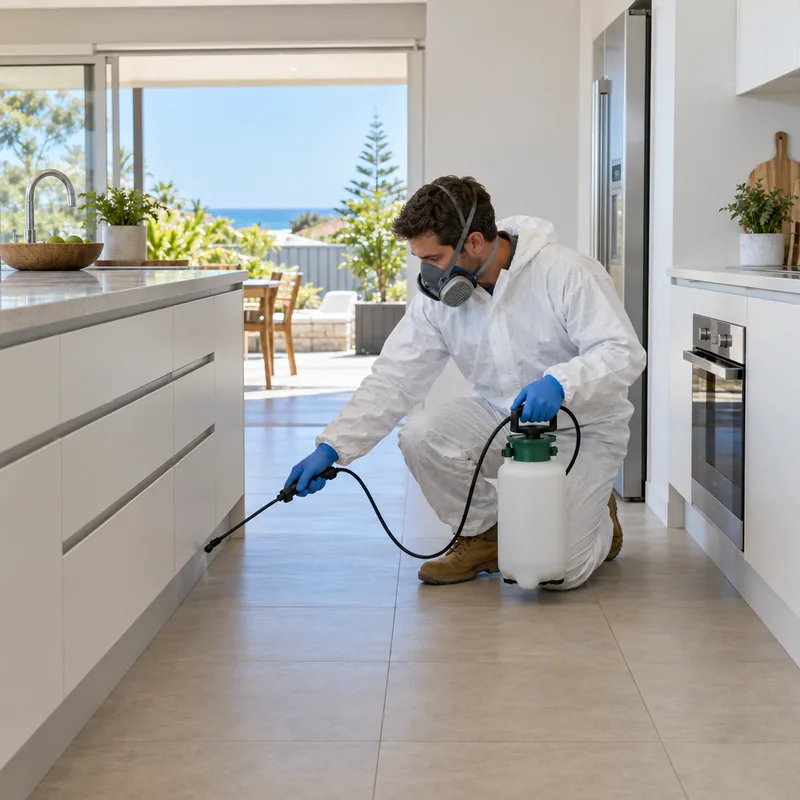
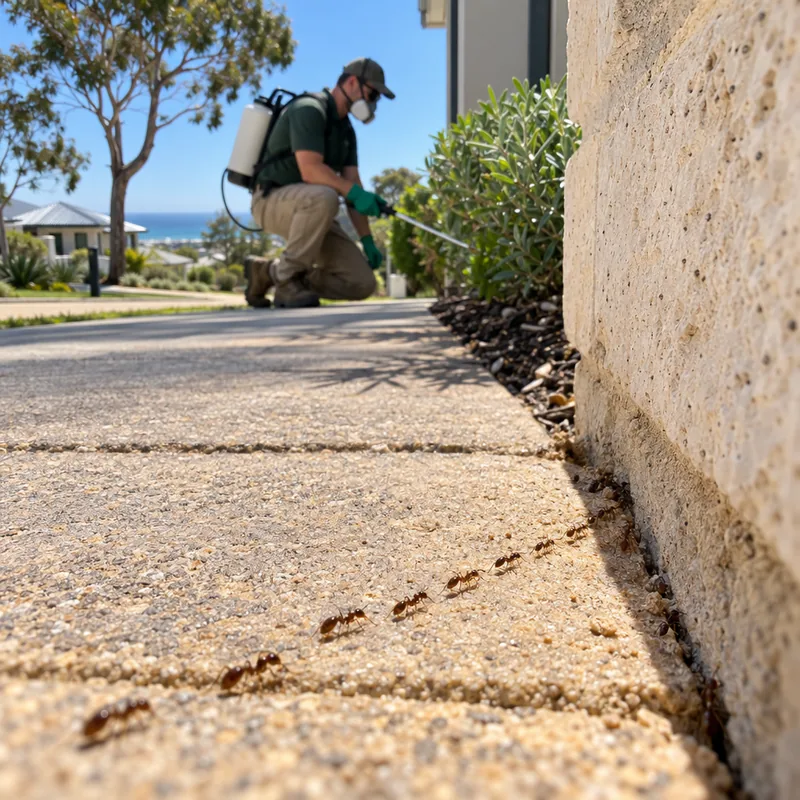
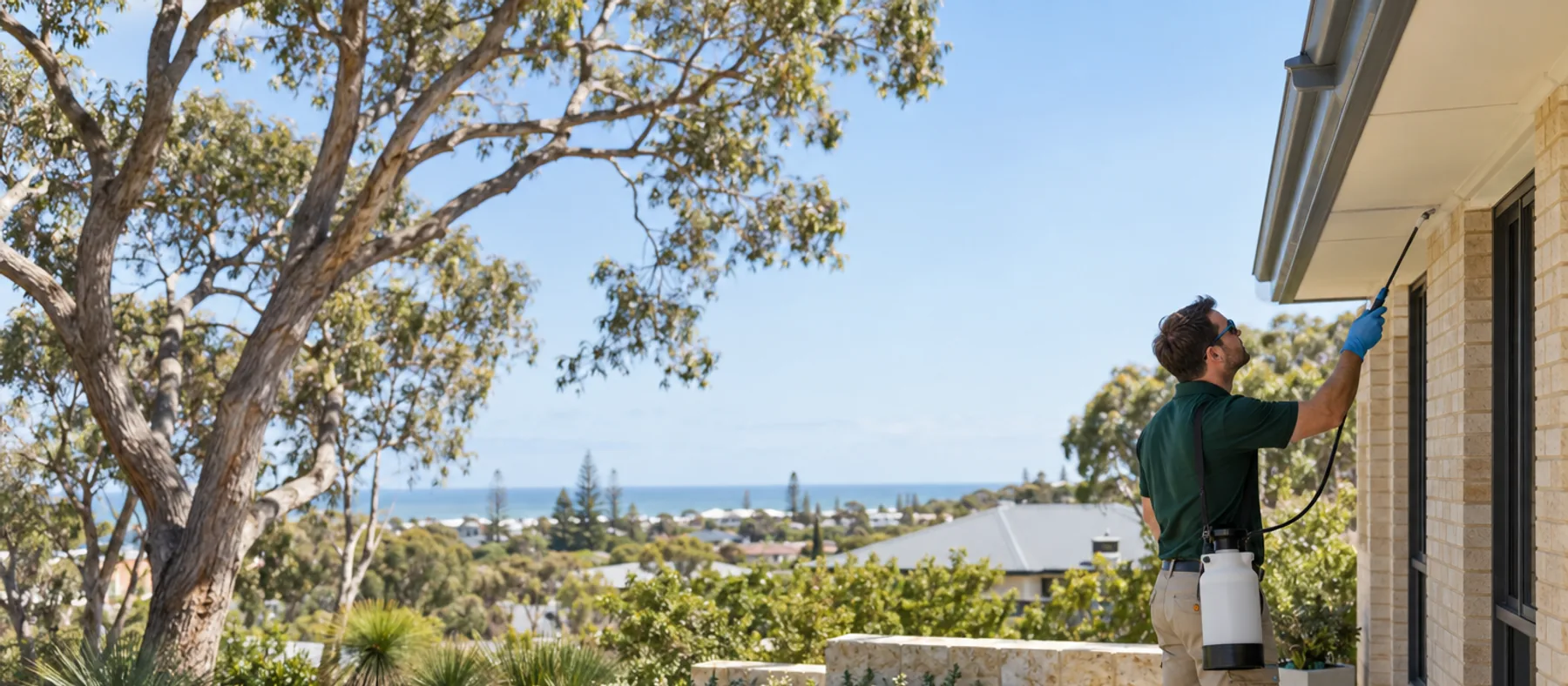
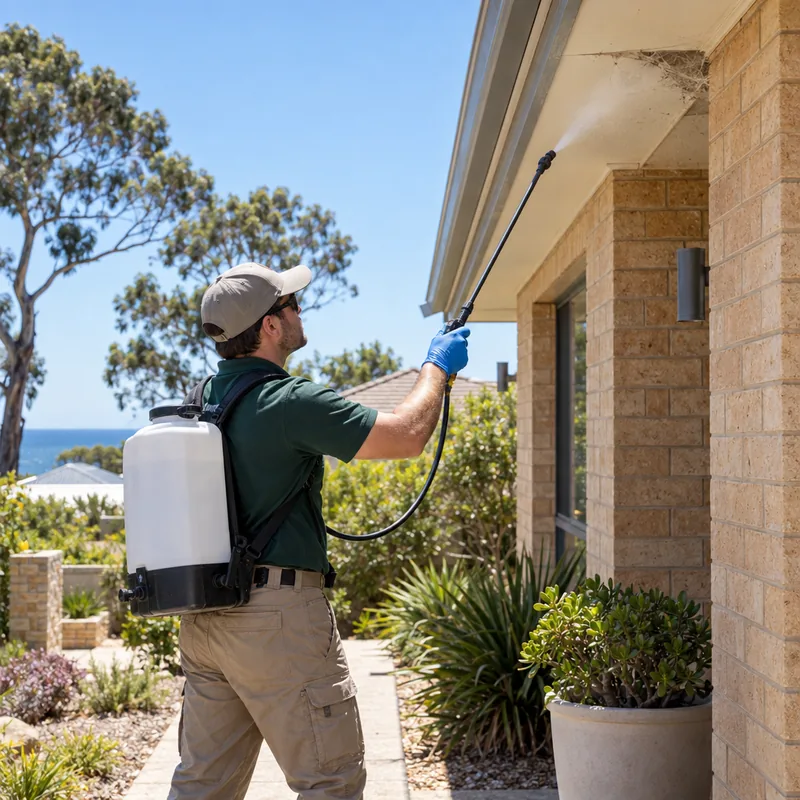
The perimeter and eave spray then goes on: a synthetic pyrethroid or similar residual applied to the base of the walls, up under the eaves, along the gutter line, around window and door frames, into weep holes, across the deck and the outdoor entertaining area, the shed and the garage. It leaves a treated surface that spiders and the insects they feed on contact over the following months. Inside, skirtings, cornices, window reveals, wardrobes and behind furniture are treated where spiders are found, and the roof void is dusted where accessible. Webs are removed from the eaves, gutters, lights and window frames after the spray, rather than before, so that the spiders in them are treated first. Spider removal of this kind is part of every general pest treatment, and a dedicated spider visit is used where redbacks are the main concern or the webbing is heavy.
On the day and how to prepare
Take washing off the line, put pet bowls and toys away, cover fish tanks and switch off their pumps, and keep children and pets inside or off the treated areas until surfaces are dry. Do not knock down webs before the visit, because disturbed redbacks relocate to somewhere harder to find. If you have a trampoline, cubby house or sandpit, let the technician know so they are checked and treated. Appointments are booked around your schedule and a typical home takes an hour or so.
Keeping spiders down
Switch outdoor lights off when they are not needed, or change to a warmer coloured globe that attracts fewer insects. Store pots, pavers, timber and bricks off the ground and away from the house. Keep outdoor furniture in use rather than stacked against a wall, and check under it before children sit down through summer. Keep the shed and garage tidy and cardboard off the floor. Fit flyscreens and door seals, and keep shrubs and trees trimmed off the walls and eaves. In the older beachside streets of Warnbro and Safety Bay, clear the weep holes and window tracks that black house spiders web up, and check the underside of decking each spring.
When to call and what to ask
Redbacks found where children or pets play, webs building faster than you can clear them, white-tailed spiders in the bedrooms, or a bite on someone in the household are all reasons to book. Late spring is a good time for a treatment across Perth’s south, before the summer build-up, and a rental or holiday home in Secret Harbour or Mandurah is usually treated before the new occupants arrive. Ask the technician to show you their Pest Management Technician licence, issued by the WA Department of Health under the Health (Pesticides) Regulations 2011. Ask which harbourages were found and treated directly, what the perimeter product is and how long it is expected to work on the surfaces it was applied to, and whether the webs are being removed. Written quotes and your rights as a customer are explained by WA Consumer Protection.
Spider pest control in Perth’s southern corridor, across Rockingham, Kelmscott and Beeliar, is arranged through the quote form, inspected first and quoted in writing. The post on what changes a pest control quote explains what moves the figure. Ants and wasps are often dealt with in the same visit; see the ant control and wasp and bee removal pages.
What is included
- Inspection of the exterior, eaves, meter box, outdoor furniture, pot rims, sheds, decking, fence lines and play equipment for spiders and their harbourages
- Direct treatment of redback harbourages under furniture, pot rims, meter boxes, sleepers and retaining walls
- External perimeter, eave, window frame, weep hole and gutter line spray with a residual insecticide
- Internal treatment of skirtings, cornices, window reveals, wardrobes and behind furniture where spiders are found
- Roof void and subfloor dusting where accessible
- Web removal from eaves, gutters, light fittings, outdoor furniture and window frames after the spray
- Advice on the lighting, clutter and vegetation that bring spiders back, and a written treatment record
Signs you should call
- Redbacks under outdoor chairs, in the meter box, under pot rims or along the fence line
- Webs building up on eaves, gutters, window frames and outdoor lights faster than you can clear them
- Black house spiders in the corners of windows and around weep holes
- White-tailed spiders found in bedrooms, bathrooms or in clothing and towels
- A bite on a family member or pet, or young children playing in areas with redbacks
- Spiders coming inside in numbers during hot summer weather
- You are moving into or preparing a rental or holiday home and want it cleared before occupancy
Spider Control in four steps
Inspect
The technician walks the exterior and interior looking for spiders and their harbourages, from redback webs under furniture and in the meter box to black house spider webs at windows and weep holes. The species found decides how each area is treated.
Written quote
You receive a written quote setting out the direct treatment of redback harbourages, the perimeter and eave spray, internal work, roof void dusting and web removal. Nothing is applied before you see it.
Treat
Redback harbourages are treated directly, then a residual insecticide is applied to the perimeter, eaves, window frames, weep holes and gutter lines, with internal treatment where spiders are found. Webs are removed after the spray has done its work.
Protect and follow-up
The residual treatment keeps working on the surfaces it was applied to over the following months. You receive advice on lighting, clutter, vegetation and storage that reduce spider numbers between visits.
Redbacks, bites and what to do before the visit
Redback bites are medically significant. If someone is bitten, wash the site, apply a cold pack for the pain and seek medical advice, and call 000 if the person is a small child or has severe symptoms. Before the visit, keep children and pets away from outdoor furniture, the meter box and stacked pots, and do not knock down webs, because a disturbed redback simply moves to the next dark spot. Take washing off the line, cover fish tanks and put pet bowls away. Stay out of treated areas until surfaces are dry.
Frequently asked questions
1. Which spiders in Rockingham are actually dangerous?
The redback is the spider of medical significance in the southern suburbs. Its bite is painful and needs medical advice, and small children and pets are most at risk because they play where redbacks nest, under outdoor furniture, pot rims, play equipment and in the meter box. White-tailed spider bites are unpleasant, but the widely repeated claims about flesh damage have not been supported by medical studies. Black house spiders, wolf spiders and huntsmans can bite if handled but are not considered dangerous. Funnel-web spiders of the kind found on the east coast are not part of the Perth picture. Treatment focuses on redbacks first.
2. Why does a spider spray need to hit the harbourages?
Because a redback almost never leaves its web. It sits in a dry, sheltered spot, under a chair, inside a meter box, under a pot rim, and waits for food to arrive, so a spray across the wall metres away is something it will never walk through. Spider treatment that works starts with the inspection finding every harbourage and treating it directly, and only then applies the residual perimeter and eave spray to deal with web-building spiders on the house and the insects they feed on. A technician who does not walk the yard with a torch and look under things is not treating redbacks.
3. How long does a spider treatment keep working?
A residual treatment stays active on the surfaces it was applied to for months, with the exact period depending on the product, the surface, sun exposure and rain, so it is best checked with the technician for your property rather than promised in general terms. Sheltered eaves and the inside of a meter box hold the product far longer than a sun-baked wall or paving that is hosed regularly. Most homes in Perth's south book a spider treatment once a year, in late spring before the summer build-up, and a second visit is sometimes needed on a bush block in Baldivis or the foothills where the pressure is higher.
4. Do you remove the webs as well?
Yes. Webs are removed from the eaves, gutters, outdoor lights, window frames and outdoor furniture as part of the treatment, after the spray rather than before, so that the spiders in the webs are contacted by the product first. Removing webs first simply moves the spiders. Redback webs under furniture and in meter boxes are cleared once the harbourage has been treated. If you want to keep on top of webs between visits, a soft broom on the eaves each month is fine once the treatment has dried, and it will not remove the residual product from the surface.
5. Are huntsman spiders treated?
A huntsman found inside during the treatment is dealt with, and the internal and roof void work reduces how many come in, but huntsmans are not the target of a spider treatment. They are large, fast and harmless, do not build webs, eat cockroaches and other insects, and mostly live under bark and in sheds. They come inside in summer and after rain. If a huntsman on the lounge room wall bothers you, a container and a piece of card puts it outside. The treatment is aimed at redbacks, white-tailed spiders, black house spiders and the general webbing on the house.
6. Is spider treatment safe for kids and pets?
The products used are registered for use around homes and applied at the label rate by a licensed technician, into harbourages, cracks, eaves and the perimeter rather than across open surfaces. Keep children and pets off treated areas, including decking and outdoor furniture, until dry. Take washing off the line and put pet bowls and toys away before the visit. Cover fish tanks and ponds and turn off their pumps, because fish are more sensitive than mammals, and tell the technician about birds and reptiles. Once dry, the treated surfaces are bonded and normal use of the yard resumes.
7. When is the best time of year for spider control in Perth?
Late spring, from October into November, is the most useful time for a spider treatment across Rockingham and the southern suburbs, because it puts a residual in place before the summer heat sends spiders indoors and before redback numbers peak in the warm months. Autumn treatments are common on homes with heavy webbing after summer. A treatment is worthwhile at any time if redbacks are found where children play or a bite has occurred, and holiday homes in Mandurah and Secret Harbour are often treated before the peak rental season. Spiders are active year round here, so there is no wrong month, only a better one.