Termites, or white ants as most people in WA still call them, do not announce themselves. By the time a skirting board crumbles or a door frame gives under a thumb, the colony has usually been feeding for months. A termite inspection, or a white ant inspection as many locals still ask for it, is the only reliable way to find out what is happening inside the timbers of a home before it becomes a treatment and repair job. This page explains how an inspection is done across Rockingham and Perth’s southern suburbs, what the report tells you, and what it cannot.
Why termites are a problem in Rockingham and Perth’s south
Termites are active all year in Perth. Winter slows them but does not stop them, and the warm, humid evenings of spring and early summer bring the swarming flights that start new colonies. The most destructive species here is Coptotermes acinaciformis, a subterranean termite that nests in the base of trees and under concrete slabs and sends foraging galleries out through the soil to anything made of cellulose. Schedorhinotermes is also damaging, and Nasutitermes turns up as well. DPIRD publishes identification notes on the termite species found in Western Australia.
The southern suburbs give them plenty to work with. Older brick and tile homes in Cooloongup, Hillman and Medina have timber roof frames, timber window frames and in some cases timber floors over a subfloor. Foothill homes in Kelmscott and Armadale sit on clay soil with more moisture and a jarrah forest edge. Newer estates in Baldivis and Port Kennedy are built on cleared bushland where the colonies were already living in the tuart and peppermint stumps. Everywhere, reticulation spraying the brickwork, garden beds built up against the house, air conditioner drip lines and retaining sleepers create the moisture and timber-to-ground contact that termites look for.
What a termite inspection involves
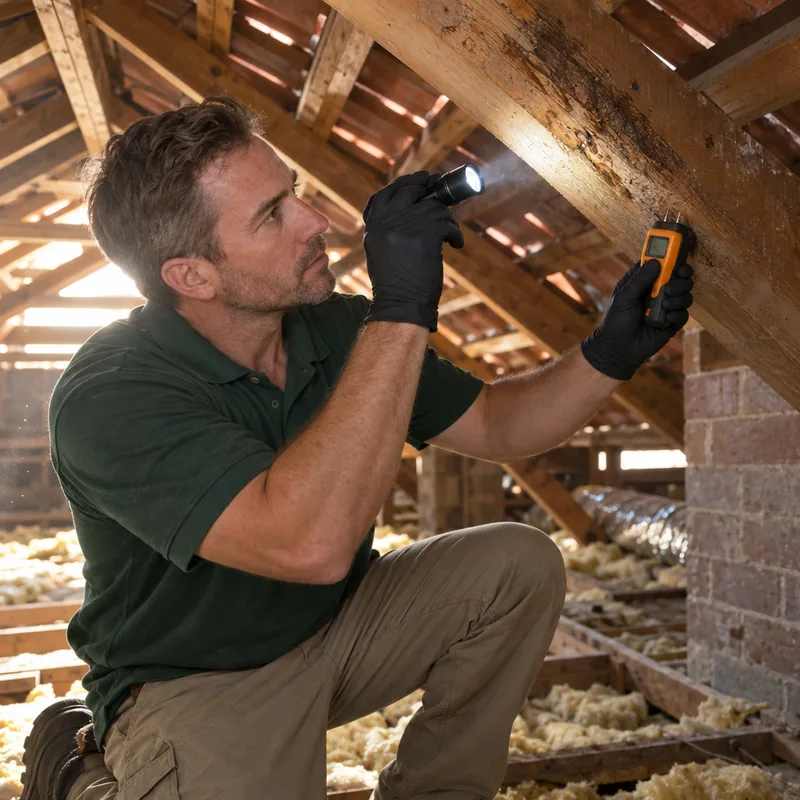
A termite inspection is a visual inspection of every accessible part of the property. Inside, the technician checks skirtings, architraves, door and window frames, built-in cupboards, wet area frames and any exposed structural timber, tapping and sounding as they go. The roof void is entered where there is access and the rafters, battens, ceiling joists and top plates are inspected, because that is where activity often shows first in a double brick home. Where the house has a timber floor, the subfloor is inspected for stumps, bearers, joists, ant caps and mud leads on piers.
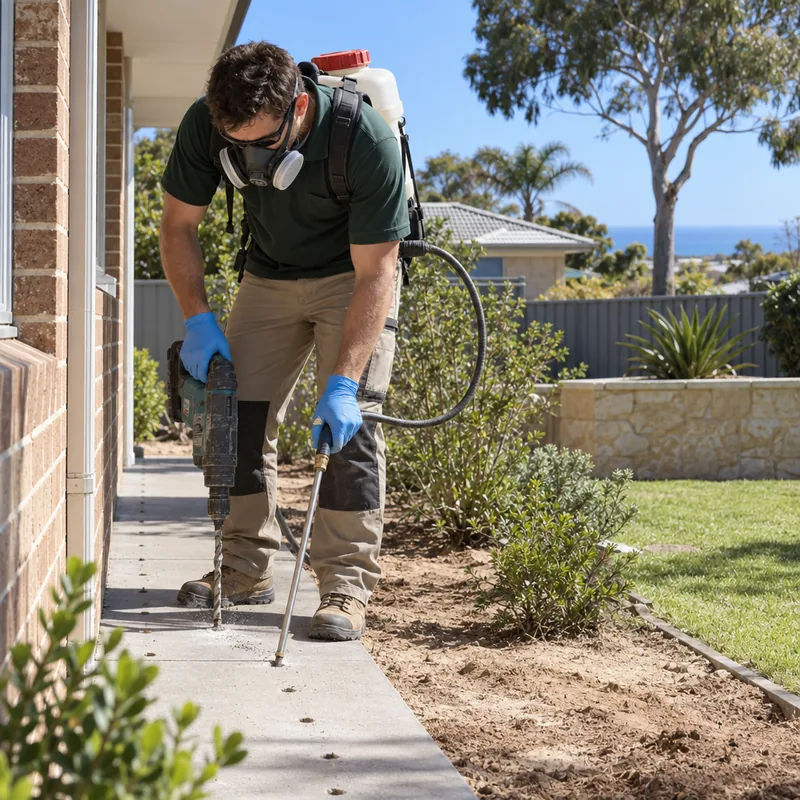
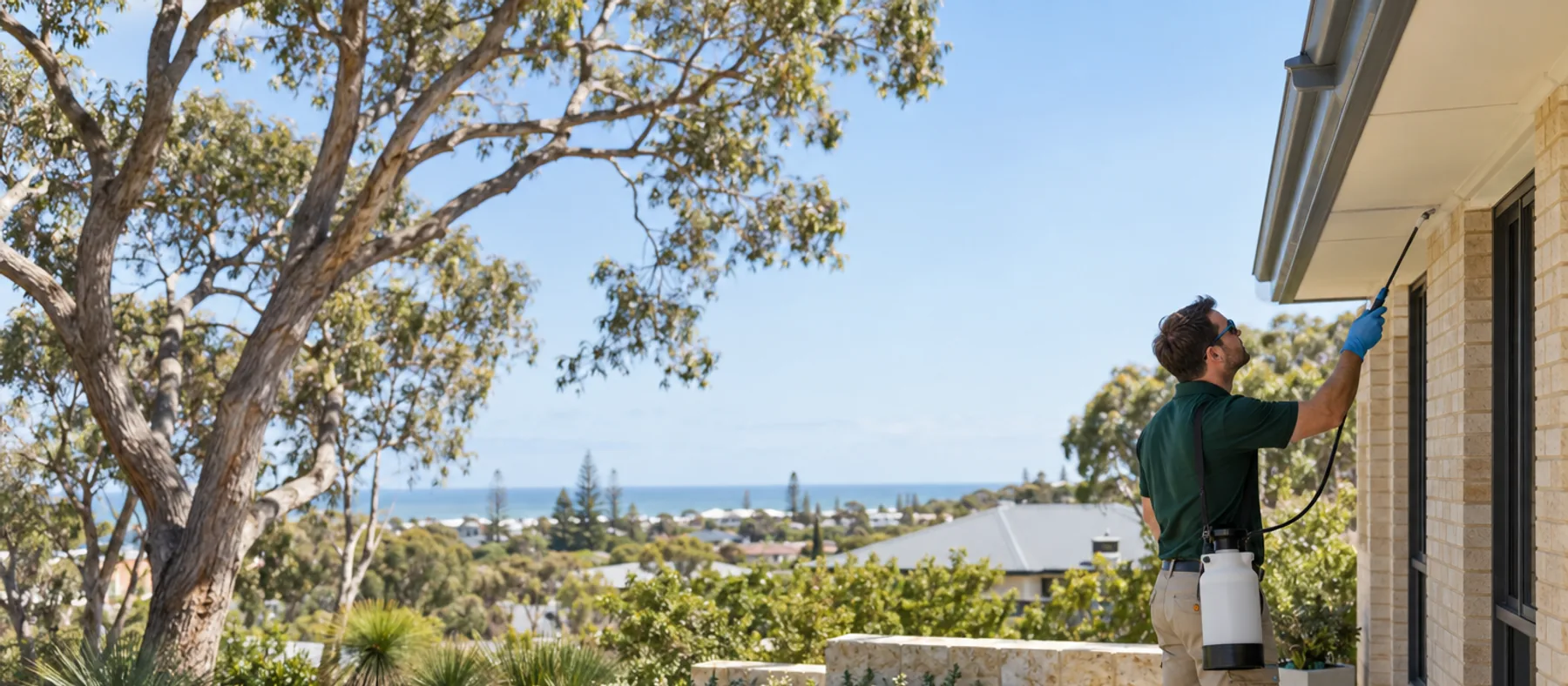
Outside, the slab edge and weep holes are checked for leads, then the brickwork, pergola posts, decking, fence lines, retaining walls, sheds and any timber stored on the ground. Trees and stumps on the block are checked for nests and the yard is assessed for conditions that attract termites. If any activity is found it is photographed and identified. The termites are not sprayed or disturbed at that point, because disturbing a lead sends the colony elsewhere and makes treatment harder.
Moisture meters, sounding and thermal imaging
Termites keep their workings damp, so a moisture meter run along walls and timbers picks up areas that are wetter than they should be. Sounding, which is tapping timber and listening for the change from solid to hollow, finds galleries behind an intact paint skin. Thermal imaging, where used, shows the temperature difference of a damp, active area behind a wall without cutting into it. None of these tools sees through walls. They point the inspector at the places that need a closer look, and together they find far more than eyes alone.
Pre-purchase timber pest inspections to AS 4349.3
If you are buying in the southern suburbs, a pre-purchase timber pest inspection to AS 4349.3 is a separate step from the building inspection and worth arranging before you go unconditional. It follows the same method described above but the report is written for a buyer: what was found, what could not be accessed, the damage seen, the conditions on the property that raise the risk, and what should be done before or soon after settlement. Sellers can also book one before listing so that a buyer’s inspection holds no surprises. Termite inspections in Perth are often written into an offer as a condition, so allow time for the report to be prepared.
What happens if termites are found
Finding live termites is not a reason to panic, and the worst thing to do is spray them with a supermarket can. The report identifies the species and the extent of what was seen, and a separate written quote sets out the treatment options to AS 3660.2, which can be direct treatment of the activity, a baiting programme, a chemical soil barrier, or a combination. The termite treatment page explains each option and when it fits. If only old damage is found with no live activity, the report will say so and recommend a re-inspection interval and the property fixes that lower the risk. The post on signs of termites in Rockingham homes walks through what those early signs look like and what to do next.
Preparing for the inspection
Clear access to the roof void manhole, the subfloor hatch if there is one, and the skirtings along the main walls by moving furniture and stored items a little. Unlock side gates and the shed. Note where you have seen anything unusual, such as sticking doors, rippled paint, wings on a windowsill or a soft floorboard, so the inspector can start there. Allow an hour or two for a typical house, longer for a large block in Baldivis or a foothill property in Kelmscott with sheds and stored timber. You are welcome to walk the property with the inspector and ask questions as you go.
Licensing and what a report can and cannot tell you
Pest management technicians in WA hold a Pest Management Technician licence from the WA Department of Health under the Health (Pesticides) Regulations 2011, and you can ask to see it. An inspection to AS 4349.3 is thorough but it is visual, and it cannot confirm that no termites are present in concealed areas such as inside wall cavities, under floor coverings or behind stored goods. That is why reports list the areas that could not be accessed and why regular inspections, rather than a single one, are what keep a home ahead of termites in Perth. AS 3660.2 is built around regular inspection, at least once a year in most cases and more often where the risk is higher.
To book a termite inspection in Rockingham, Cooloongup, Kwinana, Mandurah or the Armadale foothills, use the quote form and you will be contacted to arrange a time. If you want the other pests on the property dealt with in the same visit, see the general pest control page.
What is included
- Visual inspection of all accessible timbers inside the home, including skirtings, architraves, door frames and window reveals
- Roof void inspection of rafters, battens, ceiling joists and top plates where access allows
- Subfloor inspection on homes with timber floors, including stumps, bearers, joists and ant caps
- External inspection of the slab edge, weep holes, brickwork, pergolas, decking, fences and retaining sleepers
- Yard inspection of trees, stumps, timber in ground contact, garden beds and stored timber within the property boundary
- Moisture meter readings on walls and timbers, tapping and sounding of suspect timber, and thermal imaging where used
- Identification of the termite species found and notes on active leads, damage and conducive conditions
- A written report to AS 4349.3 with photographs, findings, risk factors and recommended next steps
Signs you should call
- Mud tubes or leads on the slab edge, brickwork, piers or inside cupboards
- Timber that sounds hollow when tapped, or a skirting that gives under a fingernail
- Doors and windows that have started to stick, or paint that bubbles and ripples on a frame
- Flying termites or discarded wings near lights or windowsills after a warm, humid evening
- Sagging floors, soft floorboards or a ceiling line that has dropped
- You are buying a home in the southern suburbs and need a pre-purchase timber pest inspection
- It has been more than a year since the last inspection of an established home
Termite Inspections in four steps
Inspect
The technician works through the interior, roof void, subfloor, exterior and yard, sounding timbers, taking moisture readings and using thermal imaging where it helps. Any active termites are photographed and identified rather than disturbed.
Written report and quote
You receive a written report to AS 4349.3 with photographs, the species found, the damage seen and the conditions on the property that attract termites. If treatment is needed, a separate written quote sets out the options.
Treat
Where live termites are found, treatment is planned to AS 3660.2 and can involve direct treatment of the activity, a baiting programme or a chemical soil barrier. Nothing is applied on the inspection day without your agreement.
Protect and follow-up
The report lists the fixes that reduce risk, such as moving garden beds, fixing leaks and removing timber from ground contact. A re-inspection interval is recommended so the property stays on a schedule.
Do not disturb the termites
If you find termites, mud leads or damaged timber, leave them alone. Do not spray them, break the lead open or pull the skirting off, because disturbed termites abandon that spot and reappear somewhere harder to find, and the species cannot be identified from an empty gallery. Keep children and pets away from the area, take a photo if you can, and note where you saw it. Before the visit, clear access to the roof manhole, any subfloor hatch and the skirtings on the main walls, and unlock side gates and sheds.
Frequently asked questions
1. What is the difference between a termite inspection and a pre-purchase timber pest inspection?
The method on site is much the same. Both are visual inspections of the accessible interior, roof void, subfloor, exterior and yard, with a moisture meter, sounding and thermal imaging where used. The difference is the report. A pre-purchase timber pest inspection is written to AS 4349.3 for a buyer who does not know the property, so it covers timber pests more broadly, including borers and fungal decay, and lists every area that could not be accessed. A routine termite inspection on a home you already own focuses on termite activity, damage and the conducive conditions to fix, with a recommended re-inspection interval.
2. Can a termite inspection find every termite in my house?
No inspection can, and any report that says otherwise should be read carefully. A termite inspection is visual, supported by a moisture meter, sounding and thermal imaging where used, and it covers the areas that are accessible on the day. Termites inside a wall cavity, under tiles or carpet, behind built-in cupboards or under stored goods can go unseen. That is why the report lists what could not be accessed and why regular inspections matter more than any single one. What an inspection does reliably is find active leads, damage and the moisture and timber contact that bring termites in.
3. How long does a termite inspection take?
Allow an hour to two hours for a typical three or four bedroom home in Rockingham or Baldivis. A large block with sheds, decking, retaining walls and mature trees takes longer, as does an older home in Kelmscott or Medina with a subfloor that has to be crawled. The time is spent methodically, room by room, then the roof void, subfloor, exterior and yard, so it cannot be rushed without missing things. The written report is prepared after the visit rather than on the bonnet of the ute, so you receive it once the photographs and findings have been put together.
4. What should I do before the inspector arrives?
Clear access to the roof void manhole and any subfloor hatch, and move furniture and stored goods a little way off the skirtings on the main walls so the timber can be seen and sounded. Unlock side gates, the shed and the garage. Keep pets somewhere secure. If you have noticed anything, such as a sticking door, rippled paint, a soft board or wings on a windowsill, point it out at the start. Do not spray or disturb any suspected termites before the visit, because that scatters them and makes it harder to identify the species and trace the activity.
5. Which termites are found in Perth's southern suburbs?
Coptotermes acinaciformis is the species that does most of the damage across Rockingham, Kwinana, Mandurah and the Armadale foothills. It is subterranean, nests in the base of trees and under slabs, and forages through the soil to timber. Schedorhinotermes is also destructive and is often found in the same areas. Nasutitermes builds mounds and tree nests and turns up around bushland edges and reserves. Drywood termites of the Cryptotermes group are a quarantine concern rather than an everyday pest here. Identifying the species matters because it changes the treatment, especially for baiting programmes.
6. How often should a home in Rockingham be inspected for termites?
AS 3660.2 is built around regular inspections, at least once a year in most cases and more often where the risk is higher. Higher risk in the southern suburbs means a block backing onto bushland or a reserve, a home with a timber floor and subfloor, mature trees or old stumps on the property, a history of termite activity, or an older chemical barrier that may be past its useful life. Newer homes in Baldivis and Secret Harbour on cleared sand are not exempt, because the colonies that lived in the bush are still there. An annual inspection is the baseline, not the maximum.
7. I have seen flying termites near my house. Does that mean I have an infestation?
Not necessarily, but it means a mature colony is close. Winged termites, called alates, fly on warm humid evenings in spring and early summer, and sometimes in autumn, to start new colonies. They are attracted to lights, so a cloud at the porch light or a scatter of shed wings on a windowsill means a nest within flying distance, which could be a tree on the verge, a stump next door or your own home. Book an inspection rather than assume either way. If the wings are inside with the windows closed, that raises the odds the colony is in the building.