A termite treatment is not a single product sprayed at some insects. It is a plan built around the species found, where the colony is likely to be, how the house is built and what the block around it looks like. Termite control in Perth, or white ant treatment as many locals still call it, done properly to AS 3660.2 deals with the termites that are there now and makes it much harder for the next colony to get in. This page explains the three approaches used across Rockingham and Perth’s southern suburbs, how they are chosen, what happens on the day and what termite protection looks like afterwards.
Why termite control matters in Rockingham and Perth’s south
Coptotermes acinaciformis, the most destructive termite in WA, nests in tree bases and under slabs and forages through the soil in every direction. It does not need much: a garden bed built up against the brickwork, reticulation wetting the slab edge every second morning, an air conditioner drip line onto the sand, retaining sleepers, formwork timber buried under the paving when the house was built. The sandy soils from Rockingham through Secret Harbour and Mandurah drain quickly, so wherever water lingers is exactly where termites forage. In the foothills at Armadale, Kelmscott and Byford the clay holds moisture and the jarrah forest edge is never far away.
Older homes in Medina, Cooloongup and Hillman have timber roof frames and often timber floors, so there is more to eat and more places to hide. Newer double brick homes on sand pads in Baldivis and Golden Bay have less timber inside but sit on freshly cleared land where the colonies already were. Both need termite protection; they just need it planned differently.
Confirming what you are dealing with
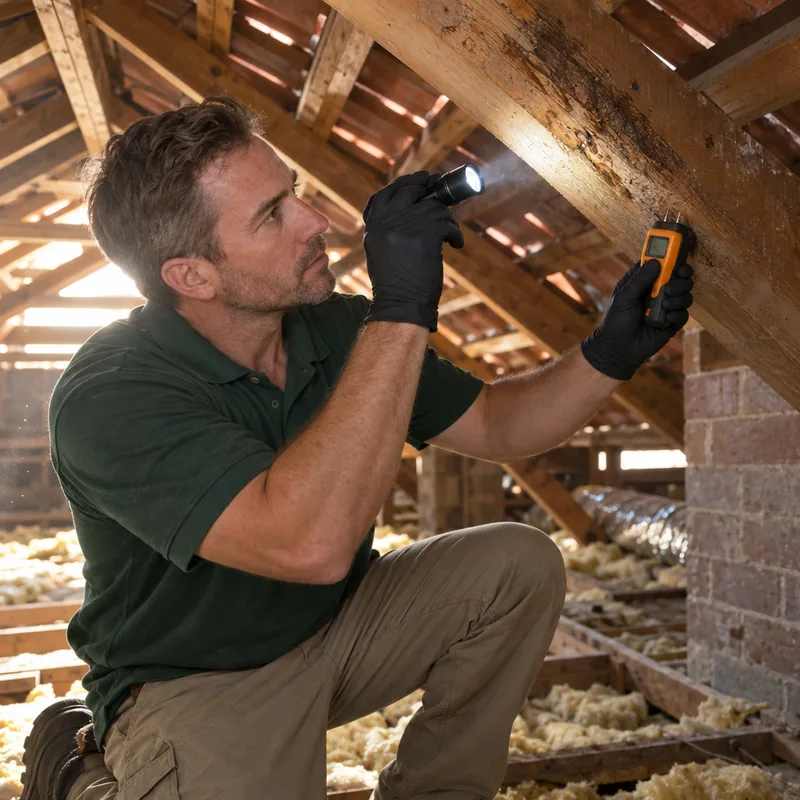
Every termite treatment starts with an inspection, even when you can see the termites yourself. The species changes the method, because a baiting programme that works well on Coptotermes may not suit another species. The extent of activity changes the scope, because termites in one door frame are often coming from the same lead that is feeding a roof timber on the other side of the house. And the entry point changes the plan, because a barrier that leaves a gap at a buried sleeper or a slab join is not a barrier. The inspection also picks up the conditions on the property that brought the termites in, and fixing those is part of the treatment, not an optional extra.
Termite barriers, baiting and direct treatment
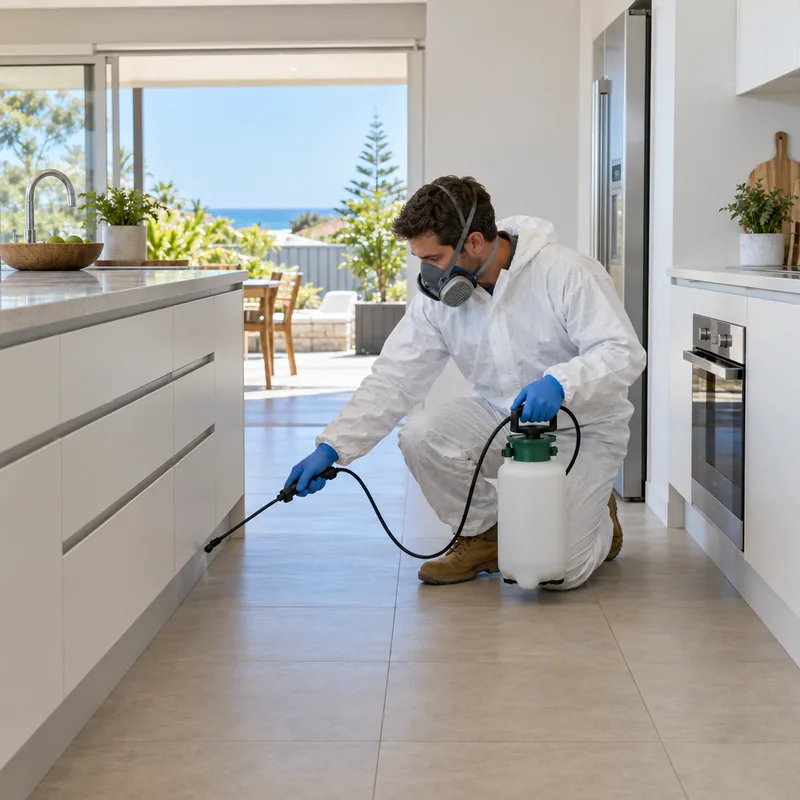
Direct treatment deals with the termites you can reach. A non-repellent termiticide dust or foam is applied into the active workings so that the termites carry it back through the colony. It knocks down the activity in that spot and, where the colony is small or close, can eliminate it, but on its own it does not protect the building.
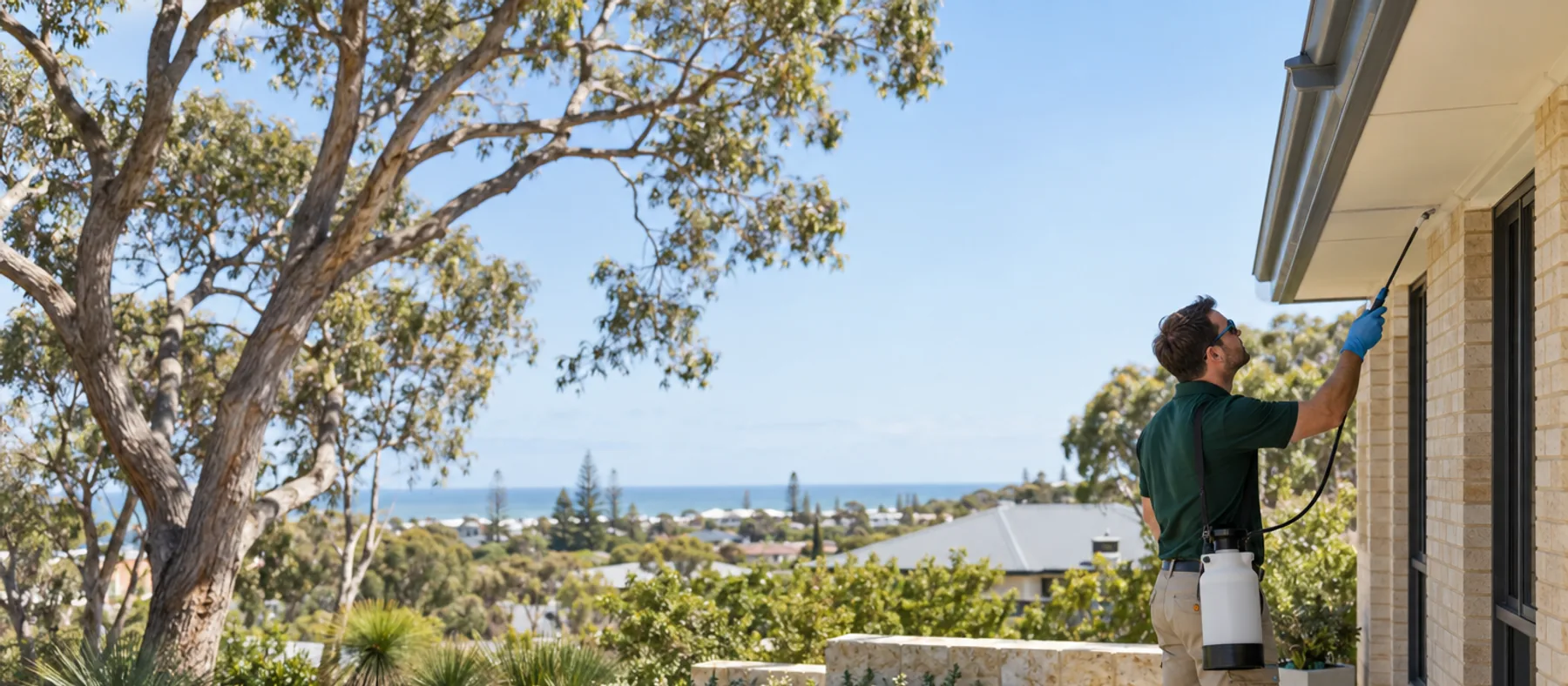
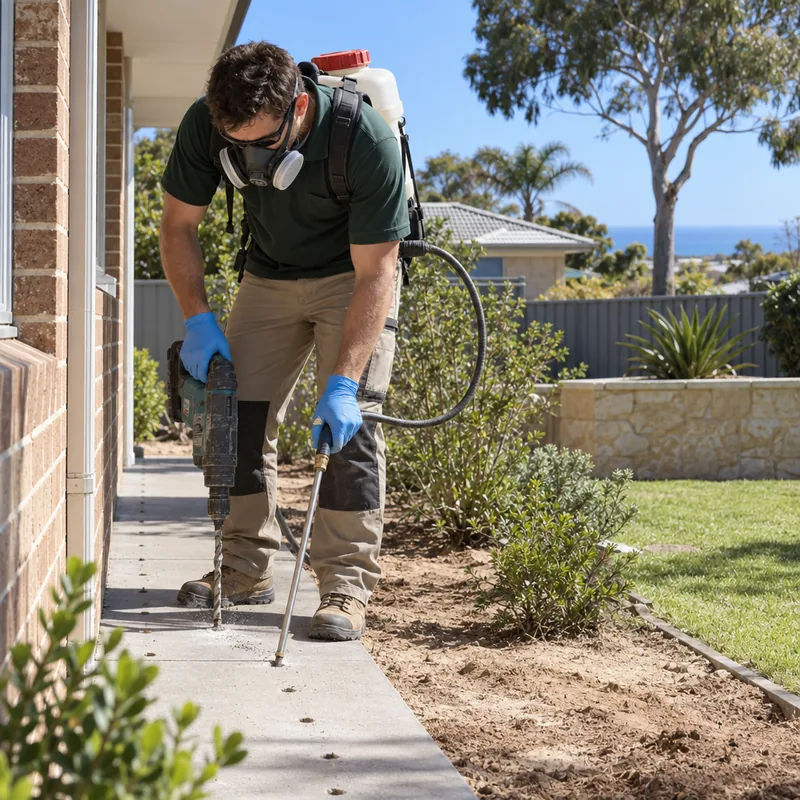
A chemical soil barrier, which is what most people mean by a termite barrier in Perth, is a continuous treated zone in the soil around the outside of the building. The technician trenches the soil against the slab edge or the subfloor walls, treats and backfills it, and where paving, concrete or a driveway sits against the house, drills through it at close intervals and injects the termiticide beneath. Modern non-repellent products do not stop termites at a line; termites forage through the treated zone without noticing it and carry the product back to the colony. Termite barriers only work if they are continuous, which is why the inspection before one matters so much and why extensions, pools and new paving can break an older one.
Termite baiting uses stations placed in the ground around the property and, where suitable, directly over active leads inside the home. The stations contain a timber or cellulose attractant, and when termites are found feeding in them a bait containing an insect growth regulator is added. Workers carry it back and the colony declines over the following weeks and months. Baiting suits properties where a barrier cannot be made continuous, blocks with bores, tanks and vegetable gardens close to the house, and situations where the aim is to find and eliminate the colony rather than only protect the building. It needs monitoring visits on a schedule to work.
Many treatments combine them: direct treatment of the activity now, then a barrier or a baiting programme for ongoing termite protection. The written quote explains which is recommended for your property and why.
What happens on treatment day
For a barrier, expect trenching along the external walls, drilling of any paving or concrete against the house, and the reticulation switched off along those walls for the period the technician advises. Holes in paving are plugged and made good. For baiting, the in-ground stations are set out around the perimeter at the spacing the system requires and any above-ground stations fixed over active leads. For direct treatment, the affected timber is opened only as much as needed to reach the workings. Keep children and pets clear of trenched and drilled areas until the work is finished and backfilled. A typical single-storey home takes most of a day for a barrier; baiting installation is quicker but comes with the monitoring visits afterwards. A durable notice recording the treatment is fixed in the meter box, as AS 3660.2 requires.
Termite protection between treatments
The barrier or baiting programme does its job, but the property does the rest. Pull garden beds and mulch back from the walls, adjust reticulation so it does not wet the slab edge or brickwork, fix leaking taps and run air conditioner drip lines to a drain. Get retaining sleepers, stored timber and firewood off the soil and away from the house. Keep the slab edge and weep holes visible, not buried under paving or soil, so that any new lead can be seen. And keep the annual inspection, because the standard is built around regular inspection and a treatment that is never inspected again is a treatment that is running blind. The post on the signs of termites in Rockingham homes covers what to keep an eye on between visits.
When to arrange termite treatment
Live termites found in the house, mud leads on the slab edge, damaged timber uncovered in a renovation, or a pre-purchase inspection that recommends treatment are the obvious triggers. Less obvious ones are an existing barrier that has passed its treated life or been cut by a pool, extension or new driveway, and a neighbour on the same street having a treatment, because the colony that reached them is foraging under your block too. Termite treatment in Mandurah, Baldivis, Armadale and the rest of the southern corridor is booked through the quote form. The inspection is done first and the quote is written before any product goes in the ground.
Licensing, standards and what to ask
Termite work in WA is done by technicians holding a Pest Management Technician licence from the WA Department of Health under the Health (Pesticides) Regulations 2011, working for a registered pest management business. Ask to see the licence. Ask which product is proposed and what its label states about treated life in your soil type. Ask how the barrier will be made continuous across the driveway, the pool surround and the slab join at the garage, and what the monitoring schedule is for a baiting programme. Ask what is written on the durable notice and what the follow-up visit covers. White ant control is only as good as the answers to those questions.
A written quote from a technician who has walked the property, from Mandurah to Armadale and Secret Harbour, should answer all of that before you commit, and the pest control cost post explains what moves a termite quote up or down.
What is included
- Confirmation of species and extent of activity before any treatment is chosen
- Direct treatment of active termites with a non-repellent termiticide dust or foam where the activity can be reached
- Chemical soil barrier around the slab or subfloor, trenched and treated, with drilling and injection through paving and concrete where needed
- In-ground termite baiting stations installed around the property and monitored on a schedule
- Above-ground bait stations placed directly on active leads inside the home where that suits the species
- Treatment of nests found in trees, stumps and retaining walls on the property
- Advice on the moisture and timber-contact fixes that reduce the chance of re-entry
- A written treatment record and durable notice in the meter box as AS 3660.2 requires, with follow-up and inspection intervals set out
Signs you should call
- Live termites found during an inspection, in a skirting, door frame or roof timber
- Mud leads on the slab edge, piers, brickwork or inside a cupboard
- Hollow-sounding timber, bubbling paint or a door frame that crumbles when pressed
- Termite damage found during a renovation, when a wall or floor was opened
- An existing chemical barrier that is past its treated life or was cut by paving, a pool or an extension
- A neighbour on the same street has just had a termite treatment
- A pre-purchase timber pest inspection recommended treatment before or after settlement
Termite Treatment in four steps
Inspect
Treatment starts with an inspection to confirm the species, trace the activity and find the moisture or timber contact that brought them in. Treating the wrong species or missing a second entry point wastes the treatment.
Written quote
You receive a written quote setting out the recommended method, the areas to be treated, any drilling required and the follow-up schedule. Barrier, baiting and direct treatment options are explained with the reasons for the recommendation.
Treat
Active termites are treated directly, and then either a chemical soil barrier is installed around the building or a baiting programme is set up around the property. Work is carried out to AS 3660.2 and recorded.
Protect and follow-up
Bait stations are monitored on a schedule and the barrier is checked at the follow-up visit. A durable notice records the treatment and an annual inspection keeps the protection current.
Before the technician arrives
Do not spray, break open or poke at any termite lead, mud tube or damaged timber. Disturbed termites abandon that spot and reappear somewhere harder to find, and the species cannot be identified from an empty gallery. Keep children and pets away from trenched or drilled areas on the day, keep the reticulation off along the treated walls for the period the technician advises, and let us know about rainwater tanks, vegetable beds, ponds and bores near the house so the barrier can be planned around them.
Frequently asked questions
1. What is the difference between a termite barrier and termite baiting?
A termite barrier is a continuous zone of treated soil around the outside of the building, trenched against the slab edge and injected under paving and concrete, so that termites foraging towards the house pass through it and carry a non-repellent termiticide back to the colony. Termite baiting uses stations in the ground around the property and over active leads inside, and when termites feed in them an insect growth regulator bait is added that the colony carries home. Barriers protect the structure from the day they are installed. Baiting aims to eliminate the colony and needs monitoring visits. Many homes use both.
2. Do I need a termite barrier on a new home in Baldivis or Byford?
New homes in WA are built with a termite management system to AS 3660.1 as part of the construction, which may be a chemical barrier, a physical barrier or a combination, and the builder's handover documents should say which. That system is not permanent and needs regular inspection to remain effective. In Baldivis, Byford and the other growth estates the colonies that lived in the cleared bush are still there, so a new home on a fresh sand pad is not low risk. An inspection tells you what the existing system is, whether it has been breached by paving, a pool or an extension, and whether anything more is needed.
3. How long does a termite treatment last?
It depends on the product used, the soil, how much the treated zone is disturbed and whether the property conditions that attracted termites are fixed. Each termiticide label states an expected treated life for a barrier, and that figure is written on the quote and the durable notice rather than promised in general terms here. A baiting programme lasts as long as the stations are monitored and maintained. Whatever the method, AS 3660.2 is built around regular inspection, at least once a year in most cases, and that inspection is what tells you whether the protection is still doing its job.
4. Will the termites just come back after treatment?
Termites are part of the environment across Rockingham, Mandurah and the foothills, and no treatment removes them from the district. What treatment does is deal with the colony feeding on your home and put a barrier or baiting programme in place so that the next colony to forage under the block is intercepted. Whether they get back in depends on that protection staying continuous and inspected, and on the property fixes, such as reticulation off the walls, garden beds pulled back and timber off the ground. Homes that keep the annual inspection and fix the moisture issues rarely have a repeat problem.
5. Is termite treatment safe for my family, pets and garden?
Termiticides used in soil barriers are registered for use around occupied homes and are applied at the label rate into the soil, not onto surfaces people touch, by a licensed technician. Keep children and pets away from trenched and drilled areas on the day and until they are backfilled and plugged. Tell the technician about bores, rainwater tanks, ponds, fish tanks and vegetable beds close to the house, because the barrier is planned around them and baiting may be preferred in those spots. Bait stations are lockable and hold a small amount of insect growth regulator inside the station rather than in the open.
6. Do you do termite treatment in Mandurah and Armadale?
Yes. Termite treatment in Mandurah covers the canal estates at Halls Head, the newer estates at Meadow Springs and Lakelands, and the older homes in Falcon and central Mandurah, where sandy soils, estuary moisture and mature trees all raise the pressure. Termite treatment in Armadale and Kelmscott deals with foothill clay soils, big blocks, jarrah forest edges and older weatherboard and brick homes, with Byford and the Serpentine-Jarrahdale growth areas alongside. The method is chosen the same way everywhere, after an inspection, but the barrier and baiting layout changes with the soil, the trees and how the house sits on the block.
7. What does white ant treatment involve on a home with a timber floor?
Older homes in Medina, Hillman and Spearwood with timber floors over a subfloor are treated from underneath as well as around the outside. The subfloor is inspected for stumps, bearers, joists, ant caps and mud leads on the piers, and active termites are treated directly there. The barrier is then applied to the soil inside the subfloor along the walls and around each pier, and around the outside perimeter, so that the treated zone is continuous. Ventilation and drainage in the subfloor are checked, because damp subfloors are where white ants in these homes usually start. Access to the subfloor hatch needs to be clear on the day.